 By admin
 Have you ever tried that viral baking soda hack for smoother skin, only to wake up wondering if it actually worked? Many swear by this cheap kitchen staple for tackling wrinkles, promising a tighter, fresher complexion. But what if that ‘quick fix’ is actually a ticking time bomb for your skin, leaving it more damaged and aged than before?
You might stare into the mirror the following morning, convinced you’ve found a miracle, but here’s the harsh truth: any perceived ‘smoothness’ is often just a symptom of severe dehydration. Your skin feels flatter not because wrinkles have vanished, but because it’s been aggressively stripped of its vital moisture. This critical misunderstanding is precisely where the popular baking soda wrinkle trend takes a damaging turn.
Let’s be brutally honest: your delicate facial skin is absolutely not designed to be treated like a kitchen counter. It’s a complex, living barrier, meticulously balanced with natural oils, essential moisture, and microscopic defenses specifically designed to shield you from environmental aggressors. When you assault this intricate system with a highly alkaline substance like baking soda, you’re not ‘revitalizing’ it; you’re violently disrupting its fundamental chemistry.
The Deceptive Appeal: Why Baking Soda Seems Like a Miracle Solution Initially
It’s no mystery why baking soda consistently features in countless DIY skincare concoctions. It’s incredibly inexpensive, a household staple, and surprisingly persuasive when transformed into a seemingly innocent, creamy mask for targeting those pesky fine lines. Its fine texture feels smooth, its scent is barely there, and the initial illusion of efficacy is incredibly powerful.
However, the true impact of baking soda on your skin is a critical detail that often goes unmentioned. This common ingredient completely disregards your skin’s delicate natural acidity, a factor far more crucial than many understand. Your healthy skin maintains a slightly acidic pH for a vital purpose: this precise balance is essential for keeping your protective barrier sealed, moisture effectively locked within, and the overall surface feeling calm and resilient.
Visualize your facial skin as a meticulously constructed brick wall, with supple, wet mortar binding each brick together. Baking soda acts like a harsh solvent, relentlessly eroding that crucial mortar. Initially, the ‘wall’ might appear cleaner, but the underlying structural integrity is rapidly compromised. Once this damage begins, it manifests as uncomfortable dryness, stinging sensations, or a rough, papery texture that can shockingly make you appear older almost instantly.
And here lies the insidious paradox: the smoother and tighter your skin feels immediately after using baking soda, the more likely it is that you’re actually inflicting severe damage by over-stripping its natural defenses. This deceptive contradiction is precisely the trap many fall into.
The Unseen Damage: What Baking Soda Does Beneath Your Skin’s Surface
It’s crucial to understand that fine lines are far more than superficial creases. They frequently indicate a deeper issue: your skin is simultaneously losing vital water content, natural elasticity, and its inherent resilience. Therefore, when a harsh, DIY concoction creates that immediate, tight sensation on your skin’s surface, you’re not actually turning back the clock; instead, you’re effectively wringing your skin dry, much like a sponge left baking under the scorching sun.
This intense, almost ‘polished’ feeling can be incredibly deceptive to the eye. Light reflects off a severely dehydrated surface in a peculiar way, momentarily making fine lines appear less prominent. However, the instant your skin attempts to draw moisture from its deeper reserves to compensate, your entire face can quickly appear even more fatigued, particularly in delicate areas like around the mouth, across the cheeks, and beneath the eyes.
Unfortunately, most individuals halt their assessment at the superficial ‘it felt clean’ stage. The true, critical narrative unfolds beneath the surface, where your skin’s protective barrier is desperately attempting to mend itself during your sleep. If this crucial barrier is already compromised and irritated, that vital repair process becomes significantly more challenging, not simpler.
The mainstream beauty and wellness industry rarely, if ever, highlights this crucial aspect. You won’t find any glamorous ad campaigns promoting a dollar-store kitchen powder that can’t be repackaged into an expensive, ‘luxury’ product. This is precisely why these quick, seemingly effortless shortcuts gain widespread attention, while their damaging consequences remain conveniently hidden from view.
The Harsh Reality: Why Mature Skin Suffers the Most, First
As our skin naturally thins with age, it gradually loses the vital, protective cushioning that once shielded it. This means that the very same abrasive paste a younger, more resilient face might tolerate without issue can leave mature skin feeling intensely red, uncomfortably prickly, and desperately parched by the time you wake up.
Imagine washing your face and immediately experiencing that sharp, unyielding tightness pulling across your cheeks, as if your skin has inexplicably shrunk a size too small. Then you notice a subtle pink flush around your nose, a hint of flaking near your chin, and a distinct, uncomfortable sting when you apply moisturizer to a sensitive area. This isn’t a sign of ‘effectiveness’; this is your skin’s protective barrier desperately signaling distress, waving a white flag in surrender.
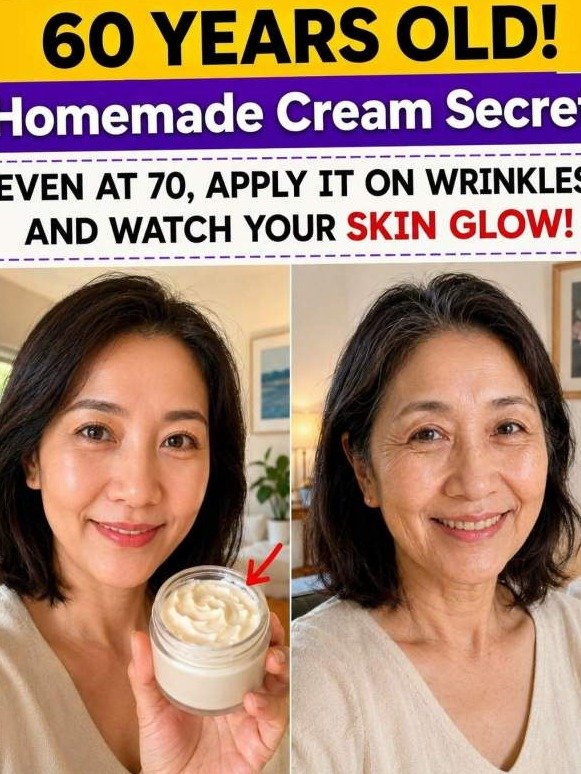
And the most alarming aspect? Consistent, repeated use of baking soda can progressively render your face far more reactive and sensitive over time. Suddenly, products you once tolerated perfectly well begin to sting or even burn. This unfortunate turn of events often leads people down a desperate path, chasing an endless array of new creams, masks, and ‘fixes,’ tightening a vicious cycle around their skin like a noose.
What initially appears to be a rapid victory against wrinkles can, in reality, silently transform your skin into a perpetual dryness machine. Your skin begins to crave moisture it’s no longer capable of retaining, and the more you strip its natural defenses, the more pronounced and visible your fine lines ultimately become. So, if baking soda is the problem, what truly offers a genuine solution?
The Transformative Shift: How to Achieve Truly Revitalized Skin
The immediate, striking change people observe when they cease aggressively treating their face is that their skin finally stops resisting. Gone is that uncomfortable, chalky tightness after cleansing. The stinging sensation when they smile vanishes. And the days of waking up to skin that feels fragile and dry like tissue paper become a distant memory.
This positive transformation occurs because gentle cleansing and proper, genuine moisture actively cooperate with your skin’s natural barrier, rather than relentlessly attacking it. A carefully balanced cleanser effectively removes impurities and grime without abrasively stripping your face, while a richer, nourishing cream functions like freshly applied mortar, meticulously rebuilding the structure between those ‘bricks.’ As a result, your skin becomes far more adept at retaining water, and this fundamental improvement alone can significantly diminish the appearance of fine lines.
Following this, there’s a crucial element many tend to undervalue: consistency. Consistently using a moisturizer with an appropriate texture for your skin type, diligent daily application of sunscreen, and a skincare routine that never leaves your skin feeling stripped can collectively achieve far more for the appearance of wrinkles than any dramatic, one-off experiment ever could.
This approach isn’t flashy or dramatic. It won’t fizz or create a tingling, ‘active’ sensation that makes your eyes water. However, what it will do is prevent your face from appearing prematurely worn out or exhausted by midday, and that, ultimately, is the profound and noticeable change people genuinely appreciate when they look in the mirror.
The Real ‘After’ Picture: What Truly Healthy Skin Looks Like
Imagine waking up not to a face that feels uncomfortably tight and overworked, but to skin that effortlessly moves and flexes naturally with every smile. Your cheeks no longer exhibit that thin, papery texture, and the lines around your mouth don’t jarringly demand attention under the unforgiving glare of harsh bathroom lighting.
This is the authentic, lasting payoff: not an artificial, ‘crystal-smooth’ facade, but a genuinely rested-looking face, precisely because its vital protective barrier remains healthy and intact. Your skin’s surface maintains its natural softness, any persistent redness subsides, and your complexion finally stops reacting as if it’s been aggressively scrubbed with abrasive sand.
And once you personally experience this remarkable difference, that tempting ‘quick fix’ you once considered a clever hack will reveal its true nature: a deceptive trap, perhaps disguised in a seemingly innocent, pretty jar.
The Critical Mistake That Undermines Every DIY Attempt
A single, widespread practice can completely derail the entire DIY skincare endeavor: applying baking soda to damp skin and allowing it to remain there until it dries into a stiff, chalky crust. This hardened, white film aggressively draws out moisture as it solidifies, leaving the delicate skin underneath feeling significantly tighter, rougher, and far more irritated than it was initially.
The subsequent point delves into an even more critical consideration: the specific combinations or pairings that can either mitigate the damage caused by harsh treatments or, conversely, accelerate the complete collapse of your skin’s protective barrier.
Please be aware: This article is intended solely for general informational purposes and should never be considered a substitute for professional medical advice. Always consult with your qualified healthcare provider for guidance tailored to your individual health and skincare needs.