 By admin
 The pain isn’t “just a bad period.” It’s tissue tearing and bleeding where it doesn’t belong.
What if the excruciating pain you feel every month isn’t just ‘bad cramps,’ but a silent, internal war tearing at your body? Imagine tissue inside you thickening, shedding, and bleeding with nowhere to go, month after agonizing month. This isn’t a horror story; it’s the daily reality for millions battling endometriosis.
This condition arises when tissue, remarkably similar to the lining of the uterus, begins to grow outside its proper place. Each menstrual cycle, this misplaced tissue reacts to hormonal shifts as if it were still inside the womb: it swells, breaks down, and bleeds into an enclosed space, with no natural way to exit the body.
This is precisely why your cramps can feel like a red-hot iron twisting deep in your pelvis, and why that sudden bloating can make your favorite jeans feel suffocating by midday. Your body is desperately trying to clean up an internal mess it never asked for, and the relentless pressure just keeps escalating.
What presents as ordinary “period pain” on the surface can actually be a relentless internal abrasion, slowly damaging your tissues from within. And what most women are never told is the devastating cascade of events that this trapped tissue triggers next.
Why the same cycle can feel like a different body every month
Picture your pelvis as a sink where the drain is constantly half-clogged, and the water is repeatedly turned on, cycle after agonizing cycle. Each new menstrual period doesn’t just bring bleeding; it introduces another wave of irritation, more swelling, and countless raw nerve endings being scraped and aggravated by the same persistent, hidden damage.
This ongoing internal turmoil explains why discomfort can surface even before any bleeding begins, why intimate moments might feel sharp, deep, and utterly wrong, and why your lower back can ache profoundly, as if you’ve been lugging a heavy, uneven load all day. This isn’t random suffering; the pain carefully maps the intricate pathways of inflammation spreading throughout your body.
Yet, inflammation is merely the initial stage of the assault. The residual scar tissue it inevitably leaves behind can begin to pull and distort your internal organs, dragging them away from their natural, smooth movements — and this is where the narrative takes an even darker turn.
The hidden damage that keeps stealing energy, digestion, and fertility
As endometriosis continues its relentless cycle of flaring and healing, your body responds by depositing scar tissue, acting like an overzealous repair crew that simply never clocks out. This fibrous tissue can then bind together critical reproductive organs, such as ovaries, fallopian tubes, and the delicate pelvic lining, much like wet glue drying and fusing moving parts into a rigid, painful mass.
It’s at this point that the symptoms transcend mere period pain. You begin to experience a profound, bone-deep fatigue that makes even simple tasks, like taking a shower, feel like an insurmountable challenge. You contend with bloating that transforms a normal meal into a tight, distended abdomen. You might also notice bowel pain, persistent constipation, or sudden bouts of diarrhea that arrive predictably with your menstrual cycle.
The reason women experience these symptoms so uniquely is straightforward: the same underlying disease can simultaneously press upon distinct internal structures. One woman might feel the brunt of it in her back, another in her bladder, and yet another in a persistent ache during intimacy — and startlingly, all these diverse manifestations can be occurring long before anyone correctly identifies the true culprit.
Why women keep getting brushed off while the damage keeps spreading
The harsh reality is that for far too long, endometriosis has been dismissed and concealed behind vague labels such as “normal cramps,” “stress,” or simply “just part of being a woman.” This diagnostic delay carries profound consequences, because every single month that a woman’s pain is ignored, the underlying inflammation gains more territory to carve out its destructive path.
There are no massive public awareness campaigns for debilitating pelvic pain. You won’t find glossy advertisements for the woman forced to cancel plans because her abdomen feels like it’s filled with shattered glass and crushing pressure. This pervasive silence is precisely why so many continue to suffer in isolation, believing their struggles are unique or imagined.
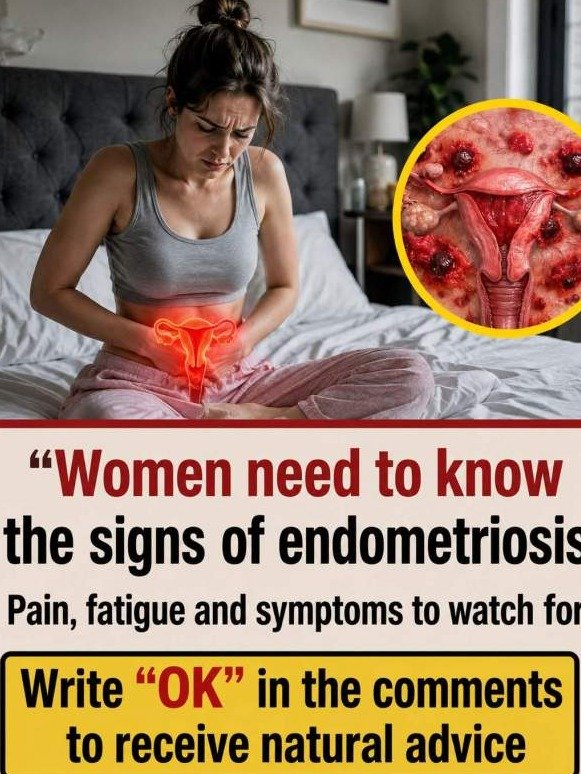
The easiest, most superficial explanations often receive the most attention, while the genuine, escalating condition relentlessly embeds itself deeper into the body’s tissues. However, once you understand the critical signs and symptoms to look for, the previously mysterious pattern of pain and discomfort transforms into an unmistakable reality.
What changes when the body finally gets the right support
Providing genuine support for endometriosis doesn’t involve downplaying its severity. Instead, it means actively working to quell the internal fire, alleviate the painful spasms, and interrupt the relentless cycle of irritation that has been overwhelming the entire system for too long.
For some women, the initial shift is noticed in the quiet moments of the morning: less apprehension when rising from bed, a reduction in that persistent pulling sensation deep within the pelvis, and a diminished heavy, bruised feeling beneath the beltline. For others, the relief manifests as digestion finally settling down, akin to a tightly clenched fist slowly and deliberately opening.
As time progresses, the improvements become undeniable: fewer precious days are lost to the agonizing spiral of pain, the crushing afternoon fatigue eases its grip, and there’s a newfound freedom to inhabit a body that no longer feels like it’s waging war against itself every single month. The crucial question then becomes: what exactly is fueling this internal fire in the first place — and one common, seemingly innocuous habit can make it far worse than most women ever realize.
The wrong way to “help” can feed the very irritation you’re trying to calm
When your pelvis is already inflamed and screaming for relief, consistently filling your plate with ultra-processed foods, sugar-laden beverages, and heavy, greasy meals is akin to dousing a small kitchen flame with fresh oil and then feigning surprise when the smoke intensifies. Your belly swells further, the internal pressure skyrockets, and the entire system feels profoundly more agitated and reactive.
A far more effective approach involves constructing your meals around vibrant, fiber-rich vegetables, heart-healthy fats, and an array of colors that look freshly plucked from a bustling market stall — think deep emerald greens, brilliant red peppers, rich purple cabbage, and aromatic, bright herbs. These nutrient-dense foods provide your body with essential biological fuel and act as molecular ‘brooms,’ helping it effectively manage the inflammatory burden instead of being overwhelmed by it.
And there’s one particular preparation habit that subtly, yet significantly, impacts whether these vital compounds actually survive long enough to exert their beneficial effects…
What to watch next if your body keeps sending the same signal
When a persistent cluster of symptoms—including chronic pain, debilitating fatigue, heavy bleeding, uncomfortable bloating, and challenges with fertility—continually resurfaces together, it is not a mere coincidence. It is, in fact, a definitive and urgent pattern.
Endometriosis has the power to profoundly impact every facet of your life: your career, your relationships, your energy levels, and even your fundamental capacity to navigate a day without constantly bracing for the next agonizing stab of pain. The more clearly you learn to recognize this complex pattern, the more swiftly you can begin asking the crucial questions, advocate fiercely for superior care, and finally stop misinterpreting a serious medical condition as a personal failing.
The next critical insight lies hidden within how your body processes estrogen — and understanding this intricate detail fundamentally alters everything you know about why certain flares erupt with such devastating intensity.
This article is for informational purposes only and does not replace professional medical advice. Please consult your healthcare provider for personalized guidance.