 By admin
Imagine a plant so breathtakingly beautiful, its elegant flowers could adorn any landscape, yet so incredibly potent, it harbors a dark secret capable of causing severe harm. This isn’t a myth; it’s the chilling reality of Datura stramonium, widely known as the ‘Devil’s Trumpet’. This captivating member of the nightshade family also goes by many other evocative names like Jimsonweed, thorn apple, or devil’s snare, and has intrigued scientists, historical scholars, and curious onlookers for centuries.
With its striking trumpet-shaped blossoms and distinctive spiky seed pods, this plant frequently captures attention in untamed fields and along roadsides. However, beneath its alluring facade lies a potent chemical composition, serving as a powerful reminder of nature’s inherent power and the respect it demands. Join us as we delve into the fascinating history, unique characteristics, and crucial safety considerations surrounding this truly remarkable and enigmatic plant.
🌸 A Striking Plant With Hidden Risks
Upon first glance, Datura stramonium presents an image of sheer elegance, almost appearing to be a desirable ornamental specimen. Its magnificent trumpet-shaped flowers, typically displaying shades of white or pale purple, often unfurl in the evening hours, releasing a wonderfully sweet and pervasive fragrance into the night air.
Yet, despite its enchanting allure, every single part of this plant contains naturally occurring compounds that can be profoundly harmful if ingested or misused. From its leaves and delicate flowers to its seeds and roots, all components harbor substances known to significantly impact the nervous system. Consequently, Datura stramonium is universally recognized as highly toxic and should absolutely never be consumed under any circumstances.
Although it originally hails from the Americas, Datura has successfully spread its reach across vast regions of the globe. It commonly flourishes in disturbed ground conditions, such as:
-
Roadsides
-
Open fields and pastures
-
Unused or vacant lots
-
The peripheries of agricultural land
Its remarkable ability to thrive even in challenging and less-than-ideal environments underscores its impressive resilience and explains its widespread presence worldwide.
🌱 Botanical Features of Datura Stramonium
Learning how to correctly identify this plant is crucial for preventing accidental encounters and exposure. Here are some of its most recognizable characteristics:
Height
Datura plants typically achieve a considerable stature, often growing between 1.5 and 2 meters tall, making them quite prominent within their natural habitats.
Leaves
The foliage is distinctly large, a deep dark green, and features irregularly lobed edges, contributing to the plant’s somewhat wild and untamed appearance.
Flowers
Its iconic trumpet-shaped blossoms stand erect and can measure an impressive 15–20 cm in length. These striking blooms are frequently white or violet and typically open as evening approaches.
Fruit (Seed Pods)
The plant develops distinctive round, spiny capsules, which are sometimes colloquially referred to as thorn apples. When these pods fully mature, they naturally split open to release numerous small, black seeds.
These easily identifiable features make Datura relatively simple to spot and recognize once you are aware of what specific characteristics to observe.
⚗️ Natural Chemical Compounds
The significant potency of Datura stramonium is directly attributed to several powerful, naturally occurring compounds known as tropane alkaloids. These include key substances such as:
-
Atropine
-
Scopolamine
-
Hyoscyamine
These potent substances exert their influence on the nervous system by intricately altering the way specific neurotransmitters function within the body. While similar compounds have been extensively researched and even utilized in controlled pharmaceutical applications, the precise concentrations present in wild Datura plants are highly unpredictable and thus inherently dangerous for unsupervised use.
For these critical safety reasons, it is absolutely paramount that Datura is never, under any circumstances, used without direct medical supervision.
📜 A Long History in Culture and Folklore
Throughout the annals of history, Datura has woven itself into countless narratives, spiritual rituals, and traditional practices across a diverse array of global cultures.
Indigenous Traditions
Certain Indigenous communities, particularly in ancient times, incorporated carefully prepared forms of the plant into significant spiritual ceremonies or profound rites of passage.
Traditional Medicine
In earlier herbal medicine practices, precisely controlled preparations of Datura were occasionally employed to help alleviate symptoms associated with asthma, muscle spasms, or various forms of pain.
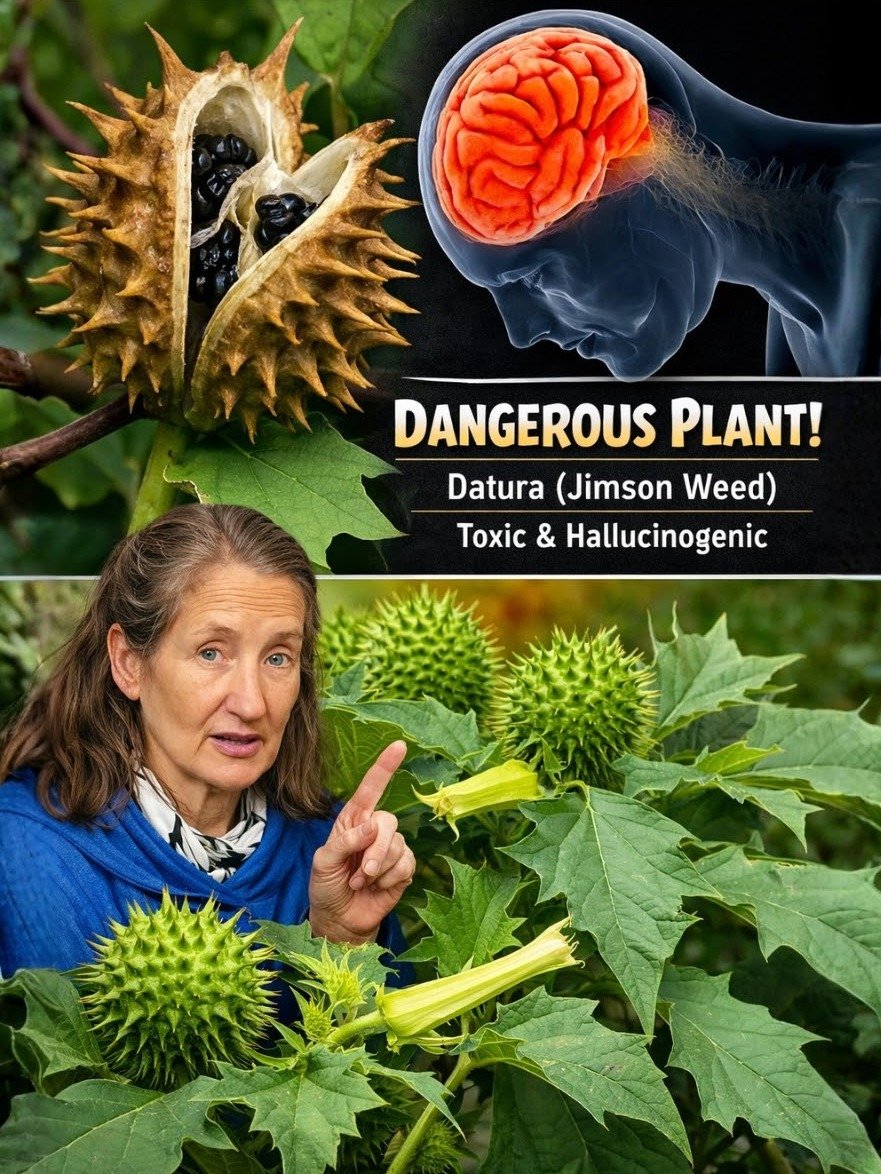
Folklore and Mythology
The plant’s striking appearance and powerful, often disorienting, effects contributed to its ominous monikers such as “Devil’s trumpet” and “Hell’s fig”, which symbolize both intense fascination and inherent peril.
Conversely, contemporary medicine places a strong emphasis on rigorous scientific understanding and extreme caution when approaching any plants containing such potent alkaloids.
⚠️ Health Risks and Toxicity
Despite its undeniable aesthetic appeal, Datura stramonium is unequivocally classified as highly poisonous. Even the accidental ingestion of any small part of this plant can trigger severe and alarming symptoms, including:
-
Profound confusion or intense delirium
-
An abnormally rapid heart rate
-
Severely blurred vision coupled with extreme dry mouth
-
Periods of severe agitation
-
In the most extreme and dangerous scenarios, seizures or even unconsciousness
It’s critical to remember that children, household pets, and even livestock are particularly susceptible and vulnerable to its toxic effects, often because the plant’s seeds or fruits might appear appealing or simply unfamiliar to them.
🛡️ Safety Tips and Prevention
Should you come across Datura growing either in the wild or within the boundaries of your own property, it is imperative to adhere to these crucial safety precautions:
Master Plant Identification
Actively look for its distinctive trumpet-shaped flowers, the characteristic jagged leaves, and its unmistakable spiky seed pods.
Avoid Residential Cultivation
Refrain from cultivating this plant, especially in areas where children or pets are likely to play and roam.
Exercise Extreme Caution During Handling
If removing the plant becomes absolutely necessary, always wear sturdy gloves and be sure to avoid touching your face until you have thoroughly washed your hands.
Seek Immediate Medical Attention
In the unfortunate event that accidental ingestion or suspected poisoning occurs, do not hesitate to seek emergency medical assistance right away.
🌍 A Plant That Traveled the World
While its origins trace back to the Americas, Datura has now established a strong presence across Europe, Asia, Africa, and Australia. Its remarkable adaptability enables it to flourish in disturbed environments and various agricultural regions globally.
In certain geographical locations, it is increasingly recognized and categorized as an invasive species, largely due to its rapid proliferation and its tendency to aggressively outcompete indigenous plant life.
🌿 The Modern Debate: Ornamental Beauty vs. Safety
Some enthusiastic gardeners are indeed drawn to the dramatic and striking flowers of Datura and its closely related species, choosing to cultivate them as captivating ornamental plants. However, a significant number of horticultural experts strongly advise opting for non-toxic alternatives that can provide comparable aesthetic appeal without posing serious safety hazards.
Excellent examples of safer, yet equally beautiful, ornamental flowering plants include:
-
Angelonia
-
Petunias
-
Hibiscus
-
Moonflowers (specifically, the non-toxic varieties)
These wonderful alternatives enable gardeners to luxuriate in the beauty of stunning blooms without exposing themselves or their loved ones to the inherent risks associated with highly toxic plants.
🌟 Nature’s Powerful Paradox
The compelling existence of Datura stramonium serves as a potent reminder that the natural world frequently encapsulates both breathtaking beauty and inherent peril within the very same form. Its exquisitely elegant flowers, uniquely unusual seed pods, and rich cultural history collectively make it an endlessly fascinating subject for study—yet, it is equally a plant that unequivocally demands profound caution and unwavering respect.
Developing a comprehensive understanding of plants like Datura not only deepens our appreciation for the intricate complexity of the natural world but also ensures we remain thoroughly informed about any potential risks they might present.
✅ Important Note:
This article is provided strictly for educational and informational purposes only. Datura stramonium should never, under any circumstances, be consumed or utilized for medicinal purposes without the direct guidance and supervision of a qualified medical professional.