 By admin
 What if your nails aren’t just for show, but are actually tiny messengers signaling critical information about your health? While minor nail changes often go unnoticed, when fingertips start to swell and your nails begin to curve dramatically over the edges, it’s a silent alarm you absolutely shouldn’t ignore.
This distinctive alteration is medically referred to as nail clubbing or digital clubbing. While it might occasionally be a benign trait, it frequently serves as a crucial indicator of deeper, more significant health problems that demand careful attention.
In this comprehensive guide, we’ll delve into the mysterious origins of this unusual nail transformation, uncover its potential implications for your well-being, and clarify precisely when it’s time to seek professional medical advice.
Decoding Clubbed Fingertips: What Are They Exactly?
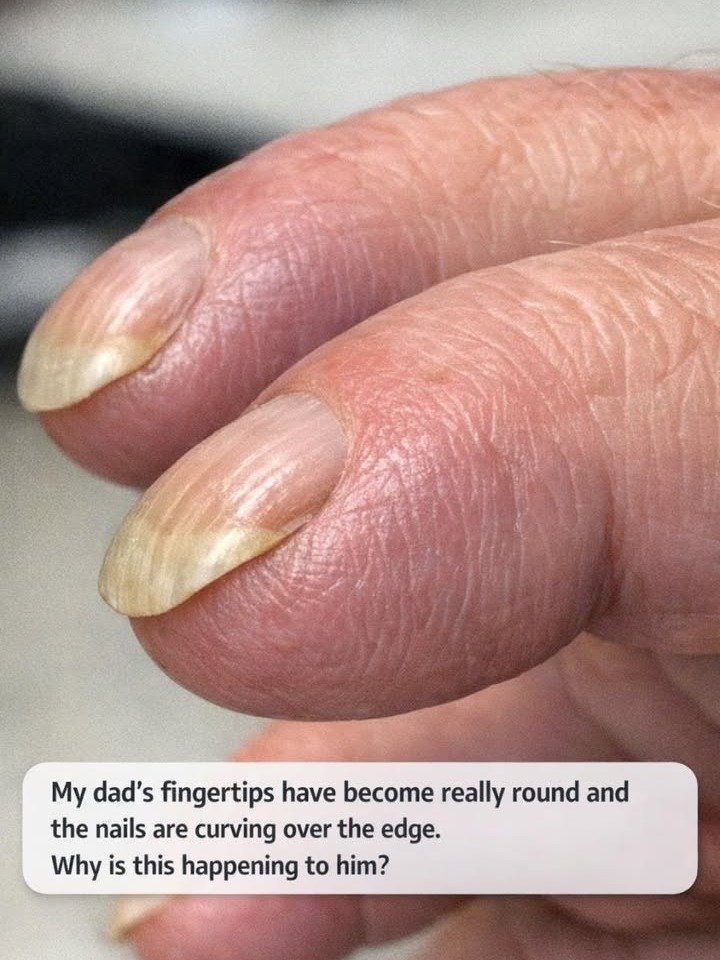
Nail clubbing describes a very distinct and observable alteration in the contours of both the fingertips and the nails themselves. Instead of maintaining their typical relatively flat appearance, the nails start to arch significantly downward over the very tip of the finger, and the fingertip often takes on a swollen, bulb-like characteristic.
Key indicators to look out for include:
-
Fingertips that appear noticeably rounder or disproportionately larger than usual
-
Nails that curve downwards in a pronounced manner, often resembling an upside-down spoon
-
Nail beds that exhibit a distinctively soft or spongy texture when pressed
-
A complete loss of the natural, acute angle typically found between the nail and the cuticle
As time progresses, the entire distal end of the affected finger can become visibly thicker and more bulbous, a characteristic appearance sometimes colloquially referred to as “drumstick fingers.”
While the condition of clubbing itself typically doesn’t cause pain, its presence can be a profoundly important diagnostic clue, signaling that a more significant underlying process is unfolding within the body.
The precise biological mechanism responsible for clubbing remains an area of ongoing research, but medical experts currently theorize that it arises when the soft tissues situated beneath the nail bed undergo thickening, accompanied by an increase in blood flow to the fingertips.
In a significant number of cases, this phenomenon is observed when the body experiences chronically low oxygen levels in the blood over extended periods. This persistent oxygen deprivation subsequently triggers changes in tissue growth and fluid accumulation, ultimately reshaping the nails and fingertips.
To put it simply, nail clubbing is usually not a standalone disease itself—rather, it is a revealing symptom that points towards the existence of another, often more serious, medical condition.
Uncovering the Medical Reasons Behind Curved Nails and Rounded Fingertips
1. Pulmonary Conditions
Disorders impacting the lungs are among the most prevalent medical explanations for the development of nail clubbing.
These potential conditions include:
-
Lung cancer
-
Persistent lung infections
-
Bronchiectasis (a condition where airways widen)
-
Pulmonary fibrosis (scarring of lung tissue)
-
Cystic fibrosis (a genetic disorder affecting mucus production)
Indeed, a significant majority of all clubbing cases are directly attributable to various lung diseases.
These respiratory illnesses inherently diminish oxygen saturation levels in the bloodstream, which in turn can initiate the specific tissue alterations observed in the fingertips.
2. Cardiac Ailments
Certain heart conditions can also precipitate clubbed nails, particularly those pathologies that compromise the efficient circulation of oxygen throughout the body.
These include examples such as:
-
Congenital heart defects present from birth
-
Infective endocarditis (an infection of the heart’s inner lining)
-
Specific structural heart diseases that impede normal function
Such cardiovascular disorders inherently diminish the vital delivery of oxygen to the body’s peripheral tissues, thereby contributing to the characteristic nail changes.
3. Gastrointestinal and Hepatic Disorders
While perhaps less widely recognized, a number of gastrointestinal and liver-related conditions can also manifest as nail clubbing.
These encompassing conditions typically include:
-
Crohn’s disease (a chronic inflammatory bowel disease)
-
Ulcerative colitis (another form of inflammatory bowel disease)
-
Liver cirrhosis (advanced scarring of the liver)
-
Malabsorption disorders that hinder nutrient uptake
Medical professionals postulate that the persistent inflammation and altered circulatory patterns inherent in these conditions may be contributing factors to the development of this nail deformity.
4. Endocrine and Hormonal Imbalances
Certain endocrine system conditions can also be implicated in cases of clubbing, notably including Graves’ disease, which is an autoimmune disorder affecting the thyroid gland.
In less common instances, significant hormonal imbalances can provoke localized swelling and modifications in the connective tissues surrounding the fingertips, leading to clubbing.
5. Benign or Inherited Factors
It’s crucial to understand that not every instance of curved nails necessarily indicates an underlying illness. Some individuals exhibit a mild form of clubbing naturally, often due to inherited genetic traits, and they can lead perfectly healthy lives without any associated medical conditions.
Other non-pathological reasons for clubbing might encompass:
-
The natural aging process
-
Previous injuries to the fingers
-
Sustained, long-term pressure on the nails
-
The side effects of certain prescribed medications
Nevertheless, any sudden or noticeably progressive changes in nail shape should always prompt a medical evaluation to rule out concerns.
How Healthcare Professionals Diagnose Nail Clubbing
Healthcare providers typically confirm a diagnosis of clubbing through a straightforward and non-invasive physical examination.
A particularly common diagnostic tool is the Schamroth window test.
Here’s a simple breakdown of how this test is performed:
-
Begin by placing the same fingers from both of your hands together, nail-to-nail, directly opposite each other.
-
Under normal circumstances, you should observe a small, diamond-shaped gap or