 By admin
 A heart attack strikes without warning, without an invitation. It can seize your chest like an iron grip, suffocating your vital heart muscle by cutting off its oxygen supply, transforming every passing minute into irreversible damage. That unmistakable crushing pressure, the sudden clammy sweat, overwhelming nausea, or pain radiating into your jaw or arm — these aren’t just minor aches. They are your body’s urgent, undeniable distress signal.
What’s truly terrifying is how deceptively mild these initial symptoms can appear. Perhaps it’s just a noticeable heaviness in your chest after a short flight of stairs, or an odd tightness that you mistake for simple indigestion. It might manifest as an unexpected stomach discomfort, a sudden dizzy spell, or an unsettling feeling that something is profoundly amiss, even as your surroundings seem perfectly normal. This subtle onset is precisely how so many individuals are caught off guard.
However, the most critical threat isn’t solely the arterial blockage itself—it’s the agonizing delay that often occurs before anyone takes action. Your heart isn’t prone to exaggeration; when it begins to fail, it communicates its distress with chilling speed and honesty. The crucial events unfolding within those initial minutes are what ultimately determine the extent of heart muscle survival.
The silent story of a blocked artery that catches everyone by surprise
Imagine your coronary artery as a critical, narrow tunnel, tirelessly channeling oxygen to a power plant that can never power down. Over the years, a sticky, insidious plaque accumulates along its inner walls, much like stubborn grease residue building up in a drainpipe. Then, without warning, a sudden rupture or a rogue clot transforms this vital passage into a dangerous chokepoint, so constricted that the tissue beyond it begins to starve.
This is the aspect most people fail to grasp: the initial sensation isn’t always sharp pain, but rather a profound suffocation. Your heart muscle, much like an engine with a pinched fuel line, struggles desperately, its cells beginning to fail one by one. Each subsequent beat becomes more arduous and costly than the last.
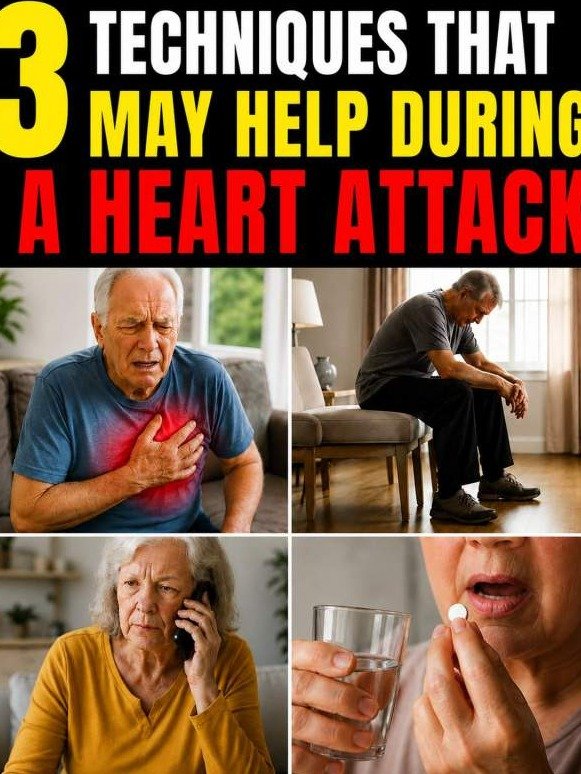
Your very first, most crucial action isn’t about being a hero. It’s about taking a simple, direct, and potentially life-saving step: immediately call emergency services. Afterward, unlock your front door, find a seated position, and consciously work to minimize any physical exertion that would consume the precious little oxygen remaining in your body.
But even after that, a vital question remains: what specific actions can you take while you wait for help to arrive?
Why your immediate reaction is the game-changer
In those critical moments, the most powerful tool isn’t panic, nor is it wishful thinking. It’s a precise sequence of actions designed to alleviate strain on your heart until medical professionals reach you. Position yourself upright or in a well-supported, semi-seated posture, ideally with your back firmly braced and your knees comfortably bent if possible.
This particular position is incredibly important because lying completely flat can inadvertently direct more blood flow back towards an already struggling heart. Imagine a failing pump being overwhelmed with fluid from both directions at once—it would strain even harder, not find relief. Sitting up isn’t merely about comfort; it’s a strategic move to manage the load on your heart.
Next comes aspirin, but only if it’s suitable for the individual and has been previously approved by their doctor for emergency use. During a heart attack, platelets can dangerously clump together, much like emergency workers inadvertently creating a barrier in the wrong place. Aspirin acts swiftly to halt this dangerous aggregation.
The method of consumption matters critically: chewing the tablet allows it to enter your bloodstream far more rapidly than swallowing it whole. In this race against time, speed translates directly into oxygen for your heart. That small, bitter chew could be the pivotal factor between a clot growing larger and your blood finding a crucial pathway through.
It’s rarely discussed because a low-cost tablet doesn’t generate significant profits for anyone. No one builds a high-gloss marketing campaign around a pill that costs mere pennies, yet this remains one of the most effective, readily available tools to gain precious time when your heart is under severe attack. And the next crucial piece of advice is where many people are dangerously misinformed.
Why controlled breathing is far more than ‘just calming down’
Panic is like pouring gasoline onto an already raging fire. It accelerates your heart rate, drives blood pressure sky-high, and forces your compromised heart to demand even more oxygen precisely when its supply is collapsing. This is why controlled breathing isn’t just a trivial suggestion—it’s a calculated strategy to reduce your heart’s workload.
A slow, deliberate inhalation through your nose, followed by a steady pause, and then a longer, controlled exhale through your mouth: this specific pattern shifts your nervous system away from a full-blown alarm state. Think of it as gently lifting your foot off the accelerator in a car that’s already dangerously overheating. The engine might still be damaged, but it’s no longer screaming at its redline limit.
The initial relief people experience isn’t magic. It’s the sensation of your chest feeling less frantic, your hands trembling less, and your mind regaining the clarity to focus on the single most important task: waiting for the ambulance without expending vital energy. A room that felt suffocatingly small suddenly becomes manageable again.
This is particularly vital for older adults and for women, who frequently face dismissal when their heart attack symptoms present as “atypical.” Persistent fatigue, unexplained nausea, discomfort in the back, jaw pressure, or sudden breathlessness—these are not minor footnotes. They are often the primary, urgent indicators.
This brings us to why the subtle warning signs preceding the event are just as crucial as the event itself. Because your body frequently whispers warnings long before it screams for help, and those whispers are tragically easy to overlook if you haven’t been taught to recognize their sound.
The quiet warning patterns your body sends before a major health crisis
Some individuals report an unusual heaviness or sensation while ascending stairs. Others might suddenly find themselves winded just carrying groceries or stepping out of their car. The chest may not erupt in agonizing pain; instead, it might feel like a slow, heavy, and deeply unsettling pressure—like an invisible hand pressing down from within.
Here lies the stark contrast: a heart in distress rarely behaves like it does in dramatic movie scenes. Instead, it often functions more like a clogged filter in a furnace—still operating, still trying to appear normal, even as heat and unseen damage accumulate behind the facade. By the time the overt smoke signals appear, significant damage has already begun.
Women often experience these symptoms differently. A sudden wave of nausea. An overwhelming, leaden fatigue that saps all energy from the body. A persistent pressure between the shoulder blades or an ache in the jaw that’s too easily dismissed as stress. While men more commonly report chest pain first, the heart pays no heed to gender stereotypes.
That’s why the smartest, simplest course of action is this: treat any new chest pressure, radiating pain, cold sweat, sudden difficulty breathing, or an overwhelming sense that something is profoundly wrong as an immediate emergency. Not tomorrow. Not after a nap. Act right then, without hesitation.
And once you understand this, the final, common trap becomes glaringly obvious—yet people still tragically fall into it.
The critical three-second habits that can derail your entire response
Do not attempt to drive yourself to the hospital. Do not adopt a “wait and see” approach. Do not wander around your house attempting to determine if your symptoms will magically improve. Any movement burns precious oxygen, increases strain on your heart, and steals vital time from the only medical team equipped to address the arterial blockage.
One common habit is even more detrimental: leaving your front door locked with the assumption that “they’ll figure it out.” Emergency crews can lose precious, life-saving minutes struggling with a closed door while the person inside is weakening with every breath. A simple unlocked door can be the pivotal difference between receiving rapid treatment and enduring a catastrophic delay.
And if aspirin is part of your emergency plan, chewing it rather than swallowing it whole is the critical detail that dramatically accelerates its effect. It’s the difference between a life-saving tool arriving instantly and one that arrives too late to make a full impact.
That final, crucial detail is where the next layer of preparation begins—a layer most individuals never consider until an emergency has already struck.
P.S. There’s one specific, common habit that can fatally sabotage everything: lying flat on your back, consumed by panic, while your heart is already struggling under immense demand. This seemingly harmless position can significantly worsen your heart’s workload, and people adopt it without a second thought. The far better, simpler strategy is to sit up, brace your back, ensure your door is unlocked, and keep your body as still as humanly possible while awaiting help. And there’s one more essential piece that fundamentally alters how the entire emergency unfolds, intricately linked to a preparation most people never make in advance.
This article is for informational purposes only and does not replace professional medical advice. Please consult your healthcare provider for personalized guidance.