 By admin
 The innocent-looking white powder you’re using as a shortcut is actually turning your face into a chemical battleground.
What if the ‘natural’ ingredient you’ve been putting on your face is actually the fastest way to ruin your skin? Baking soda often feels like a quick fix, immediately scrubbing away oil and delivering that satisfyingly ‘squeaky-clean’ sensation. However, this chalky, powdery substance isn’t “balancing” your complexion; instead, it’s aggressively tearing through your skin’s protective acid shield like a high-pressure hose on delicate paint.
Initially, this might feel incredibly appealing: reduced shine, a noticeably tighter appearance, and a deep-clean feeling around your nose and chin. But soon after, you’re hit with the tell-tale sting, a sudden flush, and that uncomfortable, paper-dry tightness when you try to smile. While the surface might look temporarily polished, beneath it, your vital skin barrier is being eroded, grain by painful grain.
And this crucial aftermath is precisely what those viral ‘before-and-after’ photos conveniently omit. The real, damaging story unfolds moments after you rinse, leaving your skin desperately trying to defend itself with its essential armor critically compromised.
Why that deceptive “fresh” feeling is actually a major red flag for your skin
Your skin thrives within a slightly acidic environment, much like a carefully guarded fortress that locks in moisture and keeps harmful invaders out. Baking soda, being highly alkaline, dramatically disrupts this delicate balance, forcing your skin’s protective barrier into overdrive just to mend itself.
Imagine your face as a freshly painted wall in a humid climate. A gentle, appropriate cleanser will wipe away surface dirt without issue; however, baking soda can begin to strip away the paint itself, especially if you repeatedly rub the same area. Most people initially notice the damage as an uncomfortable tightness, followed by flaking, and then that peculiar stinging sensation when even plain water touches their skin.
Let’s be clear: that’s not your skin “purging” impurities. That’s your skin barrier desperately waving a white flag of surrender. And once this crucial barrier is weakened, a cascade of unwanted issues begins, the kind nobody wants to discuss.
The alarming, hidden chain reaction unfolding beneath your skin’s surface
When your skin’s protective barrier develops cracks, it immediately starts losing essential water at an accelerated rate, simultaneously allowing irritants to penetrate far more easily. The devastating outcome is a complexion that appears dull, feels rough to the touch, and reacts adversely to products that were once perfectly harmless – suddenly, your everyday cleanser burns, and even your trusted moisturizer feels like sandpaper against your skin.
Picture a sturdy brick wall with its mortar crumbling away. The bricks themselves are still present, but the gaping holes now permit wind, rain, and grime to seep directly through. This explains why someone might apply baking soda to a breakout and believe it “worked,” when in reality, they’re inadvertently laying the groundwork for increased redness, heightened sensitivity, and more visible skin chaos down the line.
The skincare industry often champions quick fixes because they deliver dramatic, photo-ready results. Yet, there’s no glamorous advertising campaign for an inexpensive white powder that leaves your cheeks hot, unpleasantly shiny, and painfully irritated by dinnertime. And the most uncomfortable truth is that the cheapest shortcut frequently garners the loudest, most misleading praise.
So, what truly happens when you finally stop assaulting your skin barrier and begin nurturing it instead?
Discover what genuinely clearer, calmer skin looks like when its barrier remains perfectly intact
Once your skin is no longer subjected to harsh stripping, its behavior undergoes a remarkable transformation. Oil production appears less erratic, makeup glides on much more smoothly, and that nagging, constant urge to “wash my face again” gradually begins to subside.
For individuals with oily or combination skin types, this shift becomes unmistakably clear in the mirror: significantly less mid-day grease, fewer rough patches developing around the mouth, and pores that no longer look forcibly stretched open. This isn’t magic; it’s simply the natural outcome when your skin is finally able to retain its own vital moisture instead of losing it through microscopic fissures.
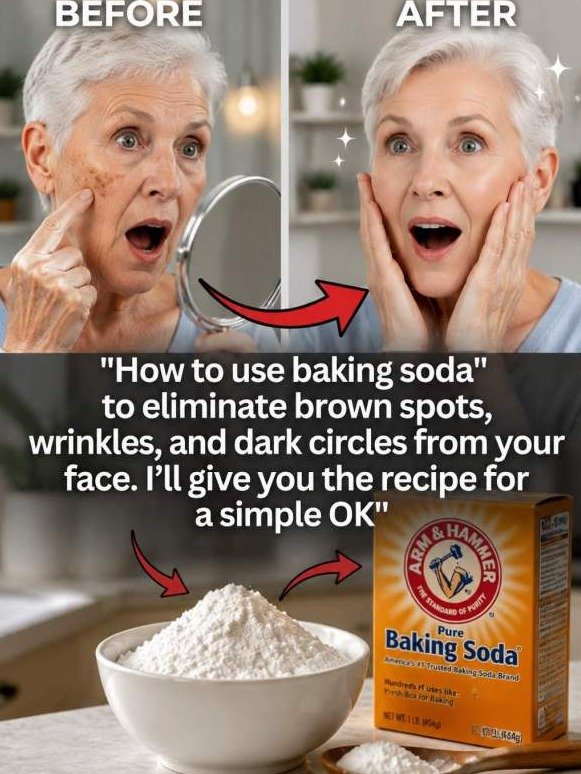
For those with dry or sensitive skin, the positive impact is even more profound and immediate. The burning sensation ceases, persistent redness calms significantly, and that tight, uncomfortable feeling reminiscent of a sunburn after cleansing diminishes into something far less dramatic. Your face stops reacting as if it’s perpetually under attack.
This matters for reasons extending far beyond mere comfort. A robust, intact barrier empowers your skin to appear smoother, more serene, and achieve a more even tone without the rebound irritation that baking soda so often triggers. However, one incredibly common kitchen habit can completely sabotage this entire process before it even has a chance to begin.
The common, incorrect ways people use baking soda that dramatically worsen the damage
Dry-rubbing baking soda directly onto damp skin is where the most significant problems erupt. The abrasive powder snags on even the tiniest dry patches, the friction intensifies dramatically, and your face inevitably ends up redder than it started – especially in delicate areas like around the nose, mouth, and under the eyes, where the skin is naturally thinnest and most vulnerable.
Another dangerous trap is mixing it into a thick, gritty paste and then scrubbing harder, mistakenly believing that because it’s “natural,” it must be safe. This approach is akin to attempting to clean a delicate glass with a harsh scouring pad and calling it proper care. The surface might appear polished for a fleeting moment, but the underlying damage becomes painfully evident when your skin begins to sting at the slightest touch.
The truly safer and more effective path involves not bullying your skin into submission. Instead, it’s about consciously choosing ingredients that gently remove buildup without compromising your precious barrier, and that’s precisely where the next layer of this essential skincare story truly gets compelling.
The gentler, effective alternatives that genuinely respect and nurture your face
Ingredients like colloidal oatmeal, soothing aloe vera, low-strength lactic acid, and specially formulated barrier-friendly cleansers are designed to work harmoniously with your skin, rather than aggressively against it. They won’t deliver that artificial “squeaky” finish, but they provide something far more valuable: they effectively help to clear the skin’s surface while meticulously preserving its natural moisture network.
Imagine a dusty kitchen countertop. Baking soda acts like a rough, abrasive sponge that leaves unsightly scratches in its wake; conversely, a gentle, skin-friendly exfoliant is like a soft cloth that effortlessly lifts away the mess without marring the surface. This profound difference becomes evident each morning when your face feels genuinely smooth instead of angry, and your moisturizer absorbs beautifully instead of sitting on top like a sticky residue.
That is the true victory – not a fleeting, dramatic one-minute transformation, but skin that remains consistently steady, wonderfully calm, and significantly less reactive over time. And once you fully grasp just how quickly baking soda can backfire, one final, critical detail becomes absolutely impossible to overlook.
P.S.
Applying baking soda directly to your face, especially with vigorous circular scrubbing, is arguably the quickest route to transform a supposed “brightening” trick into a catastrophic barrier breakdown. You’ll visibly notice the chalky residue, the tell-tale redness around your nostrils, and that uncomfortable, tight shine that emerges after rinsing.
What many individuals fail to recognize is the critical “pairing problem”: the very next ingredient you apply after baking soda can either help to soothe your distressed skin or, conversely, drive the irritation even deeper – and understanding this combination truly changes everything.
This article is for informational purposes only and does not replace professional medical advice. Please consult your healthcare provider for personalized guidance.