 By admin
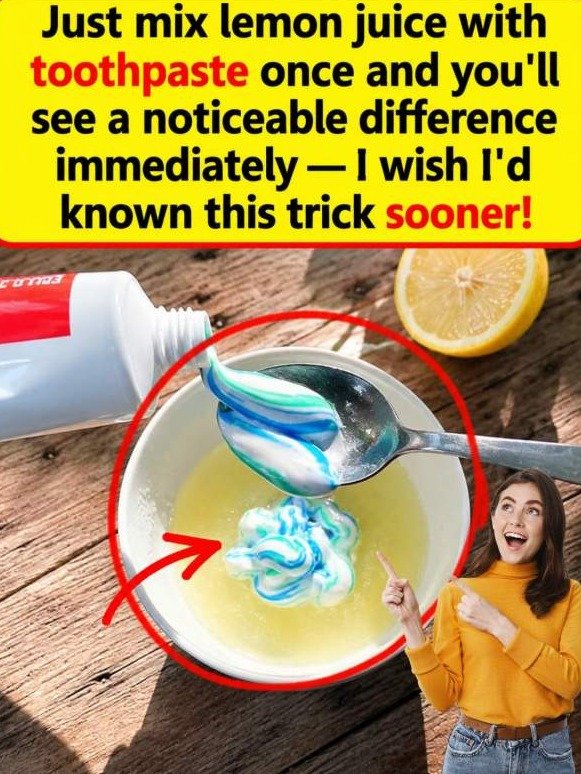
 That sharp zing of lemon juice mixed into your toothpaste isn’t a whitening miracle—it’s a full-blown acid assault on your teeth. While that citrus blend might look harmless in a cute bowl, the chemistry happening inside your mouth is a disaster in the making. You’re essentially coating your teeth in a sour, corrosive liquid and then immediately scrubbing them with abrasives, creating the dental equivalent of sandpapering wet plaster.
Unlike your skin, your tooth enamel doesn’t have the ability to regenerate. Once you wear it down, it’s gone forever, a detail that viral social media hacks conveniently leave out of the frame. A single splash of lemon might seem minor, but turning it into a habit is a slow, steady grind that leaves your teeth porous, hypersensitive, and aching at the slightest touch of cold water.
The most deceptive part of this trend? The cleaner your teeth look initially, the more damage you are likely doing to the very surface you’re trying to preserve.
Even the scent should be a red flag. That potent, eye-watering citrus burn that makes your mouth pucker is a sign of high acidity. This isn’t just a mild cleaning agent; it’s a chemical force that physically alters your tooth structure before you even start brushing.
What the lemon is really doing inside your mouth
Lemon juice acts as a potent acid that strips away the protective, smooth layer of your enamel, much like a harsh paint stripper removes finish from wood. When you add toothpaste to this equation, you aren’t “neutralizing” the acid; you are dragging grit across a surface that has just been weakened and softened by the citrus.
Think of your enamel as the clear coat on a car’s paint job. Once that protective layer is etched or scratched, it becomes a magnet for stains and decay. People often mistake “aggressive scrubbing” for “better hygiene,” but when you introduce acid, you aren’t cleaning—you are accelerating the erosion process.
That’s the surface story, but the real trouble begins deeper. Your mouth starts reacting to this abuse long before you notice any visible yellowing or physical loss of tooth structure.
The first warning sign is often a sharp, sudden twinge when you drink ice water or breathe in cold air. That sensation is the result of your enamel buffer being stripped away, leaving your nerves exposed like a house with the insulation torn out.
If you continue this cycle, you’ll find that your teeth don’t just become sensitive—they become stain-magnets.
The wellness industry thrives on the promise of quick fixes, but it never warns you about the long-term price tag of destroying your enamel. There’s no viral profit in telling people to simply stop using home chemistry experiments. “Restraint” doesn’t get clicks, but it is the only thing that will actually save your smile.
We all want a brighter, more confident smile, but the irony is that these “miracle” hacks often result in a duller, more porous surface that attracts stains even faster than before. You are trading your long-term dental health for a short-term trick that leaves your teeth more vulnerable to coffee, tea, and wine.
The more you compromise that smooth, natural protective layer, the more easily pigments from your food and drinks will latch onto your teeth like burrs.
Why the damage shows up in a different way for different mouths
For many, the first red flag is extreme sensitivity. If a sip of a cold beverage feels like an electric shock or sweet snacks cause pain, you are likely already dealing with eroded enamel. This isn’t a sign of a “deep clean”—it is your teeth screaming for help.
For others, the degradation is subtle and aesthetic. The glossy, reflective sheen of healthy enamel disappears, replaced by a matte, chalky texture. Ironically, while the hack promises to brighten your smile, it eventually leads to a surface that stains more aggressively because it has lost its protective, polished finish.
It’s exactly like ruining a non-stick frying pan. Once you scrub off the protective coating, everything starts to stick. By the time you notice how much harder it is to keep your teeth clean, the damage is already done.
This is why “natural” does not automatically mean “safe.” Just because an ingredient comes from a fruit doesn’t mean it belongs on your teeth. Your mouth is a biological system, not a kitchen sink.
Once you realize these hacks are counterproductive, the real question becomes: what actually keeps your smile bright without destroying it?
What actually helps a dull smile look brighter
The secret is actually boring: stick to the basics. Use high-quality fluoride toothpaste, a soft-bristled brush, and maintain a consistent routine. It isn’t glamorous, but it acts as a protective maintenance crew rather than a wrecking ball.
Simple habits, like rinsing your mouth with water after drinking coffee or soda, are incredibly effective. This washes away the acidic film before it has a chance to soften your enamel, acting like a shield against daily wear and tear.
Most people are hunting for a dramatic, overnight whitening shortcut; in reality, they just need a smooth tooth surface that doesn’t trap every stain in its path.
If you have stubborn stains, look toward dentist-approved whitening treatments or professional cleanings. These are designed to be safe for your enamel. I know that’s not the exciting answer people want to hear, but the safest dental path is almost always the one that avoids theatrical “hacks.”
There is one final, crucial detail regarding your technique that is often overlooked.
Brushing your teeth immediately after consuming acidic food or drink is a major mistake. Your enamel is at its most vulnerable state right after an acid hit; using a toothbrush at that exact moment is like scrubbing a wet floor with a wire brush.
The part that wrecks the whole trick
Mixing lemon and toothpaste is a bad idea on its own, but the timing of when you brush is just as important. By brushing immediately, you are grinding down the very layer of your teeth that you are trying to clean.
The viral videos show a satisfying, aesthetic process—a yellow lemon, a bright paste, a quick mix—but they hide the ugly truth of what is happening microscopically. You are essentially polishing your teeth into a state of permanent sensitivity.
Timing is everything. Give your mouth time to remineralize, stick to products specifically formulated for oral health, and stop treating your enamel like a science experiment.
One common kitchen habit makes this entire process significantly worse—and it’s the step most viral creators conveniently leave out.
They aren’t hiding it because it’s complex; they’re hiding it because “miracle hacks” get clicks, while warnings about acid and abrasion don’t go viral.
Falling for the wrong combination can turn your daily hygiene into a slow, irreversible grind. Understanding that your teeth require protection, not punishment, is the first step toward a truly bright, healthy smile.
This article is for informational purposes only and does not replace professional medical advice. Please consult your healthcare provider for personalized guidance.