 By admin
 Imagine this: You cough, clear your throat, and suddenly out pops a tiny, foul-smelling lump. Sound familiar? If you’ve ever experienced this unsettling moment, you’re definitely not alone – and no, it doesn’t automatically mean your hygiene is lacking.
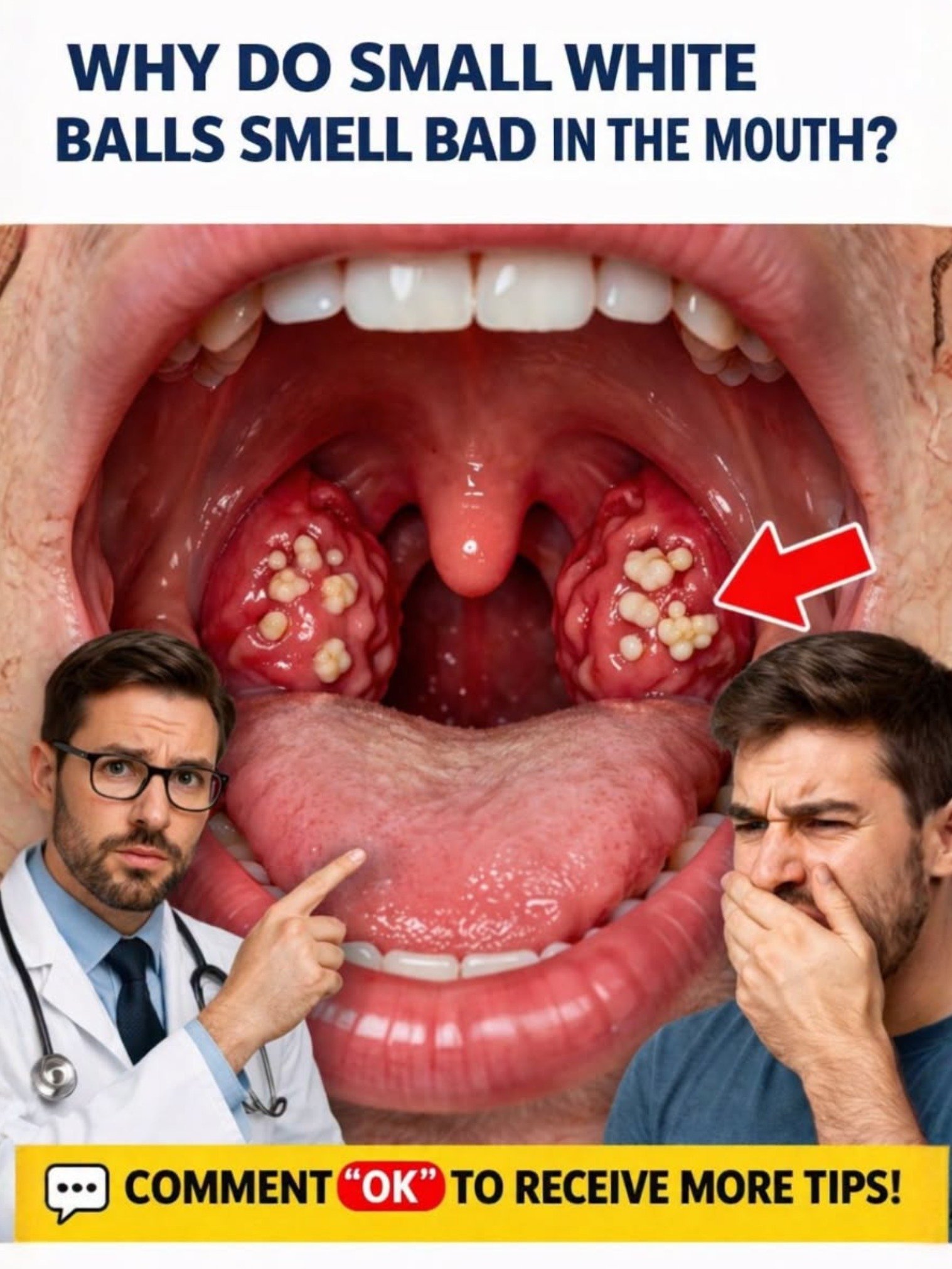
These mysterious, odoriferous little nuggets are actually known as tonsil stones (tonsilloliths)—a surprisingly common culprit behind stubborn bad breath that even the most diligent brushing, flossing, or mouthwash can’t conquer.
🤔 What Exactly Are Tonsil Stones?
So, what exactly are these intriguing (and admittedly, a bit gross) formations? Tonsil stones are essentially small, calcified deposits that develop within the natural folds and pockets, known as crypts, found on your tonsils. Their formation is a gradual process that typically involves a combination of factors:
- Tiny bits of food, shed skin cells, and mucus become lodged in these tonsillar crypts.
- Specific types of bacteria (especially anaerobic ones) begin to break down this trapped organic matter.
- Over time, minerals present in your saliva (like calcium and phosphorus) start to solidify this accumulating mixture.
👉 These hardened formations can be remarkably small, often no bigger than a grain of rice, yet they can sometimes expand to the size of a small pea. While some individuals might only encounter them sporadically, others find themselves dealing with tonsil stones on a more regular basis.
🤢 Why Do They Smell So Bad?
The most distinctive (and unpleasant) characteristic of tonsil stones is their notoriously foul odor. This potent smell is primarily due to the release of volatile sulfur compounds (VSCs) by the bacteria actively breaking down the trapped debris. These compounds are often likened to the pungent smell of rotten eggs, giving you an idea of their intensity.
👉 Shockingly, even a single, minuscule tonsil stone has the power to unleash breath-destroying odors that can persist for many hours, making it incredibly difficult to mask.
🚨 Common Signs You May Have Tonsil Stones
Even if these sneaky stones aren’t immediately visible to the naked eye, your body often sends out clear signals that they might be present. Keep an eye out for these tell-tale signs:
- A lingering, stubborn bad breath that doesn’t improve, even with diligent brushing and flossing routines.
- An odd, metallic, or generally unpleasant taste that seems to persist in the back of your throat.
- A sensation as if a foreign object is lodged in your throat, causing constant irritation.
- Visible white or yellowish specks or patches on the surface of your tonsils.
- Experiencing mild, yet persistent and recurring sore throat discomfort.
- Unexplained ear discomfort, which can occur due to shared nerve pathways between the tonsils and ears.
- Noticing small, hard lumps when you cough or clear your throat.
- A frequent need to clear your throat, or experiencing some difficulty when swallowing.
👥 Who Is More Likely to Get Them?
While tonsil stones can affect anyone, certain factors can increase your likelihood of developing them. You might find yourself more susceptible if you:
- Naturally possess larger tonsils or have particularly deep tonsillar crypts, which provide more hiding spots for debris.
- Are currently in your teenage years or a young adult, as this demographic often experiences them more frequently.
- Regularly suffer from post-nasal drip or other chronic sinus problems, which can contribute to mucus buildup.
- Have a history of frequent tonsil infections, as inflamed tonsils can be more prone to stone formation.
🏠 Gentle Ways to Manage Them at Home
👉 If the stone is visible:
- With extreme caution and a gentle touch, attempt to dislodge it using a clean cotton swab or a low-pressure oral irrigator (like a water flosser on its lowest setting).
- Always follow up by rinsing your mouth thoroughly with warm salt water to cleanse the area and soothe any irritation.
🔁 Daily habits that may help reduce buildup:
- Make it a routine to gargle with warm salt water or a good quality alcohol-free mouthwash every evening before bed.
- Ensure you’re drinking plenty of water throughout the day; a dry mouth can exacerbate the conditions that lead to stone formation.
- Regularly clean your tongue using a tongue scraper or your toothbrush to remove bacteria and debris.
- If you frequently experience excess mucus or post-nasal drip, consider trying gentle nasal rinsing to help keep the area clear.
🌿 A Simple Natural Spray (Optional)
For those seeking an additional natural approach, a homemade gentle spray can sometimes offer relief. While optional, some find it helpful in preventing buildup:
To create this simple mixture, combine:
- 200 ml of warm, purified water.
- 1 level teaspoon of common table salt.
- 3–4 drops of food-grade peppermint oil or grapefruit seed extract (ensure it’s safe for internal use).
Lightly mist this solution towards your tonsil area approximately 3–4 times each day.
👉 Anecdotal evidence suggests that consistent use of this spray may contribute to a noticeable reduction in tonsil stone formation over time for some individuals.
🩺 When Should You Seek Medical Advice?
While home remedies are often effective, there are situations when it’s crucial to consult a healthcare professional. Don’t hesitate to seek medical advice if:
- Your tonsil stones are noticeably large (exceeding approximately 5–6 mm) or if they are causing you significant pain or discomfort.
- You experience any bleeding whatsoever when attempting to remove the stones yourself.
- You notice swelling that is confined to only one side of your throat or tonsils.
- You find yourself battling frequent or recurring tonsil infections, as this could indicate a more significant underlying issue.
📊 Quick Comparison of Approaches
- Mouthwash (alone): While it can provide a temporary burst of fresh breath, it generally doesn’t have the power to dislodge or eliminate existing tonsil stones.
- Salt water + oral irrigation: This combination is highly effective in supporting the gentle removal of stones and significantly aids in minimizing their recurrence.
- Professional medical treatment: For more stubborn, painful, or frequently recurring cases, medical intervention can provide more definitive and longer-lasting solutions.
💡 Final Thought
It’s vital to remember that if you’re experiencing tonsil stones, it absolutely does not imply a lack of personal hygiene.
Often, their occurrence is simply a result of your unique, natural tonsil anatomy and structure.
The good news is that by adopting consistent, mindful oral care routines and integrating these straightforward daily habits, many individuals report significant improvement and relief from tonsil stones in a matter of days.