 By admin
 Imagine doing everything right—brushing diligently, rinsing with mouthwash, even chewing gum before important conversations—yet that persistent, embarrassing odor still refuses to disappear. It’s a problem that silently erodes your confidence, making you instinctively cover your mouth or subtly turn away during chats. But what if the true source of this stubborn issue isn’t your teeth or gums at all, but something tiny, hidden, and frequently missed? Keep reading, because uncovering this surprising truth could completely transform your approach to oral hygiene.
What Are Tonsil Stones and Why Do They Form?
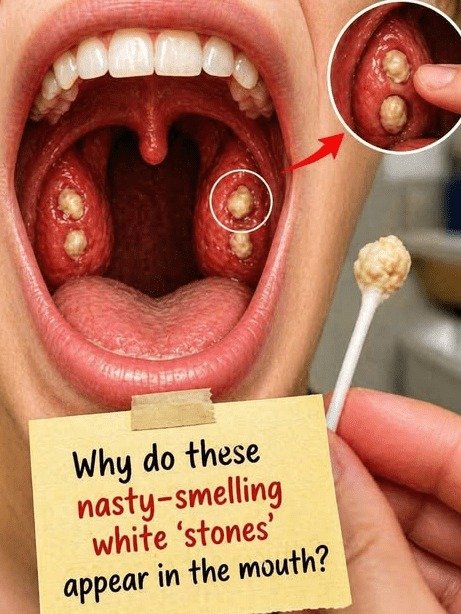
Tonsil stones, medically referred to as tonsilloliths, are tiny, solidified formations that develop within the natural folds and crypts of your tonsils.
While they might appear innocuous—just small white or yellowish specks—these seemingly harmless bits are often potent sources of strong, unpleasant odors and can lead to significant discomfort.
Understanding their formation is key:
• Microscopic food particles, shed cells, and mucus become lodged within the tiny indentations (known as tonsil crypts) on your tonsils.
• Oral bacteria then start to decompose this trapped organic matter.
• Gradually, this accumulating material undergoes calcification, solidifying into the small, distinct stones we call tonsilloliths.
But there’s more to this story…
Once these stones are lodged in your throat, they create an ideal breeding ground for specific bacteria notorious for producing foul odors. This explains precisely why traditional oral hygiene methods like brushing and flossing often fail to resolve the underlying issue.
Leading research in the field of oral health consistently highlights that tonsil stones represent a prevalent yet frequently overlooked contributor to chronic bad breath, particularly among the adult population.
Why Tonsil Stones Often Go Unnoticed
Here lies the real challenge: a significant number of individuals remain completely unaware they harbor tonsil stones.
The question is, why?
It’s primarily because the symptoms they produce are often so subtle and easily dismissed.
You might be experiencing:
• A persistent, unpleasant taste lingering in your mouth
• A sensation of something being lodged or caught in your throat
• Sporadic bouts of coughing or the need to clear your throat
• A dull ache or discomfort in your ear (a surprising symptom that can indeed radiate!)
And occasionally…
There are virtually no other noticeable symptoms—save for that inescapable bad breath.
This silent presence is particularly prevalent among older adults, where factors such as decreased saliva production and shifts in oral hygiene routines can significantly increase the likelihood of stone formation.
To illustrate just how easily these signs are misinterpreted:
| Symptom | Commonly Mistaken For |
|---|---|
| Bad breath | Poor brushing habits |
| Throat irritation | Dry throat or aging |
| Small white particles | Food debris |
| Coughing | Allergies |
Notice the recurring theme? It’s remarkably simple to misinterpret these subtle indicators for something entirely different.
The Real Reason They Cause Bad Breath
Now, let’s delve into the core reason behind their notorious odor.
Tonsil stones are far more than mere “debris”—they are dense microbial colonies teeming with bacteria specifically programmed to generate potent sulfur compounds.
It is these volatile sulfur compounds that are directly accountable for the distinctively unpleasant, often rotten-egg-like, smell.
The process unfolds like this:
• The bacteria diligently break down the organic material trapped within the stone.
• This decomposition process liberates various sulfur gases into the oral cavity.
• These potent gases then manifest as a powerful, enduring malodor.
And here’s the crucial distinction…
In contrast to superficial bad breath (which often originates from food particles or beverages like coffee), the odor from tonsil stones emanates from a much deeper region within your throat.
This fundamental difference explains why:
• Even strong mouthwashes often provide only temporary masking, failing to address the source.
• Thoroughly brushing your teeth and tongue proves ineffective at completely eradicating this deeper odor.
• The unpleasant smell tends to resurface with frustrating speed.
This cycle is precisely why many individuals experience profound frustration—they meticulously follow all the “right” hygiene practices, yet the problem stubbornly persists.
Simple Habits That May Help Reduce Tonsil Stones
Now, we arrive at the practical solutions you’ve been eager to discover.
Despite the prevalence of tonsil stones, integrating a few straightforward habits into your daily routine can significantly help in minimizing their formation and accumulation.
Begin by incorporating these effective strategies:
Daily Care Routine
• Make it a habit to gargle with warm salt water at least once, preferably twice, each day.
• Ensure you maintain excellent hydration throughout the day to promote consistent saliva flow.
• Gently brush your tongue every time you brush your teeth, focusing on the back.
• Consider using a water flosser with caution around the tonsil area to dislodge debris.
However, it’s crucial to understand that…
Consistency in your approach far outweighs intensity. Gentle, regular daily habits will yield much better results than sporadic, aggressive attempts at cleaning.
Lifestyle Adjustments
• Experiment with reducing dairy intake if you observe an increase in mucus production.
• Completely avoid smoking, as it severely dehydrates the mouth and exacerbates debris buildup.
• Incorporate crunchy fruits and vegetables into your diet, as their fibrous nature can aid in natural oral cleansing.
When to Seek Further Attention
It’s important to be vigilant if you consistently notice:
• The recurring presence of tonsil stones.
• A growing sense of discomfort or irritation in your throat.
• Bad breath that persists relentlessly, even with diligent oral hygiene practices.
In such cases, it would be wise to consult a qualified healthcare professional who can offer personalized guidance and explore further options.
When Should You Be Concerned?
To be unequivocally clear—tonsil stones, in most instances, do not pose a serious health threat.
Nevertheless, there are specific circumstances under which their presence absolutely should not be overlooked.
Keep a vigilant eye out for:
• Any noticeable pain or difficulty when swallowing.
• Persistent swelling or inflammation in your throat region.
• A history of recurrent throat infections.
• The development of unusually large or frequently reappearing stones.
The undeniable truth is…
Your body possesses an incredible ability to provide subtle warning signals long before more significant health concerns emerge. Heeding these early alerts can spare you considerable discomfort down the line.
Final Thoughts: Don’t Ignore the Small Signs
Persistent bad breath isn’t always a simple matter of brushing more vigorously or opting for a stronger mouthwash.
Often, the root cause lies much deeper, silently accumulating and developing over an extended period.
Tonsil stones stand out as one of the most frequently overlooked yet significant culprits in this scenario.
But here’s the encouraging news:
By cultivating a basic understanding and integrating a few minor daily habits, a vast number of individuals experience remarkable improvements in both their physical comfort and personal confidence.
Remember that intriguing “open loop” we presented at the very beginning?
The profound truth is this: often, the smallest, most inconspicuous elements within your body are responsible for generating the greatest discomfort—yet, paradoxically, they also tend to be the simplest to address once you fully grasp their nature and mechanisms.
Frequently Asked Questions (FAQ)
1. Are tonsil stones a common occurrence for older adults?
Indeed, they are. As we age, natural shifts in saliva production and the overall oral environment can create conditions that make the accumulation of tonsil stones more probable.
2. Is it possible to remove tonsil stones by simply brushing your teeth?
No, not directly. While brushing is essential for general oral hygiene, tonsil stones develop in deeper recesses of the throat, beyond the reach of a toothbrush.
3. Do tonsil stones invariably lead to bad breath?
While not every tonsil stone causes bad breath, they are a notably common and often hidden underlying reason for persistent, unpleasant oral odor.
Disclaimer
Please note: This article is intended solely for informational purposes and should not be considered a substitute for professional medical advice. Should you be experiencing persistent symptoms or discomfort, it is highly recommended to consult a qualified healthcare provider for an accurate diagnosis and appropriate treatment.