 By admin
 Ever noticed a tiny red dot pop up on your skin and wondered, ‘What *is* that?’ You’re not alone. While most of these mysterious little spots are completely benign, some can be crucial signals from your body, hinting at an underlying health issue that absolutely shouldn’t be overlooked. This comprehensive guide will demystify the most common culprits behind those red dots, explain what each type signifies, and most importantly, tell you exactly when it’s time to seek professional medical advice.
Common Causes of Red Dots on the Skin
1. Cherry Angiomas (Benign Red Moles)
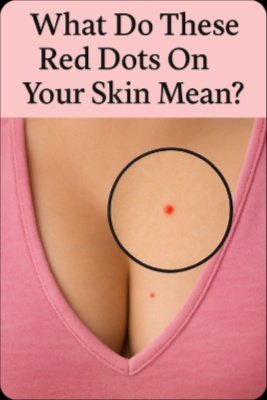
Among the most frequently observed culprits behind those small, vivid red dots are cherry angiomas. These utterly benign growths are essentially clusters of minute blood vessels and commonly make their debut on areas like the chest, arms, or back.
Distinctive characteristics to look for include:
- A striking bright red or even purple hue
- A typically small, perfectly round form
- The reassuring fact that they are usually painless
👉 Generally speaking, these pose no health risk and do not necessitate medical intervention unless you choose removal for aesthetic preferences.
2. Petechiae (Tiny Blood Spots)
Next, we have petechiae, which manifest as minute red or purple spots, indicating minuscule bleeding directly beneath the skin’s surface. These can emerge quite suddenly and might be connected to anything from a slight injury to a more significant underlying health concern.
Potential triggers for petechiae include:
- Periods of intense straining, such as from vigorous coughing or vomiting
- Reactions to specific types of medications
- Various infectious diseases
⚠️ It’s crucial to seek immediate medical attention if you observe petechiae rapidly spreading or if they are accompanied by a fever, as these could signal a more serious condition.
3. Heat Rash
Often a summer nuisance, heat rash develops when sweat becomes trapped beneath the skin’s surface, resulting in the formation of numerous small, irritated red bumps.
Telltale signs of heat rash typically involve:
- An uncomfortable itchy or prickly sensation on the skin
- Distinctive clusters of tiny red spots
- Its frequent occurrence in hot, oppressively humid environments
👉 Fortunately, this condition commonly resolves itself simply by cooling down the affected area and maintaining good personal hygiene.
4. Allergic Reactions
Those bothersome red spots could also be a clear indication of an allergic reaction, sparked by anything from certain foods to specific skincare products or even common environmental irritants.
Keep an eye out for these accompanying symptoms:
- Persistent itching
- Noticeable swelling in the affected area
- The appearance of raised, itchy welts known as hives
👉 The most effective approach to managing allergic reactions is to pinpoint and then diligently steer clear of the offending trigger.
5. Acne or Inflamed Pores
In many instances, those red dots are nothing more than inflamed hair follicles or a mild manifestation of acne breakouts.
These commonly appear on areas like the:
- Chest
- Back
- Face
👉 With a consistent and appropriate skincare routine, these blemishes typically show significant improvement.
6. Insect Bites
Unwanted encounters with insects often result in small, red, and intensely itchy dots appearing on the skin.
Key indicators of insect bites include:
- Their abrupt and often unexpected emergence
- Accompanying itching or localized swelling
- A tendency to appear on areas of the body that are exposed to the elements
When Should You Be Concerned?
While the vast majority of red dots are benign and pose no threat, it is absolutely essential to seek medical consultation if you observe any of the following concerning signs:
- A sudden or rapid proliferation in their quantity
- The development of pain, bleeding, or an intensifying itch
- Any additional troubling symptoms, such as fever, persistent fatigue, or unexplained bruising
- Spots that stubbornly refuse to fade or exhibit concerning changes in their shape or texture
Prompt medical evaluation can be instrumental in identifying and ruling out potentially serious underlying conditions, including various infections or blood disorders.
How to Treat Red Dots on Skin
The appropriate course of treatment for red dots on your skin is entirely contingent on their underlying cause:
- For Cherry Angiomas: Typically, no medical treatment is necessary, though cosmetic removal is an option for those who prefer it.
- For Heat Rash: Focus on keeping cool and opting for loose, breathable clothing to alleviate symptoms.
- For Allergic Reactions: Antihistamines can help, but the most effective strategy is to identify and rigorously avoid the specific triggers.
- For Acne: Implementing a consistent routine with gentle, appropriate skincare products is key to improvement.
- For Insect Bites: Over-the-counter anti-itch creams can provide significant relief from discomfort.
Final Thoughts
Ultimately, while the majority of red dots appearing on your skin are entirely benign, it’s vital to remember that some can indeed be tell-tale signs of deeper, underlying health concerns. Cultivating a keen awareness of their distinct appearance, precise location, and any accompanying symptoms is absolutely crucial for accurately interpreting their significance.
When in doubt or facing any uncertainty, the wisest course of action is always to consult with a qualified healthcare professional. This is especially true if you notice these spots evolving, changing, or worsening over a period of time.