 By admin
 Unmasking the Viral Leaf’s Secret
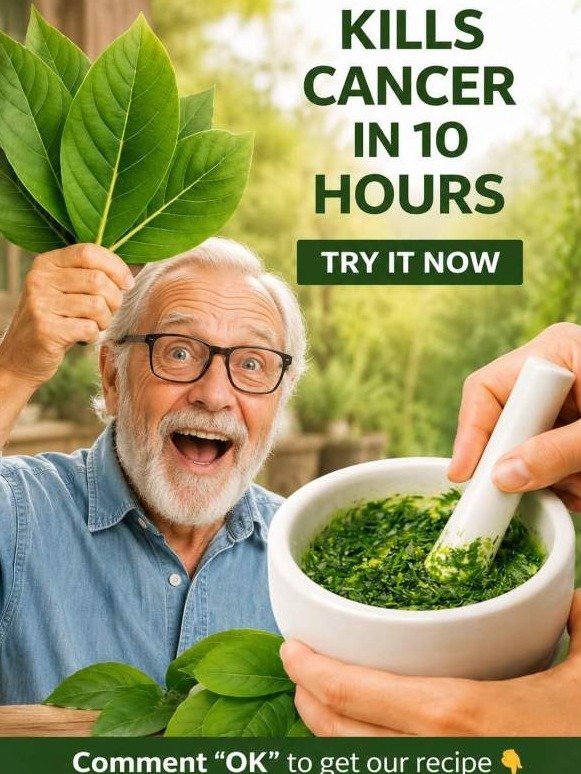
What if a simple green leaf held the key to fighting cancer? The internet is buzzing with claims about the graviola leaf, often touted as a miracle worker that “kills cancer in 10 hours.” This bold assertion echoes across social media, overshadowing the nuanced scientific reality, yet its rapid spread is fueled by a simple truth: these leaves are packed with potent acetogenins and other active compounds that dramatically impact cell activity in a controlled lab environment.
Take a moment to crush a graviola leaf between your fingers, and you’ll notice that distinctive, slightly sharp, earthy aroma that lingers on your skin. However, once these compounds enter the human body, they don’t magically eradicate disease; instead, they interact with complex cellular systems, much like fine sand strategically introduced into the intricate gears of a machine.
But here’s the critical twist: that’s merely the surface-level narrative. The crucial detail most people overlook is the monumental difference between a promising test-tube observation and its actual impact within a living, breathing organism.
The Magnetic Allure of the Miracle Headline
Within the sterile confines of a petri dish, researchers can meticulously observe how specific plant compounds interfere with and even disrupt cancer cells under perfectly controlled laboratory settings. This precisely where the captivating, yet often misleading, viral narrative originates: a single, compelling observation is frequently amplified into the sensational promise of a universal miracle cure.
However, it’s crucial to understand that a lab dish bears little resemblance to the intricate complexity of a human bloodstream. It doesn’t account for a liver metabolizing compounds, nor a tumor embedded within a network of blood vessels, nor the vigilant human immune system striving to maintain the body’s delicate balance. A petri dish is a simplistic, artificial stage; the human body, in contrast, is a bustling, dynamic city, complete with its own complex traffic, protective barriers, waste disposal systems, and an incessant symphony of chemical interactions.
The vast majority of people are content to merely skim the captivating headline. But for those who venture beyond the sensationalism, a deeper question emerges: why does a groundbreaking result in a dish so rarely translate into a comprehensive, real-world treatment? This is precisely where the true story begins to reveal its uncomfortable, yet essential, complexities.
Graviola’s True Capabilities – And Its Hard Limits
Indeed, the graviola leaf contains a remarkable arsenal of molecular compounds that effectively act as “scavengers,” helping to combat harmful oxidative stress within the body. This protective quality is precisely why it has been a favored ingredient among herbal tea enthusiasts for generations. However, it’s vital to recognize that oxidative stress represents just one facet of the multifaceted challenge that is cancer. Addressing it does not equate to a definitive cancer cure, nor does it magically transform a humble leaf into an impenetrable medical shield.
To grasp this distinction, imagine your body’s cells as a kitchen perpetually coated in layers of greasy smoke after years of intense frying. While a diligent cleaner can certainly wipe down the countertops, their efforts won’t magically rebuild faulty wiring, replace a broken stove, or repair a malfunctioning fire alarm all at once. The problem is far more complex than a simple cleanup.
This analogy perfectly illustrates the immense chasm separating an “interesting compound” observed in a lab from a viable, comprehensive “cancer treatment” in the human body. Our bodies are incredibly sophisticated systems that metabolize, modify, and often diminish many of the dramatic effects witnessed in isolated cell cultures. This fundamental biological reality is why the next crucial question we must ask holds far more weight than any sensational headline ever could.
The Critical Information Ignored by Viral Claims
Here’s the stark, undeniable fact that viral posts consistently omit: there are currently zero clinical trials, not a single one, that unequivocally demonstrate graviola leaf’s ability to destroy cancer cells in human beings. This means no credible scientific evidence exists to bridge the vast chasm between a social media promise and a proven medical reality.
This glaring absence of human clinical data is precisely why the burgeoning “wellness machine” eagerly propagates such narratives. It skillfully markets a potent dose of hope, conveniently sidestepping the rigorous scrutiny and difficult questions that true medical advancements demand. A catchy post about a “miracle leaf” can effortlessly garner millions of shares in a single afternoon, whereas the development of an actual, effective cancer treatment involves years of painstaking research, countless failures, and irrefutable, peer-reviewed proof. Imagine trying to condense that arduous, often unglamorous, journey into a flashy, shareable graphic – the immediate excitement would undoubtedly vanish.
The uncomfortable, yet undeniable, reality is this: the most seemingly effortless and inexpensive “solutions” frequently attract the loudest, most enthusiastic hype, accompanied by the least transparent and honest explanations.
The Deep Emotional Resonance of a Desperate Hope
The persistent allure of such claims isn’t rooted in scientific fact, but in raw human emotion. When individuals are consumed by fear, utterly exhausted, or helplessly witnessing a beloved family member battle a relentless disease, the prospect of a humble leaf presented as a covert weapon against illness feels like a sudden, luminous doorway opening in an otherwise impenetrable, locked room of despair.
In those moments, it’s easy to almost perceive the gentle clink of a spoon against a cup, to inhale the warm, earthy aroma of bitter tea rising in soft tendrils of steam, and to wholeheartedly embrace the powerful hope that perhaps, just perhaps, this single green entity holds the long-sought answer. This profound sense of hope is undeniably authentic and deeply human. However, the specific, exaggerated claim attached to it – that it cures cancer – unfortunately, is not.
Instead, what graviola genuinely *might* offer is a far more modest proposition: general wellness support. It is emphatically not a miracle cure, nor a substitute for conventional medical treatment, nor a justifiable reason to gamble when confronting a serious, life-threatening disease. Nevertheless, the leaf still possesses a legitimate place in wellness practices, albeit a role that is considerably more understated, less dramatic, and far more ordinary than the sensational narratives propagated across the internet would lead you to believe.
The Body’s Genuine, Subtler Reactions
When individuals integrate herbal remedies into their routine, the initial experience is rarely a dramatic, transformative internal purge. Instead, what most people observe is a far more subtle and gradual shift: the comforting ritual of preparing a tea, the distinctive bitter note on the tongue, and a profound sense of actively engaging in proactive self-care for their physical well-being.
This subtle engagement can indeed hold significant value. The active compounds found in graviola can function much like effective fire-smothering agents, helping to combat the damaging effects of oxidative stress and potentially assisting in maintaining a more balanced inflammatory response within the body. However, these beneficial effects operate quietly, as background players within the grand, intricate symphony of the body’s overall physiological system. They are certainly not a powerful wrecking ball designed to dismantle and destroy cancer itself.
Consider it akin to pouring a single bucket of water onto one small, smoldering corner of a vast, burning roof. Is it helpful? Absolutely, to some extent. Is it, however, sufficient on its own to miraculously save the entire house from destruction? Not even remotely close.
The deeper your comprehension of this fundamental distinction, the clearer and more grounded the true discussion surrounding graviola becomes. The core question isn’t whether the leaf contains beneficial compounds; rather, it hinges entirely on what those compounds are genuinely capable of achieving once they interact with the complex, dynamic environment of the human body.
Embracing Responsible Exploration
When approached with caution and used responsibly, graviola leaf tea aligns perfectly with the tradition of countless other herbal infusions: it’s a distinctive, often bitter and earthy beverage that individuals choose for a straightforward wellness ritual. Many turn to it seeking digestive comfort, some for a perceived boost to their immune system, and others simply because the act of holding a steaming cup provides a profound sense of calm and rejuvenation.
This is the authentic and honest perspective. While graviola leaves can indeed play a supporting role within a comprehensive regimen of self-care, the narrative takes a dangerous and misleading turn the instant anyone asserts that this plant eradicates cancer cells in humans. At that point, the story veers wildly off course from scientific reality.
Your invaluable body merits far more than the fleeting promise of a viral shortcut. It demands unvarnished truth, and while truth might often be less sensational and glamorous than a catchy headline, it is immeasurably more potent and beneficial when facing genuine, life-altering health challenges.
A Crucial P.S. That Transforms Everything
There’s a surprisingly common preparation habit that inadvertently sabotages the potential benefits of graviola long before the tea even reaches your lips: aggressively boiling the leaves until the resulting liquid becomes excessively dark, intensely bitter, and develops a distinctly scorched taste. This intense, prolonged heat can actually degrade and render inert the very delicate compounds people mistakenly believe they are meticulously extracting and preserving.
However, keep a vital next step in mind, because the true, transformative impact of graviola might not solely reside in the leaf itself, but rather in what you choose to combine it with – indeed, a single, carefully chosen ingredient has the potential to completely rewrite the entire narrative.
This article is intended strictly for informational purposes and should not, under any circumstances, be considered a substitute for professional medical advice. Always consult with your qualified healthcare provider for personalized guidance and treatment plans.