 By admin
 Exploring Garlic’s Antibacterial Prowess: Separating Fact from Fiction on the ’14 Bacteria and 13 Infections’ Claim
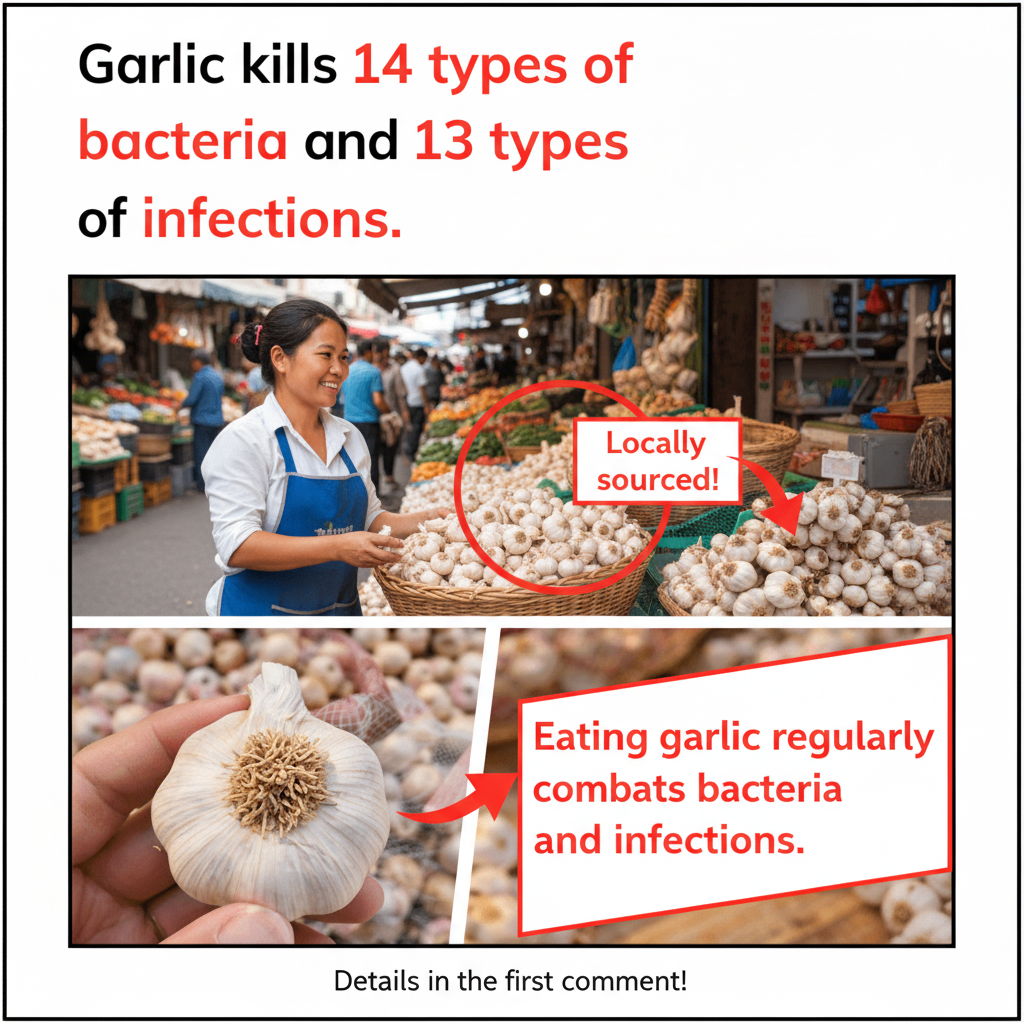
In the quest for natural wellness solutions, many individuals explore common kitchen staples for their potential health benefits. Among these, garlic frequently emerges as a frontrunner, particularly due to widespread online assertions about its ability to combat a precise number of bacteria and infections. You’ve likely encountered viral content proclaiming that “garlic eliminates 14 types of bacteria and 13 types of infections,” often accompanied by compelling visuals of fresh garlic bulbs. But how much scientific rigor supports these popular claims, and how much is simply anecdotal buzz?
Indeed, garlic has captivated scientific interest for many years, owing to its rich array of natural compounds. Research has consistently demonstrated encouraging antimicrobial effects in controlled laboratory environments. Nevertheless, the specific figures—exactly 14 bacteria and 13 infections—are conspicuously absent from reputable scientific literature or comprehensive studies. This article aims to clarify the genuine scientific understanding of garlic’s potential role in bolstering health through its antibacterial properties, empowering you to make well-informed decisions for your daily dietary and wellness practices.
Unlocking Garlic’s Power: The Science Behind Allicin and Its Compounds
The distinctive pungent aroma and many of the celebrated effects of fresh garlic are primarily attributed to a potent compound called allicin. This remarkable substance is not present in whole, intact garlic; rather, it’s formed when garlic is crushed, chopped, or otherwise damaged. An enzyme known as alliinase then transforms alliin, a precursor compound, into allicin. Alongside allicin, other sulfur-containing compounds like ajoene, diallyl sulfides, and vinyldithiins also contribute significantly to garlic’s extensive antimicrobial capabilities.
Scientific investigations reveal that allicin exerts its effects by engaging with thiol groups—sulfur-containing components—found within bacterial enzymes and proteins. This crucial interaction can severely impede vital bacterial functions, including energy generation, DNA synthesis, and the maintenance of cell wall integrity. Numerous studies, including comprehensive reviews in respected scientific journals, have confirmed allicin’s efficacy against a diverse spectrum of Gram-positive and Gram-negative bacteria in controlled laboratory (in vitro) settings.
However, it’s vital to underscore a critical distinction: while garlic compounds undeniably demonstrate inhibitory actions under controlled lab conditions, this does not directly equate to “eradicating” a specific, fixed number of bacterial strains or curing infections within the complex human body. The specific assertion of “14 bacteria and 13 infections” appears to originate from viral social media content rather than rigorous, peer-reviewed scientific research; no substantial study has ever validated these exact figures.
What Scientific Research Reveals About Garlic’s Antibacterial Efficacy
Extensive laboratory-based investigations have rigorously evaluated garlic extracts and their constituents against a wide array of bacterial species. For instance, allicin has consistently exhibited demonstrable activity against prevalent pathogenic strains such as Escherichia coli, Staphylococcus aureus, Salmonella, and Streptococcus, among others. Furthermore, some cutting-edge research is exploring garlic’s potential impact on multidrug-resistant bacteria, a field of increasing global concern.
Beyond bacteria, various garlic preparations have also been the subject of in vitro studies for their activity against specific fungi, parasites, and even certain viruses. A significant comprehensive review underscored garlic’s broad-spectrum potential, confirming its effectiveness against both Gram-positive and Gram-negative bacteria, encompassing genera like Escherichia, Salmonella, Staphylococcus, and Helicobacter. Other research has focused on its inhibitory effects on oral bacteria or common foodborne pathogens, with varying degrees of success observed depending on factors such as concentration and the method of preparation.
It is crucial to note that the efficacy of garlic can fluctuate significantly based on its form—whether it is fresh, aged, prepared as a water or alcohol extract, or subjected to heat, which is known to diminish allicin levels. Typically, freshly crushed garlic demonstrates more potent effects in these tests due to its higher allicin content. Once again, the precise figures of “14” and “13” do not align with any scientifically documented lists from credible sources. Instead, garlic’s antimicrobial effects are accurately characterized as broad-ranging yet variable, rather than confined to a fixed, exact enumeration.
Garlic’s Role in Daily Wellness: Broader Benefits Beyond Direct Antimicrobial Action
While it is imperative to state that garlic cannot be definitively claimed to cure or treat any specific medical condition, integrating it regularly into your diet can contribute to overall health and wellness in straightforward, beneficial ways. Beyond its distinct flavor, garlic has a long history of traditional use in supporting immune function and promoting general well-being.
Contemporary research points to several potential health advantages associated with consistent garlic consumption:
- Cardiovascular Health Support: Its antioxidant properties may play a role in maintaining heart and circulatory health.
- Gut Microbiome Balance: Garlic’s influence on microbial communities might contribute to a healthier, more balanced gut environment.
- Natural Food Preservation: Its inherent antimicrobial qualities have historically been utilized in certain food preservation methods.
It is important to remember that these potential benefits are derived from moderate, consistent consumption as part of a diverse and balanced diet, rather than relying on garlic as a sole or primary therapeutic solution.
Simple Ways to Incorporate More Garlic into Your Daily Diet
For those eager to harness garlic’s natural properties and enhance their culinary creations, here are some straightforward, everyday tips:
- Maximize Allicin by Crushing Fresh: To unlock the highest concentration of beneficial allicin, finely chop or crush fresh garlic cloves. Allow the crushed garlic to sit for 10-15 minutes before cooking or consuming. This resting period facilitates the enzymatic reaction that forms allicin.
- Include in Diverse Dishes: Add minced or sliced garlic to stir-fries, pasta sauces, soups, stews, and marinades. Its robust flavor complements a vast range of cuisines.
- Make Garlic-Infused Oils: Create your own garlic-infused olive oil for dressings or cooking, but remember to refrigerate it and use it within a few days to prevent bacterial growth.
- Roast for a Milder Flavor: Roasting whole garlic cloves sweetens their flavor, making them a delicious addition to roasted vegetables or spread on crusty bread.
- Use in Dressings and Dips: Freshly minced garlic can elevate homemade salad dressings, hummus, or yogurt-based dips.
By thoughtfully incorporating fresh garlic into your meals, you can enjoy its unique flavor and potential health-supporting attributes as part of a holistic approach to well-being.