 By admin
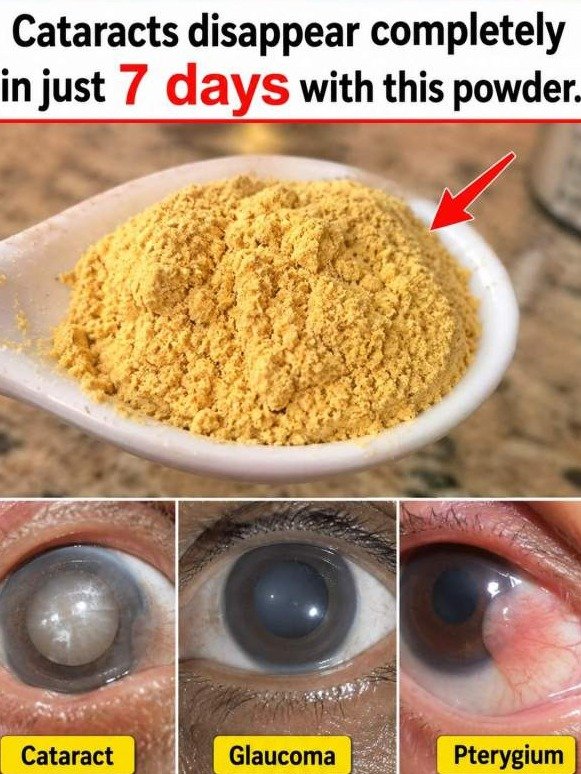
 That white powder in the spoon may be promoted as a way to improve cloudy vision, reduce glare, or support the eye’s lens. But before trying any home remedy, it is important to understand what cataracts are—and what science has, and has not, shown about powders or supplements.
Cataracts develop when the normally clear lens inside the eye becomes cloudy. Instead of allowing light to pass through cleanly, the lens scatters it, making headlights appear smeared, bright scenes uncomfortable, and familiar faces harder to recognize.
That is why reading a label under ordinary kitchen lighting can become frustrating. The letters may look hazy, the room may seem unusually bright, and your eyes may feel strained after trying to focus for too long.
Cataracts are more than simply “old eyes.” They are a gradual change in the lens caused by aging and other risk factors, including diabetes, smoking, certain medications, previous eye injuries, and prolonged ultraviolet exposure. Although some nutrients support overall eye health, there is no reliable evidence that a kitchen powder can dissolve or reverse an established cataract.
The more important question is what the eyes may be lacking, whether another condition is contributing to the blur, and when an eye examination is needed.
What Happens Inside a Cloudy Lens
The lens is living tissue that changes over time. Age-related chemical changes, oxidative stress, and other health factors can cause its proteins to clump together, gradually making the lens stiffer, yellower, and less transparent.
Think of an old porch-light cover that has turned amber after years outdoors. The bulb may still work, but the light becomes weaker, duller, and distorted. A cataract affects vision in a similar way: light still enters the eye, but it no longer travels through the lens with the same clarity.
Many supplements and natural products are marketed as internal “cleansers,” but marketing language is not the same as clinical evidence. No powder has been proven to scrub away a cataract or restore a cloudy lens to its original transparency. An eye-care professional can determine whether the symptoms are caused by cataracts, dry eye, a change in prescription, glaucoma, retinal disease, or another problem.
That evaluation matters because delaying appropriate care can allow a treatable vision problem to worsen. Cataract surgery is not automatically necessary for every person with an early cataract, but it remains the established treatment when cloudy vision begins interfering with reading, driving, work, or daily activities.
It is easy to dismiss worsening vision as a normal part of aging. However, persistent glare, faded colors, double vision in one eye, frequent prescription changes, or difficulty seeing at night deserve more than a guess about a home remedy.
Early changes may appear subtle. You might squint less with brighter lighting, move a phone closer to your face, or notice that sunlight reflecting from pavement feels unusually harsh. These signs should be discussed with an optometrist or ophthalmologist rather than used to judge whether a powder is working.
Once the cause of the blur is identified, the next step becomes clearer—and it may involve updated glasses, treatment for another eye condition, lifestyle changes, or a conversation about cataract surgery.
Why Women May Notice Cataract Symptoms in Everyday Tasks
Many women first recognize changing vision during routine activities at home. A recipe card may seem harder to read, measuring marks may blur, or a familiar room may appear covered by a thin veil.
When the underlying cause is addressed, those tasks may become easier. Text can appear steadier with the right prescription, glare may be managed more effectively, and a professional treatment plan can help restore confidence in daily activities.
The difference between struggling with visual strain and receiving appropriate care can be practical rather than dramatic. Better lighting, updated glasses, treatment for dry eye, and regular examinations may all help—depending on the diagnosis.
A cloudy lens can be compared with a bathroom mirror coated in residue: simply wiping the surrounding frame will not remove the material obscuring the reflection. Likewise, applying an unproven remedy does not mean that a cataract has been cleared. Cataracts form inside the eye and should be assessed by a qualified eye-care professional.
Clearer vision can affect much more than reading. It may influence mobility, confidence, balance, independence, and the ability to move through the day without anticipating the next visual mistake.
Why Glare Shows Up in the Dashboard, Garage, and Driveway
Many men notice cataract-related changes while moving through dim or high-glare environments: dashboard lights may bloom at dusk, tools may disappear into garage shadows, and the edges of a driveway may seem less distinct.
These symptoms can occur because a cloudy lens scatters incoming light. As a result, the dashboard may look washed out, small objects may be harder to distinguish, and nighttime driving may feel more like estimating than seeing.
That change can affect confidence before it obviously limits independence. Difficulty spotting a curb, judging a stair, or recognizing a grandchild across the room is a reason to schedule an eye examination—not a reason to rely on a powder that has not been clinically proven to reverse cataracts.
There is also a practical concern that begins in the kitchen before any supplement is taken: preparation can affect safety and consistency. Heat may damage some ingredients, while mixing products into very hot drinks can change their properties. More importantly, supplements can interact with medications or be unsuitable for people with certain medical conditions.
The key decision is therefore not simply what to take or what to mix with it. It is whether the product has credible evidence, whether it is safe for you, and whether it could delay diagnosis or treatment. Protecting the eyes also includes wearing UV-protective sunglasses, controlling diabetes and blood pressure, avoiding smoking, and attending regular eye examinations.
This article is for informational purposes only and does not replace professional medical advice. No powder or supplement should be used to treat cataracts without guidance from a qualified healthcare professional. Seek prompt medical care for sudden vision loss, severe eye pain, flashes, or a sudden increase in floaters.