 By admin
 Black Spots on Your Onions? It’s Not Dirt – Here’s What It Is and How to Handle It Safely
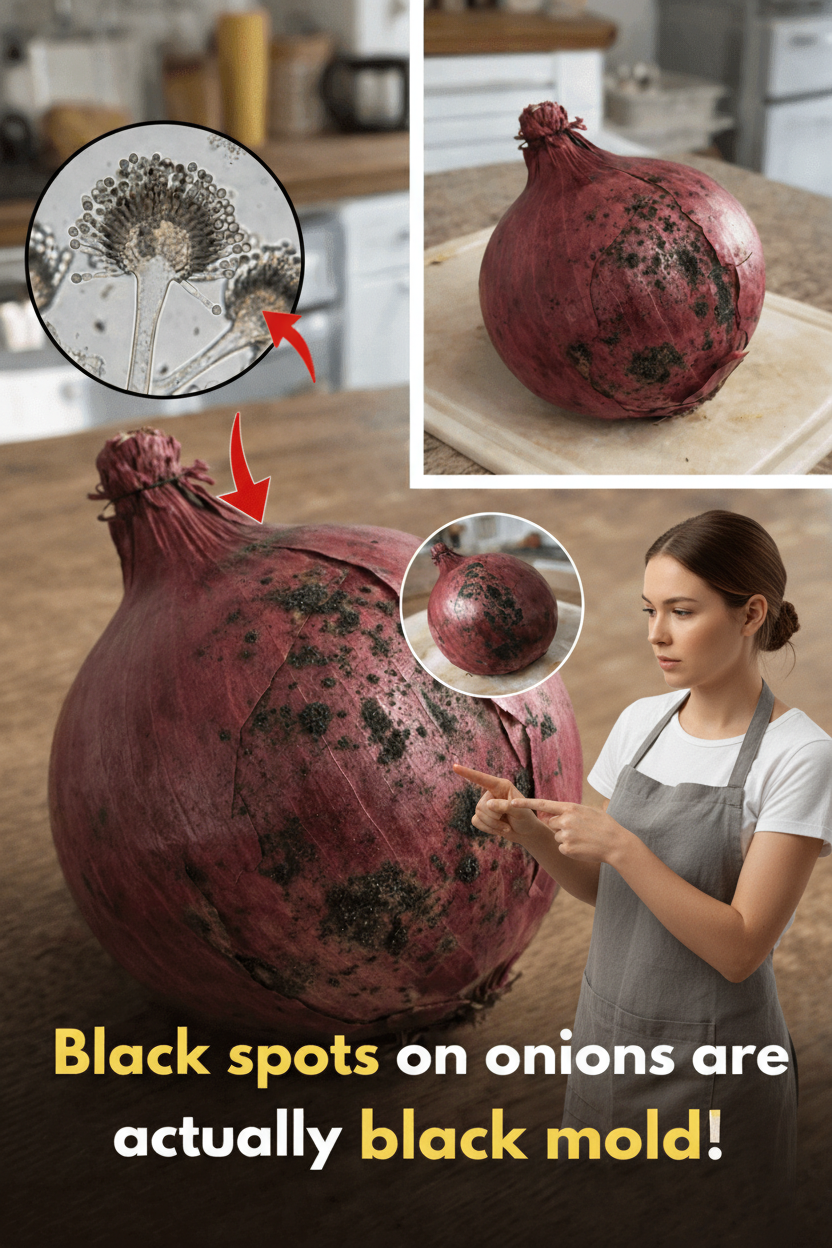
It’s a common kitchen scenario: you reach for an onion, only to discover perplexing black, powdery spots clinging to its papery skin. Many home cooks instinctively rub at these marks, dismissing them as stubborn garden dirt that simply won’t rinse away, before continuing with their meal preparation. However, that dark residue is far from harmless soil; it’s actually a widespread fungal growth known as Aspergillus niger, frequently appearing as black mold after harvest. The frustration often escalates when you realize your onions are spoiling prematurely, especially in warm, humid kitchen environments. No one wants to waste valuable produce or second-guess the safety of every bulb they use.
The good news is that understanding this common issue empowers you to identify it early, salvage what’s usable, and significantly extend the freshness of your onions. Keep reading, as we’ll soon reveal practical storage techniques that can make a substantial difference in preventing this from recurring.
Understanding Black Mold on Onions
The culprit behind those unsettling black patches on your onions is a fungus scientifically identified as Aspergillus niger. This ubiquitous organism naturally inhabits soils, floats in the air, and thrives on decomposing plant matter across the globe. Experts, including those from the University of California Statewide Integrated Pest Management Program (UC IPM), confirm its prevalence predominantly as a post-harvest issue. This particular fungus flourishes in environments characterized by warmth, high humidity, and inadequate air circulation.
It frequently initiates growth near damaged areas or the neck of the onion, where moisture tends to accumulate. What manifests as dusty black specks or streaks is, in fact, a dense aggregation of microscopic spores. These spores impart the distinct sooty appearance often misidentified as mere grime. Studies indicate that A. niger is particularly common in onions cultivated or stored in warmer climates, underscoring its nature as primarily a storage-related concern rather than a field disease. Crucially, this mold typically confines itself to the onion’s dry, outer papery layers initially, highlighting the importance of thorough inspection.
Why Does This Fungus Appear on Your Onions?
Several environmental and handling factors create the ideal breeding ground for Aspergillus niger to flourish:
- Elevated Humidity and Warmth: The fungus thrives in temperatures ranging from approximately 82–93°F (28–34°C). Furthermore, moisture is essential for 6–12 hours to initiate spore development.
- Insufficient Ventilation: Storing onions in confined spaces, such as sealed plastic bags or damp corners, traps moisture, fostering mold growth.
- Bruising or Physical Damage: Even minor injuries sustained during harvesting or handling provide easy entry points for the fungus.
- Condensation Issues: Fluctuations in temperature during transit or storage can lead to moisture accumulation between the onion’s layers, creating a favorable environment for mold.
Agricultural extension services frequently point out that onions sourced from warmer regions or those subjected to improper storage conditions are notably more susceptible to this issue. Often, the process begins even before you purchase them, underscoring that it’s rarely a reflection of your own fault.
Is It Safe to Consume Onions with Black Spots?
This is undeniably the most pressing question for many consumers. The answer largely depends on the extent of the mold’s proliferation. If the black spots are exclusively confined to the dry outer skins, and the inner bulb remains firm with no discernible off-odor, you can proceed with caution:
- Carefully peel away several layers until you expose clean, white, unblemished flesh.
- Rinse the peeled onion thoroughly under cool, running water.
- It can then be used as normal for cooking.
Food safety experts and guidelines generally confirm that mild surface mold, such as this, typically does not penetrate deep enough to compromise the edible portions of the onion. The unaffected parts are generally considered safe for most individuals.
However, it is imperative to discard the entire onion if you observe any of the following:
- The onion feels soft, slimy, or mushy to the touch.
- There is a distinct musty or otherwise unpleasant smell emanating from the bulb.
- The black discoloration has spread beyond the outer layers and into the fleshy scales of the onion.
In such instances, other harmful microbes may have infiltrated the onion, significantly elevating potential health risks. Individuals with known allergies to Aspergillus should, without exception, avoid consuming any affected onions.
A prevalent myth suggests that cooking eradicates all concerns related to mold. While heat does destroy the fungus itself, certain molds can produce mycotoxins that may persist even after cooking. Therefore, when in doubt, it is always prudent to err on the side of caution and discard the onion.
A Quick Checklist: How to Determine If Your Onion Is Still Good
Use this straightforward guide the next time you encounter black spots on your onions:
- Black spots only on outer skin? → Peel multiple layers and inspect the interior carefully.
- Firm texture, no sliminess? → Likely safe after peeling and thorough washing.
- Strong, unusual odor or softness? → Discard the entire bulb immediately.
- Mold visible beneath scales or deep streaks? → Toss it; salvaging is not recommended.
- History of mold allergies? → Completely avoid using any affected onion.
Adhering to these guidelines not only helps minimize food waste but also ensures the safety and quality of your meals.
Proactive Strategies to Prevent Black Mold on Your Onions
Preventing the emergence of black mold begins with informed selection and optimal storage practices. Here are effective strategies, grounded in agricultural extension recommendations:
- Shop Smart at the Store: Always select onions that are firm to the touch, free from any visible black spots, and have dry, intact necks.
- Proper Curing for Homegrown Onions: If you grow your own, ensure onions are thoroughly dried or ‘cured’ after harvest. This should be done in a shaded, well-ventilated area, avoiding direct high heat.
- Implement Intelligent Storage: Store onions in a cool, dark, and most importantly, dry place. Excellent air circulation is crucial. Avoid storing them in plastic bags, which trap moisture. Instead, opt for mesh bags, baskets, or open containers.
- Separate from Other Produce: Keep onions away from moisture-emitting fruits and vegetables like potatoes, which can accelerate spoilage.
- Regular Inspection: Periodically check your stored onions for any signs of spoilage or mold growth, removing affected bulbs promptly to prevent spread.
By implementing these simple yet effective measures, you can significantly reduce the likelihood of black mold affecting your onions, ensuring they remain fresh, safe, and ready for your culinary creations.