 By admin
 Could the secret to a smoother, brighter complexion be hiding right in your kitchen pantry? Social media is buzzing with talk about baking soda as a miracle skin solution, but before you jump on the bandwagon, there’s a critical truth you need to know. While this humble ingredient (sodium bicarbonate) has certainly captured attention across natural beauty blogs and viral posts, using it on your delicate facial skin requires far more caution than you might think.
It’s true that baking soda is incredibly easy to find and remarkably affordable, making it an appealing option for at-home beauty hacks. However, the skin on your face is incredibly delicate, possessing a natural balance that can be easily thrown off by harsh or inappropriate treatments.
This comprehensive guide will walk you through everything you need to understand: how baking soda truly interacts with your skin, the potential benefits some individuals experience, the significant risks involved, and crucially, the safest ways to incorporate it sparingly into a well-rounded skincare regimen.
🧴 What Is Baking Soda and How Does It ACTUALLY Work on Skin?
Baking soda, scientifically known as sodium bicarbonate, is a common household item recognized for its fine, white powdery texture and its distinctly alkaline properties. To put this into perspective, its pH typically registers between 8 and 9, which is a stark contrast to healthy skin’s natural, slightly acidic pH range of around 4.5 to 5.5.
This significant difference in pH is a crucial factor to consider—and it’s precisely why any use of baking soda on your skin must be approached with extreme caution and moderation.
When combined with liquids such as water or certain moisturizing ingredients, baking soda can exhibit several actions on the skin’s surface, potentially serving as:
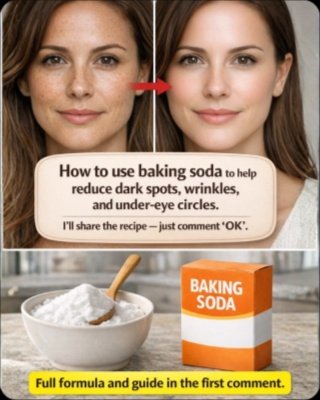
- A mild physical exfoliant, thanks to its granular texture.
- A short-term oil absorber, soaking up excess sebum.
- A superficial cleansing agent, helping to lift surface impurities.
The tiny particles present in baking soda can indeed assist in the gentle removal of dead skin cells from the outermost layer of your skin, which might temporarily contribute to a smoother, cleaner tactile sensation.
However, it is absolutely vital to have a clear understanding of its limitations:
👉 It does NOT penetrate deeply into the skin’s layers.
👉 It does NOT alter melanin production, meaning it won’t address hyperpigmentation at its source.
👉 It does NOT offer permanent solutions for wrinkles or dark spots.
Therefore, any perceived improvements or visible effects from using baking soda on your skin are almost always temporary and strictly confined to the surface.
✨ Potential Benefits Some People Report
While not a recognized dermatological treatment, some individuals choose to use baking soda for straightforward, short-term skincare purposes and often report these benefits:
1. Gentle Exfoliation
Its fine texture can help slough off dead skin cells, potentially making skin appear:
- Smoother
- Brighter
- More even in texture