 By admin
 Have you ever felt like your body is subtly changing, even when your blood pressure seems stable? Perhaps your favorite shoes feel uncomfortably tight, your face appears inexplicably puffier, or you’re battling an unusual fatigue that drains your energy by evening. It’s incredibly frustrating, even a little unsettling, when these physical shifts occur without a clear reason. While many might simply attribute these changes to the natural process of aging, the surprising truth could be much closer to home. What if the very medication you rely on daily is quietly influencing these unwelcome symptoms, and there’s a proactive way to understand and manage them without panic?
What Is Amlodipine And Why Is It Prescribed
Amlodipine stands as a widely prescribed medication, crucial for effectively managing high blood pressure and various heart-related conditions. This powerful drug is categorized as a calcium channel blocker, working by gently relaxing your blood vessels, thereby allowing blood to flow more freely and with less resistance.
For countless individuals, particularly among older demographics, Amlodipine is an indispensable tool in maintaining blood pressure within healthy, protective limits. Extensive research consistently demonstrates that medications of this class, when used correctly, are vital in significantly lowering the risk of severe cardiovascular complications.
Yet, there’s a crucial aspect many overlook:
While undeniably effective, Amlodipine can also trigger a range of side effects that are frequently either misinterpreted or completely overlooked.
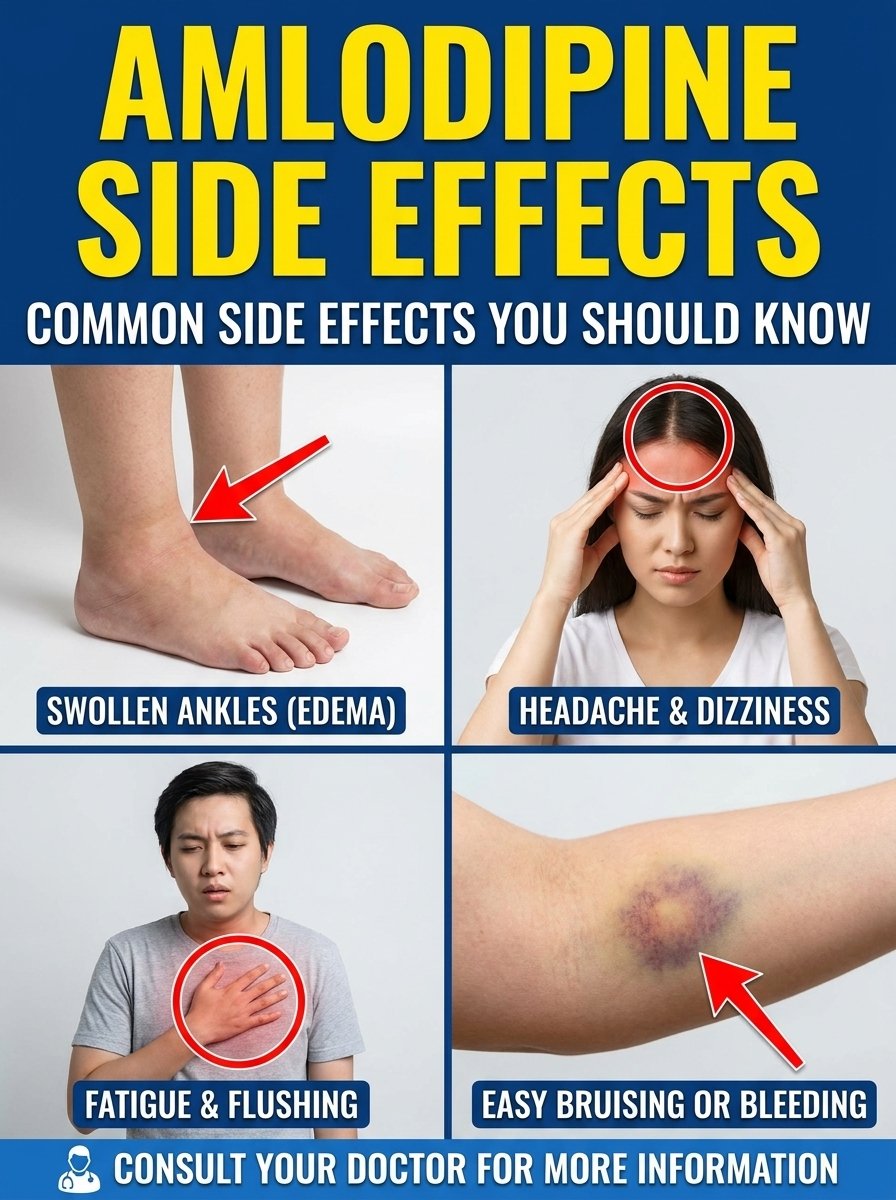
Swelling In Feet And Ankles That Sneaks Up On You
Among the most frequently reported concerns is the insidious onset of swelling in the feet and ankles.
You might start noticing tell-tale signs like your socks leaving unusually deep indentations, or your shoes feeling progressively tighter as the day wears on. This phenomenon occurs because Amlodipine can lead to a gradual accumulation of fluid, primarily in the lower extremities.
But here’s the critical point many miss:
It’s easy to dismiss this swelling, attributing it simply to the natural process of aging or prolonged periods of standing.
What you can do right away
• Make it a habit to elevate your legs for at least 20 minutes daily.
• Actively avoid sitting or standing in one position for extended durations.
• Opt for comfortable, non-restrictive footwear.
It’s crucial, however, that if this swelling intensifies, becomes painful, or spreads, you consult your doctor without delay.
Facial Puffiness And Flushing That Feels Uncomfortable
Have you ever caught a glimpse of yourself in the mirror and noticed your face appearing unexpectedly fuller, or perhaps developing a subtle redness?
Amlodipine’s mechanism involves widening blood vessels, which can sometimes manifest as facial flushing or a noticeable puffiness. While typically not a dangerous symptom, it can certainly be an uncomfortable or even embarrassing experience.
The crucial insight here is that
This particular side effect tends to become more pronounced in warmer surroundings or following periods of physical exertion.
Simple adjustments
• Ensure you maintain adequate hydration throughout the day.
• Consciously limit your exposure to excessive heat.
• Apply a cool compress to your face whenever you feel the need.
Persistent Fatigue That Drains Your Day
Constantly feeling exhausted isn’t always just a sign of getting older.
Amlodipine has the potential to lower your blood pressure a bit more than your system is accustomed to, which can result in persistent fatigue or a general sense of weakness.
The key detail many overlook is this:
You might not experience overt dizziness, but your overall energy levels can subtly yet significantly decline.
Warning signs
• A noticeable lack of motivation for daily tasks.
• Experiencing drowsiness or sleepiness throughout the daytime.
• A decrease in your usual level of physical activity.
Dizziness And Lightheaded Moments
That disorienting sensation of the room spinning or feeling lightheaded when you stand up too rapidly can be truly unsettling.
This common experience is a direct result of Amlodipine’s blood-pressure-lowering effect, and your body requires time to properly adapt to these changes.
Crucially,
Ignoring these dizzy spells can elevate your risk of falls, a particular concern for older adults.
Safety tips
• Always transition slowly when moving from a sitting or lying position to standing.
• Don’t hesitate to steady yourself by holding onto stable objects or furniture.
• Practice avoiding any abrupt or sudden movements.
Headaches That Come And Go
It’s not uncommon for individuals to report experiencing mild headaches, particularly during the initial phase of starting Amlodipine.
These headaches are typically transient and are connected to the shifts in blood flow within your body.
The encouraging news is that
This symptom frequently subsides as your system becomes accustomed to the medication.
Helpful habits
• Ensure you consume an adequate amount of water daily.
• Strive to maintain a consistent and regular sleep schedule.
• Consider reducing your caffeine intake if you notice your headaches becoming more severe.
Heart Palpitations Or Rapid Heartbeat
You might occasionally become aware of your heart beating with unusual speed or an irregular rhythm.
While this sensation can certainly be alarming, it’s sometimes a direct reflection of how your body is adjusting to the medication.
However,
A vital point to remember is that if these palpitations occur frequently, become intensely noticeable, or are accompanied by other symptoms, they absolutely should not be dismissed.
Nausea And Digestive Discomfort
A subset of individuals may experience mild nausea or a reduction in appetite.
While typically not severe, these digestive disturbances can undeniably impact your overall daily comfort and well-being.
Quick relief ideas
• Opt for smaller, more frequent meals throughout the day.
• Steer clear of overly greasy or heavy foods.
• Continue to prioritize staying well-hydrated.
Gum Swelling And Oral Changes
This particular side effect often catches people by surprise.
In certain instances, Amlodipine has been known to induce gum swelling or even an overgrowth of gum tissue.
The stark reality is that
Inadequate oral hygiene practices can significantly exacerbate this condition.
What helps
• Commit to brushing your teeth thoroughly twice every day.
• Make regular flossing an integral part of your routine.
• Ensure you visit your dentist for comprehensive routine checkups.
Skin Reactions Or Itching
A few individuals might notice mild skin reactions, such as an irritating itch or patches of redness.
While these are generally minor occurrences, it’s always wise to monitor them carefully.
Should the reaction begin to spread, intensify, or become severe, it is imperative to seek professional medical advice without delay.
Sleep Disturbances You Did Not Expect
Sleep disturbances are a frequently overlooked symptom.
You might discover yourself struggling more than usual to fall asleep or to maintain a restful sleep throughout the night.
And here’s the critical connection:
Inadequate or poor-quality sleep can unfortunately intensify other existing symptoms, including persistent fatigue and unwelcome mood fluctuations.
Mood Changes Or Mild Anxiety
A smaller number of individuals have reported experiencing subtle feelings of anxiety or a general sense of being emotionally “off.”
Although this isn’t among the most common side effects, it’s certainly a symptom that warrants your attention.
Remember, your mental well-being holds equal importance to your physical health.
Rare But Serious Signs You Should Not Ignore
Now, let’s talk about something critically important:
While thankfully rare, certain symptoms demand your immediate and urgent medical attention
• Intense chest discomfort or pain.
• Significant difficulty with breathing.
• Swelling that is extreme or rapidly worsening.
• Episodes of fainting or loss of consciousness.
It is absolutely crucial that you do not delay or attempt to “push through” any of these alarming signs.
Quick Comparison Table To Understand Better
| Symptom | Common Or Rare | What To Watch |
|---|---|---|
| Swelling feet | Common | Worsening daily |
| Fatigue | Common | Persistent low energy |
| Dizziness | Common | Risk of falling |
| Palpitations | Less common | Frequent episodes |
| Severe symptoms | Rare | Seek help immediately |
Practical Daily Habits To Stay In Control
This section empowers you to actively take charge of your well-being.
By incorporating these straightforward daily habits, you can better manage your experience:
• Consistently take your medication at the exact same time each day.
• Make a habit of monitoring your blood pressure regularly.
• Engage in light physical activity, such as daily walking.
• Consciously reduce your intake of salt.
• Maintain a detailed journal to track any symptoms you experience.
Health research consistently highlights that even minor lifestyle modifications can profoundly enhance your body’s response to medication.
Final Thoughts
Ultimately, Amlodipine serves as a valuable ally in managing your health, but it’s essential to remember that your body is constantly communicating.
Never dismiss those subtle signals when something feels amiss. The sooner you recognize and address these changes, the more effectively you can manage them.
Always keep in mind that consistent, small daily habits frequently yield the most significant positive impact on your overall health.
Frequently Asked Questions
Is swelling from Amlodipine dangerous
In most cases, it is not dangerous but should be monitored. If it becomes severe or painful, consult your doctor.
Can side effects go away over time
Yes, many side effects improve as your body adjusts within a few weeks.
Should I stop taking Amlodipine if I feel side effects
Do not stop suddenly. Always discuss with a healthcare professional before making changes.
Medical Disclaimer
This article is for informational purposes only and does not replace professional medical advice. Always consult a qualified healthcare provider regarding any concerns about medications or symptoms