 By admin
 What if the key to your energy, mood, and overall well-being isn’t a secret remedy, but something as simple as sunshine? We’ve always known Vitamin D as the ‘sunshine vitamin,’ and for good reason—it’s like your body’s personal solar anchor, silently connecting your strength, stability, and emotional balance to light. When your Vitamin D levels dip, life can inexplicably feel heavier, slower, and strangely cold, even when spring is in full bloom. The truly empowering news is that by learning to spot these crucial indicators, you can actively steer your body back towards vibrant warmth and consistent energy.
This comprehensive yet approachable guide will illuminate seven common ‘shadows’ that signal a Vitamin D drought in your body, presented in clear, understandable language. Each sign is introduced with a memorable, descriptive name, followed by straightforward insights into the underlying physiological processes and practical steps you can take. Should any of these indicators resonate with your personal experience, it’s highly recommended to consult your healthcare provider about the potential benefit of a Vitamin D blood test.
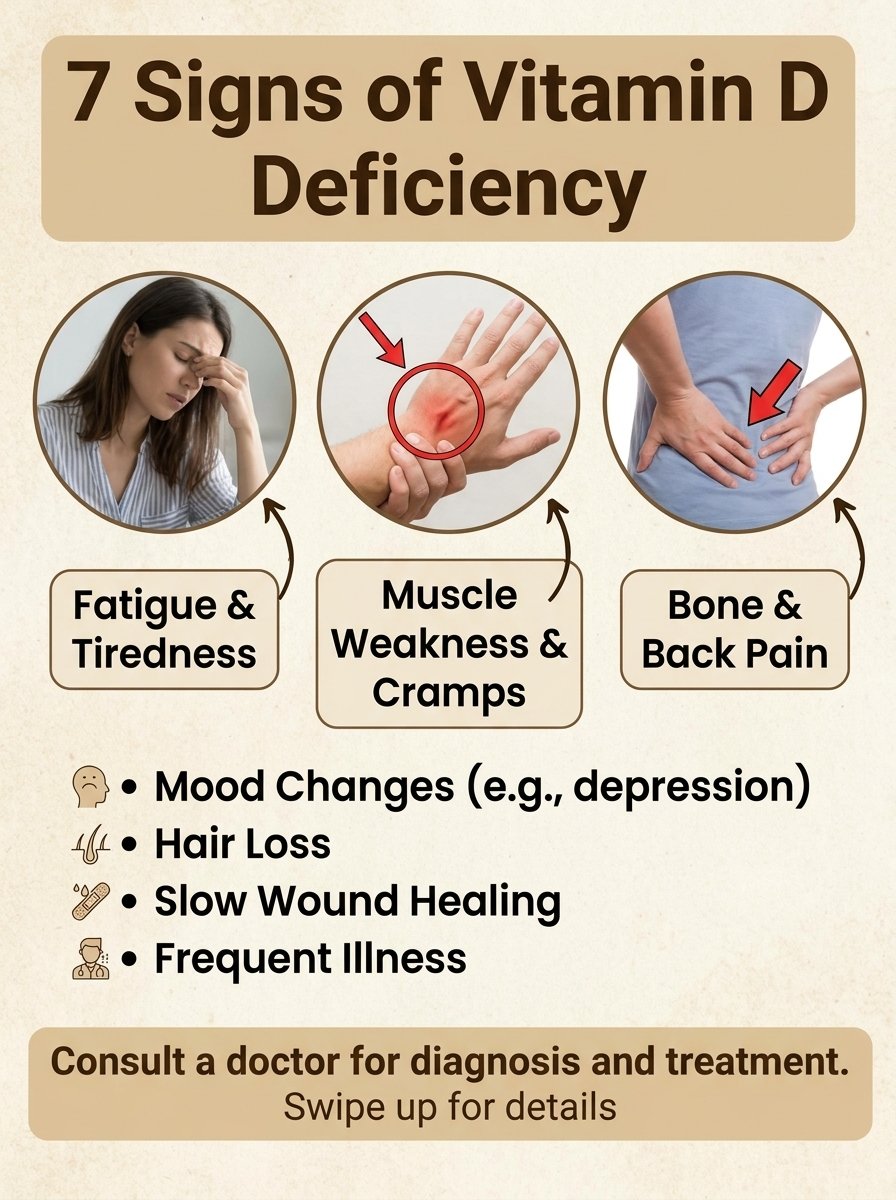
1. The Marrow-Ache (Bone and Back Pain)
Do your bones or lower back often carry a deep, persistent ache, particularly after prolonged sitting or during nighttime hours? This could be your body sending a crucial signal. Vitamin D is essential for efficiently absorbing calcium from your diet and directing it to fortify your bones. When Vitamin D levels are insufficient, this vital process falters, potentially leaving your skeletal framework feeling tender, sore, or unusually vulnerable to strain.
For individuals navigating midlife and beyond, this discomfort often manifests as morning stiffness upon waking, unease following routine tasks, or a nagging lower-back ache disproportionate to any recent physical exertion. Chronically low Vitamin D levels are directly associated with reduced bone density, significantly increasing the risk of fractures. Fortunately, you don’t have to endure this concern without action. A straightforward blood test, consistent Vitamin D supplementation, adequate calcium intake, and regular, gentle weight-bearing exercises can collectively help rebuild and fortify your skeletal foundation.
To take immediate action, start by meticulously noting when these aches emerge, their duration, and any limitations they impose on your daily activities. Present this information to your clinician. Should a Vitamin D deficiency be identified as a contributing factor, re-establishing healthy levels frequently leads to more consistent comfort and renewed confidence in your mobility.
2. The Spirit-Dusk (Persistent Low Mood)
Imagine a day perpetually overcast, where the vibrant sun is obscured; similarly, your mind can feel noticeably dimmed when Vitamin D levels decline. A common experience is a pervasive sense of ‘quiet grayness,’ a noticeable reduction in enthusiasm, or a struggle to rekindle your usual zest for life. While mood is intricately shaped by numerous factors, compelling research indicates that Vitamin D significantly influences brain chemistry and supports the neural pathways crucial for emotional equilibrium.
During specific seasons or in regions with limited natural light, this phenomenon can become even more pronounced. You might find that minor pleasures feel dulled, or that you lose interest in social engagements you once eagerly anticipated. It’s vital to understand that experiencing these feelings is not a sign of weakness; rather, it could be your brain’s subtle plea for additional ‘solar’ nourishment.
Should these observations resonate with you, consider requesting a Vitamin D test as part of your routine health assessments. If a deficiency is identified, bringing your levels back into a healthy range often contributes to a noticeable brightening of your outlook. While it’s not a singular solution for complex mood issues, countless individuals report a more stable, positive emotional baseline once their Vitamin D reserves are restored, particularly when integrated with regular physical activity, adequate sleep, and meaningful connections.
3. The Lethargy-Tide (Unexplained Fatigue)
Do you frequently wake up from a full night’s rest only to feel an overwhelming heaviness, as though your limbs are weighed down by lead? This persistent drag could very well indicate that your body’s vital energy-producing engines are merely idling. Vitamin D functions as a crucial spark within the microscopic powerhouses of your cells, facilitating the conversion of fuel into consistent, usable energy. When its levels decline, you might experience your entire day as if you’re constantly moving with the parking brake engaged.
This particular type of fatigue often feels disproportionate to your actual activity levels. You might find yourself slowly tackling daily chores, requiring frequent rest periods, or struggling to keep your eyes open during your favorite evening programs long before your usual bedtime. Such exhaustion can transform the prospect of exercise into a daunting task and make even simple errands seem overwhelmingly monumental.
If this pattern strikes a chord, begin by maintaining a concise log detailing when you experience peak tiredness, your dietary intake, and the duration of your outdoor exposure. Present this valuable timeline to your healthcare provider. Should a Vitamin D deficiency be identified as a contributing factor, restoring your levels to a healthy range frequently results in a more consistent and reliable sense of energy.
4. The Slow-Heal (Lingering Wounds)
Typically, minor scrapes and cuts heal with impressive speed. However, if you observe that a small gardening nick or a trivial kitchen scratch seems to persist unusually long, it warrants careful investigation. Vitamin D actively supports your body’s sophisticated repair mechanisms by assisting in inflammation regulation and directing the crucial signals that summon new cells to reconstruct damaged tissue. When Vitamin D levels are insufficient, this initial, vital teamwork can become noticeably sluggish.
This could manifest as a scab that is unusually slow to form, a wound that remains tender for an extended period, or a bruise that appears to fade much more gradually than in the past. While numerous elements influence healing, such as blood sugar control, circulation, and comprehensive nutrition—making a holistic assessment crucial—Vitamin D frequently emerges as a significant overlooked component, particularly if you also experience several other ‘shadows’ mentioned in this guide.
If you’ve recently noticed a new pattern of slow wound healing, be sure to bring this to your next medical appointment. A well-rounded strategy encompassing sufficient protein intake, proper hydration, gentle physical activity to boost circulation, and optimal Vitamin D levels can collectively empower your skin and tissues to mend more efficiently and promptly.
5. The Shedding-Shadow (Thinning Hair)
Hair inherently undergoes continuous cycles of growth and rest. Yet, when Vitamin D levels decline, some individuals observe a distinct shift towards increased resting phases and greater shedding, often resulting in a noticeable thinning sensation at the crown or along the hair part. Vitamin D plays a crucial role in regulating the hair follicle’s life cycle; with insufficient stores, follicles can remain dormant for too long, failing to enter their essential growth mode.
It’s important to remember that age, hormonal fluctuations, stress, thyroid health, and overall nutrition all significantly impact hair vitality. Therefore, adopting a patient, investigative approach is more beneficial than drawing premature conclusions. If you’re noticing an unusual increase in hair accumulation in your brush or shower drain, consult your clinician for a comprehensive checkup that specifically includes Vitamin D testing. If a deficiency is found, optimizing these levels can potentially foster healthier hair turnover and encourage fuller strands over time.
In this particular area, patience is absolutely paramount. Hair growth is an inherently gradual process, and it can realistically take several months before any significant improvements become apparent. Nurturing your body comprehensively from within, ensuring adequate protein intake, iron if medically indicated, and sufficient Vitamin D, provides your hair with the optimal foundation to regain its natural volume and strength.
6. The Fragile-Shield (Frequent Illness)
Do you find yourself succumbing to every circulating cold or flu within your household or workplace? Your immune system serves as your body’s primary defense, and Vitamin D is instrumental in both training and stabilizing this protective shield. It actively supports the specialized cells responsible for identifying and neutralizing invading pathogens, while also helping to maintain a balanced inflammatory response, thus promoting smoother, more efficient recovery.
While low Vitamin D levels don’t guarantee illness, they can certainly compromise the robustness of your immune defenses, making them less effective. If you’re experiencing a continuous cycle of infections, or if your recovery periods seem unusually prolonged, it’s prudent to consider whether a Vitamin D deficiency might be a contributing factor. This concern is particularly pertinent during periods of reduced sunlight exposure or if your daily routine primarily keeps you indoors.
Achieving and maintaining healthy Vitamin D levels, alongside prioritizing fundamental self-care like adequate sleep, consistent hydration, and balanced nutrition, can significantly bolster your immune system’s resilience. For those managing existing medical conditions or taking medications that impact immune function, it’s crucial to work closely with your healthcare team to develop a personalized and safe health strategy.
7. The Muscle-Twitch (Weakness and Cramps)
The intricate process of muscle contraction and relaxation depends on a delicate ballet of essential minerals. Vitamin D plays a pivotal role in regulating your body’s calcium levels and facilitating the crucial signals that instruct muscle fibers to activate. When Vitamin D is deficient, these vital signals can become erratic or weakened, often manifesting as disruptive nighttime cramps, involuntary eyelid twitches, or an inexplicable sensation that everyday tasks like climbing stairs or carrying groceries feel unusually strenuous.
Numerous individuals report a feeling of instability when standing up from a seated position, or they experience rapid fatigue when maintaining a static posture, such as standing at a kitchen sink. Over an extended period, these symptoms can erode confidence and impede the efficiency of daily routines. If this description resonates with you, it’s highly advisable to request a Vitamin D assessment. Muscular strength frequently shows marked improvement once Vitamin D levels are optimized, particularly when combined with consistent, low-impact activities like brief walks or gentle, joint-friendly strengthening exercises.
Understanding Why These Shadows Gather
As we progress through our 40s, 50s, and 60s, a confluence of physiological shifts significantly increases the likelihood of experiencing a Vitamin D drought. Our skin naturally becomes less adept at synthesizing Vitamin D from sun exposure. Additionally, modern lifestyles often involve increased indoor time or more diligent use of sun protection, both factors further diminishing natural production. Digestive efficiency can also decline, impacting nutrient absorption. Furthermore, certain medications have the potential to interfere with Vitamin D processing. While these are not reasons for undue concern, they serve as a crucial reminder that proactive health maintenance becomes increasingly vital with each successive decade.
Given Vitamin D’s profound interconnectedness with bone health, muscle function, mood regulation, immune system strength, and the body’s healing processes, a deficiency can ripple through your system, manifesting in multiple ways simultaneously. This explains why you might observe two or three of the aforementioned signs appearing concurrently. The truly hopeful aspect is that once you and your healthcare provider pinpoint this deficiency, the solutions for addressing it are typically quite direct and manageable.
The Solar Re-Entry Mandate: Helping Vitamin D Do Its Job
Vitamin D is a fat-soluble vitamin, meaning its absorption and transport within your body are optimized when consumed alongside healthy fats. This principle is at the core of what we call the ‘Solar Re-Entry Mandate.’ Regardless of whether your Vitamin D comes from sun exposure, dietary sources, or supplements, pairing it with a fat source significantly enhances your body’s ability to absorb and effectively utilize it.
Practically speaking, this could involve incorporating a serving of fatty fish, eggs, avocado, nuts, or a drizzle of olive oil into your meals. For those taking a Vitamin D supplement, many discover that consuming it with a breakfast or lunch containing healthy fats yields optimal results. Cod liver oil, for instance, is a classic example of a naturally fat-rich source that also delivers Vitamin D. The objective isn’t to consume excessive amounts of fat, but rather to provide Vitamin D with a consistent, dependable ‘anchor,’ enabling its efficient journey from your digestive system into your bloodstream and subsequently to your bones, muscles, and immune cells.
Sunlight, Food, and Supplements: Finding Your Best Mix
An effective and balanced strategy typically integrates sensible sun exposure, nutrient-rich foods, and, where advisable, a targeted supplement. Sunlight is a primary catalyst for your skin’s Vitamin D production, especially when the sun is at its zenith. Brief, mindful exposures, customized to your individual skin type and regional climate, can significantly contribute. However, if you have a history of skin cancer or have been advised to limit sun exposure, it is imperative to prioritize your safety and rely on dietary sources and supplements instead. Your safety comes first.
Your diet can be a powerful ally in this endeavor. Fatty fish such as salmon, mackerel, and sardines are naturally abundant in Vitamin D. Eggs and various fortified foods also provide valuable contributions. Crucially, always recall the ‘fat anchor’ principle: consuming these Vitamin D-rich foods alongside healthy fats in a meal dramatically improves your body’s absorption efficiency. Ultimately, consistent, sustainable habits will always yield superior results compared to sporadic, intense efforts.
Supplements can prove invaluable when sunlight exposure and dietary intake alone are insufficient to meet your Vitamin D needs. A large number of adults opt for daily Vitamin D3 supplements, as this form closely mimics the Vitamin D synthesized by your body through sun exposure. The optimal dosage is highly individualized. Your clinician, informed by a simple blood test and your comprehensive health history, can provide precise guidance. It’s strongly advised against self-prescribing high doses for extended periods without professional oversight. More is not inherently better, and your healthcare provider is best equipped to help you identify the ideal ‘sweet spot’ where maximum benefits are realized with complete safety.
Safety, Balance, and What to Ask Your Clinician
Prior to initiating or modifying any supplement regimen, it’s prudent to review a concise checklist. Inquire whether any of your current medications have known interactions with Vitamin D or calcium. Thoroughly discuss your personal and family history concerning kidney stones, parathyroid conditions, or any other health considerations that could influence appropriate dosing. If your Vitamin D levels are found to be low, collaborate closely with your clinician to establish a follow-up plan for retesting after a few months, ensuring you remain on the correct course.
Additionally, it’s beneficial to assess your overall nutritional landscape. Essential minerals like calcium and magnesium, along with Vitamin K, all contribute crucial supportive roles in maintaining robust bone and muscle health. The aim isn’t to overwhelm yourself with a multitude of supplements; rather, a ‘food-first’ philosophy, where supplements strategically address identified deficiencies, typically proves most effective for long-term well-being.
It’s entirely natural if you’re uncertain whether your symptoms are directly linked to Vitamin D deficiency. Many of the ‘shadows’ outlined in this guide can indeed overlap with typical experiences of midlife. However, a specific blood test provides invaluable clarity, effectively removing any guesswork from your personalized health strategy.
Simple Daily Rhythms That Support Your Solar Anchor
Consistent, modest daily choices are often far more impactful in safeguarding your energy than sporadic, ambitious endeavors. Make an effort to spend a few minutes outdoors during the brightest parts of the day, provided it is safe and appropriate for you. Always pair Vitamin D-rich meals with a source of healthy fat. Select proteins you genuinely enjoy to actively support muscle repair and recovery. For a week or two, maintain a brief log of your energy levels, mood, and sleep quality; recurring patterns frequently emerge swiftly, offering valuable insights for both you and your clinician.
Regular physical movement empowers your body to optimally utilize the nutrients you provide. Gentle, weight-bearing activities—like walking, performing light household chores, or engaging in simple strength exercises—effectively signal to your bones and muscles that they are actively required, promoting their health. Begin at your current fitness level and progressively increase your activity. Your confidence in movement will naturally develop with each steady step forward.
Bringing It All Together
If you’ve identified with the Marrow-Ache, the Spirit-Dusk, the Lethargy-Tide, the Slow-Heal, the Shedding-Shadow, the Fragile-Shield, or the Muscle-Twitch, please take comfort. Each of these is merely a gentle nudge from your body, not a definitive verdict. They represent your system’s subtle request for a bit more light and essential support. By astutely recognizing these signs, thoughtfully pairing your Vitamin D intake with a ‘fat anchor,’ and proactively collaborating with your healthcare provider, you possess the power to re-establish the vital ‘solar current’ that ensures you remain steady, strong, and fully engaged with the vibrant life you aspire to live.
A crucial final act of self-care is cultivating patience. Vitamin D levels that have gradually declined over many months or even seasons naturally require some time to be safely and effectively replenished. While most individuals typically begin to experience clearer energy and enhanced comfort within a few weeks of adopting consistent new habits, the full spectrum of benefits usually unfolds over a couple of months. Remain persistent; your bones, muscles, mood, and immune system will undoubtedly express their gratitude.
Regardless of the season, always remember that your incredible body possesses an inherent capacity for adaptation and recovery. By embracing a little ‘sunlight wisdom,’ prioritizing nourishing meals, and securing the appropriate medical support, you can powerfully re-anchor your vitality to the natural rhythm of light, empowering you to move forward with renewed confidence and vigor.