 By admin
 Have you ever paused to truly observe your tongue in the mirror? Beyond just a tool for taste and speech, your tongue serves as a remarkable ‘mirror to your internal health,’ offering subtle yet significant clues about your well-being. While many of us might quickly brush away an unusual appearance, dismissing it as trivial, a change in your tongue’s color or texture can often be a silent indicator of deeper physiological processes at play. These visual cues can signal anything from simple dehydration or nutritional imbalances to more complex systemic issues affecting circulation or digestion. By learning to interpret these daily messages, you empower yourself to proactively understand your body’s needs and refine your health habits. This comprehensive guide will walk you through the spectrum of tongue colors and what each might signify, helping you decode this fascinating health indicator. Stick around, and you’ll also learn about a straightforward routine for maintaining optimal tongue health.
1. The Ideal Canvas: What a Healthy Tongue Looks Like
A truly healthy tongue is often described as a vibrant, light to medium pink hue, adorned with tiny, evenly distributed bumps known as papillae. These papillae are vital, housing thousands of taste buds that allow us to savor the diverse flavors of our world. When your tongue is in optimal condition, it typically exhibits these key characteristics:
- Consistent Light Pink Color: A uniform, healthy pink without significant discoloration.
- Adequately Moist Surface: Indicating proper hydration and saliva production.
- Thin, Translucent Coating: A barely visible layer, suggesting a balanced oral microbiome.
- Small, Evenly Distributed Papillae: No large patches or overly smooth areas.
Such an appearance generally reflects robust oral health, adequate hydration, and balanced nutrition. However, it’s crucial to understand that your tongue is a dynamic organ. Its appearance can shift rapidly due to various factors, including your dietary choices, fluid intake, medications, or daily oral hygiene practices. For instance, consistent water consumption is essential for maintaining its natural moisture, while a diet rich in fruits and vegetables supports healthy blood flow and tissue integrity. Neglecting simple routines like regular brushing or tongue cleaning can lead to bacterial accumulation, causing noticeable changes. This dynamic nature brings us to the first common deviation from the norm.
2. The White Veil: Possible Signs of Imbalance or Infection
A white or heavily coated tongue is among the most frequently observed deviations from a healthy pink. This appearance often results from an accumulation of bacteria, fungi, food debris, and dead cells on the tongue’s surface. Several factors can contribute to this common condition:
- Suboptimal Oral Hygiene: Inadequate brushing and tongue cleaning.
- Recent Antibiotic Therapy: Can disrupt the natural balance of oral flora.
- Xerostomia (Dry Mouth): Reduced saliva flow prevents natural cleansing.
- Compromised Immune Function: Weakened immunity can allow overgrowth.
In specific instances, persistent white patches might indicate oral thrush, a yeast infection caused by an overgrowth of Candida albicans. While this can be concerning, a white coating doesn’t always signify a severe issue and often responds well to enhanced oral hygiene and lifestyle adjustments. Simple daily practices can make a significant difference:
- Gentle Tongue Brushing or Scraping: To remove accumulated debris.
- Increased Water Intake: Crucial for maintaining moisture and aiding self-cleansing.
- Alcohol-Free Mouthwash: Can help reduce bacterial load without irritation.
- Probiotic-Rich Foods: Such as yogurt or kefir, to support a healthy microbial balance.
Yet, the tongue’s palette of warnings extends beyond just white. Let’s explore another striking hue.
3. The Fiery Signal: Bright Red or Inflamed Tongue
A strikingly bright red or noticeably inflamed tongue can manifest quite suddenly, often accompanied by a range of uncomfortable sensations. Individuals frequently report experiencing:
- A Burning or Scalding Sensation: Particularly when consuming hot foods or liquids.
- Heightened Tenderness: Making eating and speaking uncomfortable.
- Visible Swelling: The tongue may appear larger than usual.
- Increased Sensitivity: Especially to acidic, salty, or spicy foods.
This vibrant redness can be a temporary reaction to specific external factors or an indication of internal imbalances. Common culprits include exposure to certain foods, beverages, or even medications. Potential triggers encompass:
- Food Sensitivities or Allergies: Causing an inflammatory response.
- Irritating Foods: Such as excessively spicy or acidic items.
- Nutritional Deficiencies: Notably, a lack of B vitamins (e.g., B12, folate) is often linked to a smooth, red, ‘beefy’ tongue.
- General Mouth Irritation: From ill-fitting dentures, sharp teeth, or certain oral care products.
It’s important to differentiate: if the redness appears abruptly and resolves within a few days, it might simply be a transient inflammatory response. However, persistent or recurring bright red discoloration, especially when accompanied by discomfort, warrants further investigation. This particular health indicator points towards issues that might require dietary adjustments or medical consultation. Now, let’s turn our attention to another common, yet often misunderstood, tongue color.
4. The Golden Hue: Yellow Tongue and Lifestyle Factors
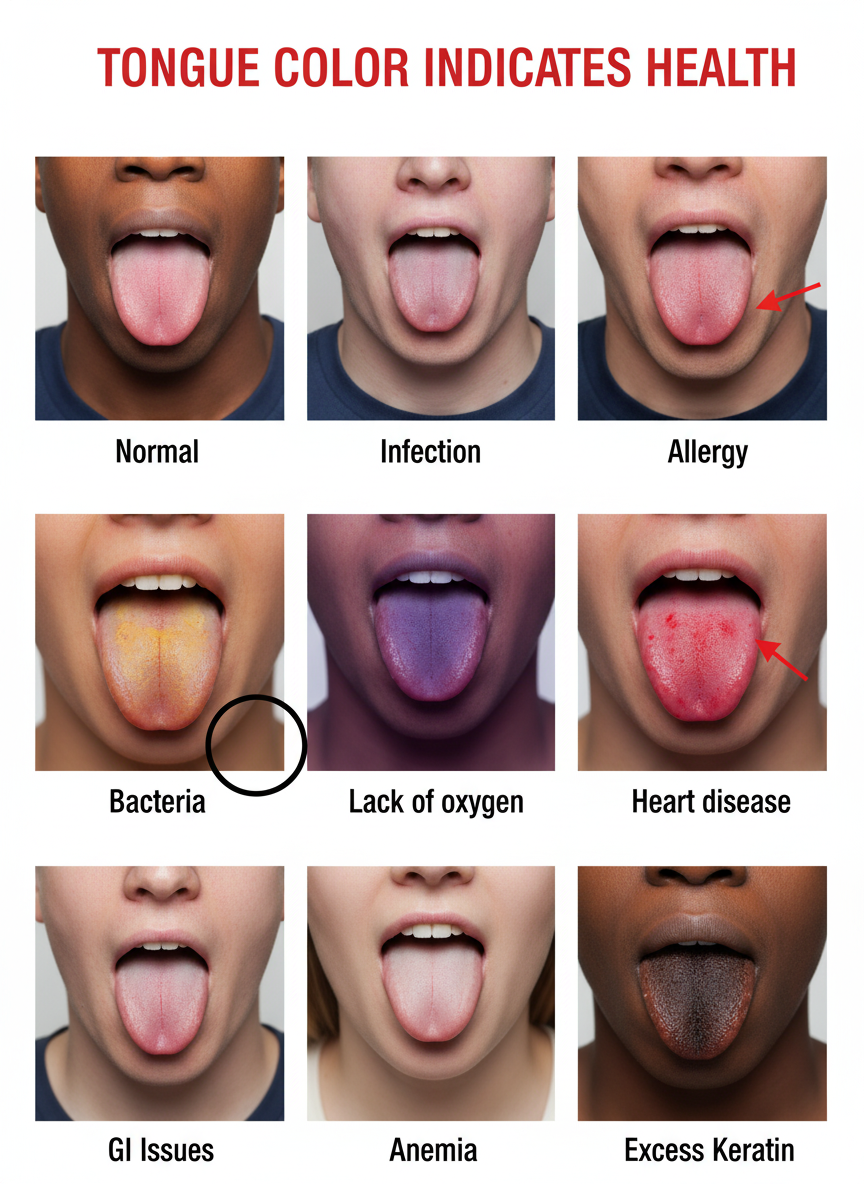
A yellow coating on the tongue is typically a direct consequence of bacterial overgrowth. When bacteria proliferate on the tongue’s surface, they can trap food particles and pigments from certain foods or tobacco, leading to this distinct coloration. Several everyday lifestyle habits can significantly contribute to a yellow tongue:
- Smoking or Tobacco Use: Tar and nicotine can stain the tongue.
- Inadequate Tongue Cleaning: Allowing bacteria and debris to accumulate.
- Chronic Dry Mouth: Reduces the natural cleansing action of saliva.
- Insufficient Hydration: Exacerbates dry mouth and bacterial buildup.
The good news is that a yellow tongue is often highly reversible. Implementing simple yet effective daily routines can dramatically improve its appearance and underlying oral health:
- Daily Tongue Scraping: Using a dedicated tongue scraper is more effective than a toothbrush for removing coating.
- Consistent Hydration: Drinking plenty of water throughout the day.
- Reducing or Eliminating Tobacco: A significant step towards better oral and overall health.
- Balanced Diet with Fiber: Fiber-rich foods can aid in natural tongue cleansing.
Often, these minor adjustments can yield a noticeable improvement within just a few days. While yellow is a common color change, sometimes the tongue can adopt even darker, more concerning shades.
5. The Deeper Hues: Bluish or Purple Tongue and Circulation
A bluish or purple discoloration of the tongue is a more serious health indicator, often signaling reduced oxygen saturation in the blood, a condition known as cyanosis. This can occur when there isn’t enough oxygen circulating through the body’s tissues. Healthcare professionals frequently link this appearance with underlying conditions impacting respiration or blood flow. Potential contributing factors may include:
- Extreme Cold Exposure: Leading to temporary constriction of blood vessels.
- Circulation Issues: Conditions affecting blood flow to the extremities.
- Respiratory Conditions: Such as asthma, COPD, or pneumonia, which impair oxygen uptake.
- Cardiovascular Stress: Heart conditions that affect the efficiency of blood pumping.
However, context is vital. Brief, temporary bluish tones might appear after prolonged exposure to very cold temperatures or during intensely strenuous physical activity. Nevertheless, any persistent or unexplained bluish-purple discoloration of the tongue should be promptly evaluated by a healthcare professional. This is a critical signal that your body may be requesting urgent medical attention. From circulation, we now shift our focus to how the tongue can hint at digestive wellness.
6. The Subtle Grey: Tongue as a Mirror to Digestive Health
A gray or noticeably thick-coated tongue can frequently emerge as a visual cue when the body’s digestive balance is disrupted. This particular coloration often suggests a sluggish digestive system or an accumulation of toxins. Individuals who present with a gray tongue may also experience a range of accompanying symptoms, such as:
- Acid Reflux or Heartburn: Indicating issues with stomach acid regulation.
- Indigestion or Bloating: Suggesting difficulty in processing food efficiently.
- Constipation: A common sign of a slow digestive tract.
- Fatigue: Often linked to poor nutrient absorption or systemic burden.
- Unpleasant Breath (Halitosis): Can be a consequence of bacterial overgrowth in the mouth and gut.
While not always a sign of severe illness, a gray tongue serves as an important reminder to assess your dietary habits and overall digestive health. Addressing underlying digestive issues, improving gut flora, and ensuring adequate hydration can often lead to a restoration of the tongue’s healthy appearance. Observing these subtle changes is a powerful step in proactive wellness and self-care.
The Silent Storyteller: A Final Word on Tongue Health
Your tongue is far more than just a sensory organ; it’s a dynamic and accessible window into your body’s inner workings. By taking a moment each day to observe its color and texture, you gain invaluable insights into your hydration, nutrition, oral health, and even systemic conditions like digestive imbalances or circulation challenges. Remember, while many changes can be resolved with simple lifestyle adjustments and improved oral hygiene, persistent or severe discoloration warrants the attention of a healthcare professional. Empower yourself with this knowledge, listen to your body’s subtle cues, and make proactive choices towards optimal wellness. A healthy tongue is often a reflection of a healthy you.
”
}
“`