 By admin
 Cancer, in its initial stages, frequently manifests discreetly. Many early indicators are subtle, often painless, and regrettably easy to misinterpret as benign issues like typical aging, everyday stress, a minor ailment, or simply a new “normal.” However, certain recurring warning signs are consistently highlighted in medical research and patient narratives – particularly when multiple symptoms appear concurrently, persist for over 2-4 weeks, or gradually intensify. Recognizing these crucial signals early can significantly enhance treatment efficacy and long-term prognosis. Below, we outline 9 of the most commonly overlooked cancer warning signs that every adult should be aware of, irrespective of their age or family medical history.
Unexplained Weight Loss (Significant Drop Without Effort)
A noticeable reduction in body weight – typically 5-10% or more within a 6-12 month period, without any intentional dietary modifications or increased physical activity – stands as a prominent early indicator for various cancers, including those affecting the pancreas, stomach, lungs, esophagus, colon, and lymphatic system. This critical cancer warning sign is often dismissed, with individuals attributing it to “finally adopting healthier eating habits” or “work-related stress.”
Persistent Fatigue Unrelieved by Rest
Experiencing profound and constant exhaustion that doesn’t alleviate even after adequate sleep (8-10 hours) or finding yourself needing frequent naps despite minimal physical exertion can be a significant cancer symptom. This persistent fatigue is frequently rationalized as “a normal part of aging,” the consequence of a “demanding lifestyle,” or simply “insufficient sleep.”
New or Altered Lumps/Thickened Tissues
The appearance of any novel lump, swelling, or area of thickened tissue, particularly in regions like the breast, testicle, neck, armpit, groin, or beneath the jaw, that fails to resolve within 2-3 weeks, warrants medical attention. Many individuals tend to disregard this potential early cancer sign, often assuming it’s “just a benign cyst” or believing “it’s nothing serious because it doesn’t cause pain.”
Non-Healing Sores, Ulcers, or Patches
Any persistent sore, ulcer, or discolored patch (white or red) located in the mouth, on the lips, tongue, skin, or genital areas that does not heal within three weeks should be a cause for concern. These non-healing lesions are often dismissed as common “canker sores,” “food irritations,” or with the expectation that “they will eventually heal on their own,” potentially delaying crucial evaluation for skin or oral cancers.
Persistent Cough, Chronic Hoarseness, or Dysphagia
A cough that endures for more than 3-4 weeks (especially if accompanied by blood), ongoing hoarseness, or the sensation of food getting lodged in the throat or chest (dysphagia) are important respiratory and digestive cancer warning signs. These symptoms are frequently attributed to benign conditions such as “seasonal allergies,” “a lingering cold,” or “gastroesophageal reflux disease (GERD).”
Unexplained Changes in Bowel or Bladder Habits
- New onset or worsening patterns of constipation or diarrhea persisting for several weeks.
- Stools that appear unusually narrow, often described as “pencil-thin.”
- The presence of blood in stool, which may be bright red or dark and tarry.
- Increased frequency or urgency of urination, or any visible blood in the urine.
These shifts in excretory functions are often rationalized by individuals as symptoms of “Irritable Bowel Syndrome (IBS),” “recent dietary changes,” or, for men, “common prostate issues.” However, they can be critical indicators of colorectal or bladder cancer.
Abnormal Bleeding or Discharge
- Any incidence of postmenopausal bleeding, regardless of quantity.
- The unexpected appearance of blood in urine, feces, sputum (phlegm), or vomit.
- Unusual vaginal discharge, particularly when experienced post-menopause.
Such irregular bodily discharges or bleeding are frequently dismissed as minor issues like “hemorrhoids,” “menstrual irregularities” (for premenopausal women), or a “one-off event,” potentially delaying the identification of gynecological, gastrointestinal, or urinary tract cancers.
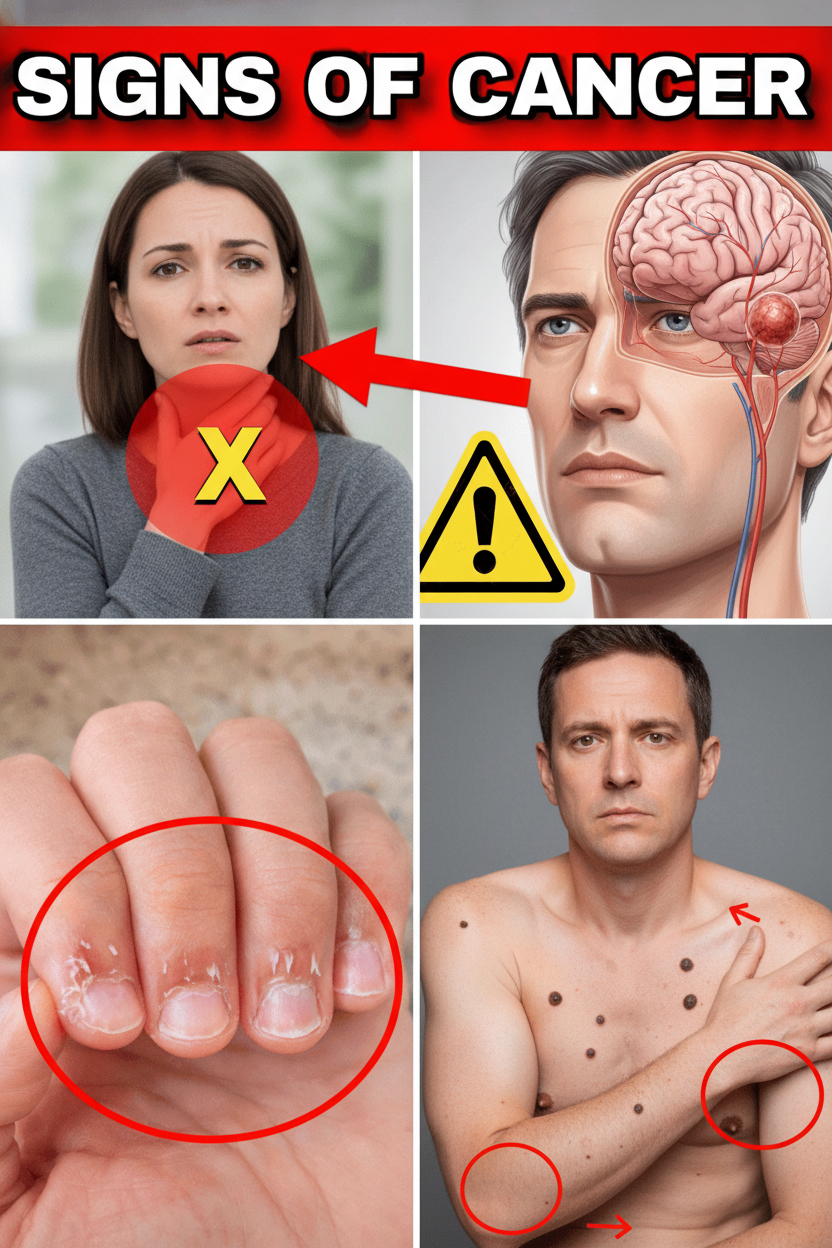
Persistent or Evolving Skin Changes
- Any new mole or an existing mole that exhibits changes in asymmetry, irregular borders, multiple colors, a diameter greater than 6 mm, or is noticeably evolving in size, shape, or color.
- A sore or ulcer on sun-exposed skin that fails to heal within a reasonable timeframe.
- A persistent rash or scaly patch that does not respond to typical treatments.
These dermatological alterations are commonly underestimated and explained away as “just a pimple,” “dry skin,” or a harmless “sun spot,” yet they can be crucial indicators of skin cancer, including melanoma.
Unrelenting Localized Pain
Ongoing pain concentrated in a specific area, such as bone pain (particularly disruptive at night), headaches that progressively intensify, or abdominal/back pain that fails to subside with conventional treatments, should not be ignored. This persistent discomfort is often dismissed as a “muscle strain,” “stress-related ailment,” or the lingering effect of an “old injury,” potentially masking underlying conditions like bone tumors or other advanced cancers.
When to Seek Medical Attention: An Urgency Guide
Immediate Emergency Care (Same-Day Doctor or ER Visit)
- A sudden, excruciating headache accompanied by visual disturbances, weakness, or difficulty speaking – these could indicate a stroke or a brain tumor.
- Significant, unexplained heavy bleeding from any orifice (e.g., in vomit, stool, urine) or postmenopausal bleeding.
- An abrupt and complete inability to swallow or breathe.
Urgent Evaluation (Within a Few Days)
- A non-healing sore or ulcer, especially if you have a history of smoking or heavy alcohol consumption.
- The discovery of a new lump combined with unexplained weight loss and/or persistent fatigue.
- Any presence of blood in urine or stool, alongside noticeable changes in bowel habits.
Prompt Consultation (Within 1-2 Weeks)
- A persistent cough or hoarseness, particularly if you have a smoking history.
- Unexplained weight loss observed in conjunction with any other warning sign from this list.
- New-onset diabetes diagnosed after the age of 50, especially when accompanied by abdominal or back pain.
The Bottom Line: Prioritizing Early Detection
It’s crucial to understand that cancer doesn’t always present with severe pain or overt bleeding in its nascent stages. The nine indicators detailed above represent some of the most reliable early warning signs consistently reported by individuals who were subsequently diagnosed with cancer. It’s important to note that these symptoms rarely manifest simultaneously or abruptly. If two or three or more of these signs persist for longer than 3-4 weeks (especially if accompanied by unexplained weight loss, unrelenting fatigue, or unusual bleeding), they should never be dismissed as merely “part of aging.”
You are the expert on your own body. Learn to trust those persistent subtle signals. A timely visit to your doctor, coupled with straightforward diagnostic tests (such as blood work, imaging scans, endoscopy, etc.), and the resulting early detection, can profoundly alter the course of your health journey. Many individuals later express regret that they didn’t heed their body’s warnings sooner.
Your Action Step: Take a moment tonight to carefully examine your body. Check your skin, mouth, and neck for any new lumps, unusual patches, or persistent changes. Make a mental note of any symptoms from this comprehensive list that feel familiar and have not resolved. If even two or three of these warning signs resonate with your current experience and endure, make it a priority to schedule a medical check-up this month. Remember, one proactive conversation with a healthcare professional provides one crucial opportunity for early intervention. Countless individuals later reflect on wishing they had paid attention to their body’s signals much earlier.
Disclaimer
This article is provided strictly for informational purposes and should not be considered a substitute for professional medical advice, diagnosis, or treatment. While many of the symptoms described can indeed stem from benign causes (such as common infections, acid reflux, hemorrhoids, stress, or non-cancerous tumors), the presence of persistent or multiple symptoms necessitates an urgent medical evaluation by a qualified healthcare provider. It is imperative that you never attempt to self-diagnose or postpone seeking professional medical care based solely on the information presented in this list. If you are experiencing unexplained weight loss, non-healing sores, unusual bleeding, or any other concerning symptoms, please consult your doctor immediately.