 By admin
 Many adults experience the common frustration of teeth that seem to lose their sparkle with age. Despite diligent brushing, a yellowish tint can emerge, often leading to self-consciousness. This natural process is influenced by aging, diet, and lifestyle, making traditional whitening solutions sometimes feel inadequate or expensive. But what if a simple, overlooked kitchen item held a surprising secret for supporting oral hygiene and a brighter smile?
Enter eggshells. Yes, the very same shells you typically discard after breakfast. This traditional household practice is gaining renewed interest, with many exploring its potential. Before you rush to try it, let’s delve into the science, understand how it works, and most importantly, how to approach it safely and effectively.
Why Our Teeth Lose Their Luster Over Time
The misconception that yellowing teeth solely indicates poor hygiene is far from the truth. Several natural processes contribute to this change as we age:
- Enamel Thinning: The outermost layer of your tooth, enamel, is naturally bright and protective. Over decades of chewing, brushing, and exposure to acids, this layer gradually wears down. As enamel thins, the underlying dentin, which has a natural yellowish hue, becomes more visible.
- Accumulation of Stains: Everyday indulgences can leave their mark. Beverages like coffee, tea, red wine, and dark sodas, along with tobacco products, contain pigments that adhere to microscopic pores in the enamel, slowly deepening discoloration over time.
- Natural Aging Process: Beyond external factors, dental research confirms that teeth naturally darken with age due to intrinsic structural changes within the enamel and dentin. This is a normal biological phenomenon.
Eggshell Powder: An Ancient Remedy Re-Emerging
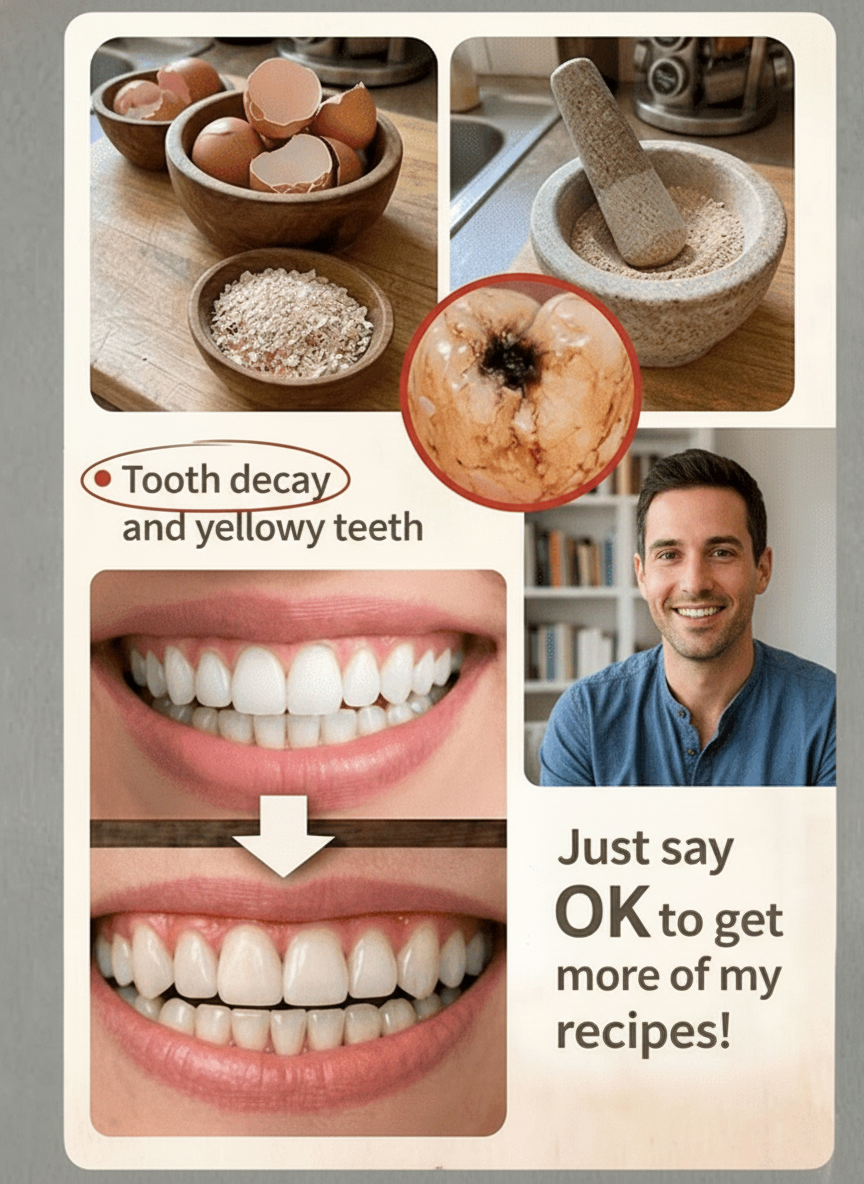
The idea of using eggshells might seem unconventional, but it’s a practice rooted in traditional household remedies. Eggshells are primarily composed of calcium carbonate, a mineral widely found in certain toothpaste formulations. When meticulously cleaned and ground into an ultra-fine powder, eggshell powder possesses a very mild abrasive texture.
This gentle abrasive action is key. Just as many whitening toothpastes utilize ingredients like calcium carbonate, silica, or baking soda to gently buff away surface stains, finely ground eggshell powder can work in a similar mechanical fashion. However, caution is paramount: excessive or aggressive abrasion can be detrimental, potentially damaging enamel rather than enhancing it. The goal is gentle polishing, not harsh scrubbing.
Beyond Abrasion: Minerals for Oral Health
Eggshells offer more than just a mild abrasive quality. They are a natural source of essential minerals crucial for tooth structure, including:
- Calcium
- Magnesium
- Phosphorus
- Trace minerals
Dental science highlights the importance of minerals like calcium and phosphate in supporting remineralization—the natural process where minerals redeposit into enamel to repair minor acid-induced surface damage. While eggshell powder isn’t a medical treatment, the minerals it provides are analogous to those involved in natural enamel repair mechanisms. It should always be viewed as a supportive hygiene practice, complementing, not replacing, professional dental care.
Comparing Whitening Approaches
Understanding how different methods work can help you make informed choices:
- Whitening Toothpaste: Uses mild abrasives to remove surface stains. Easy and widely available, but results are often gradual.
- Professional Whitening: Employs chemical bleaching agents for fast and effective results, typically at a higher cost.
- Baking Soda Brushing: Offers gentle stain removal and is affordable. Should be used occasionally due to its abrasive nature.
- Eggshell Powder: Provides mild polishing and mineral support. Natural and inexpensive, but requires careful preparation (finely ground) and gentle application.
The overarching principle for all these methods is moderation. The aim is to effectively remove stains and support enamel health without causing harm.