 By admin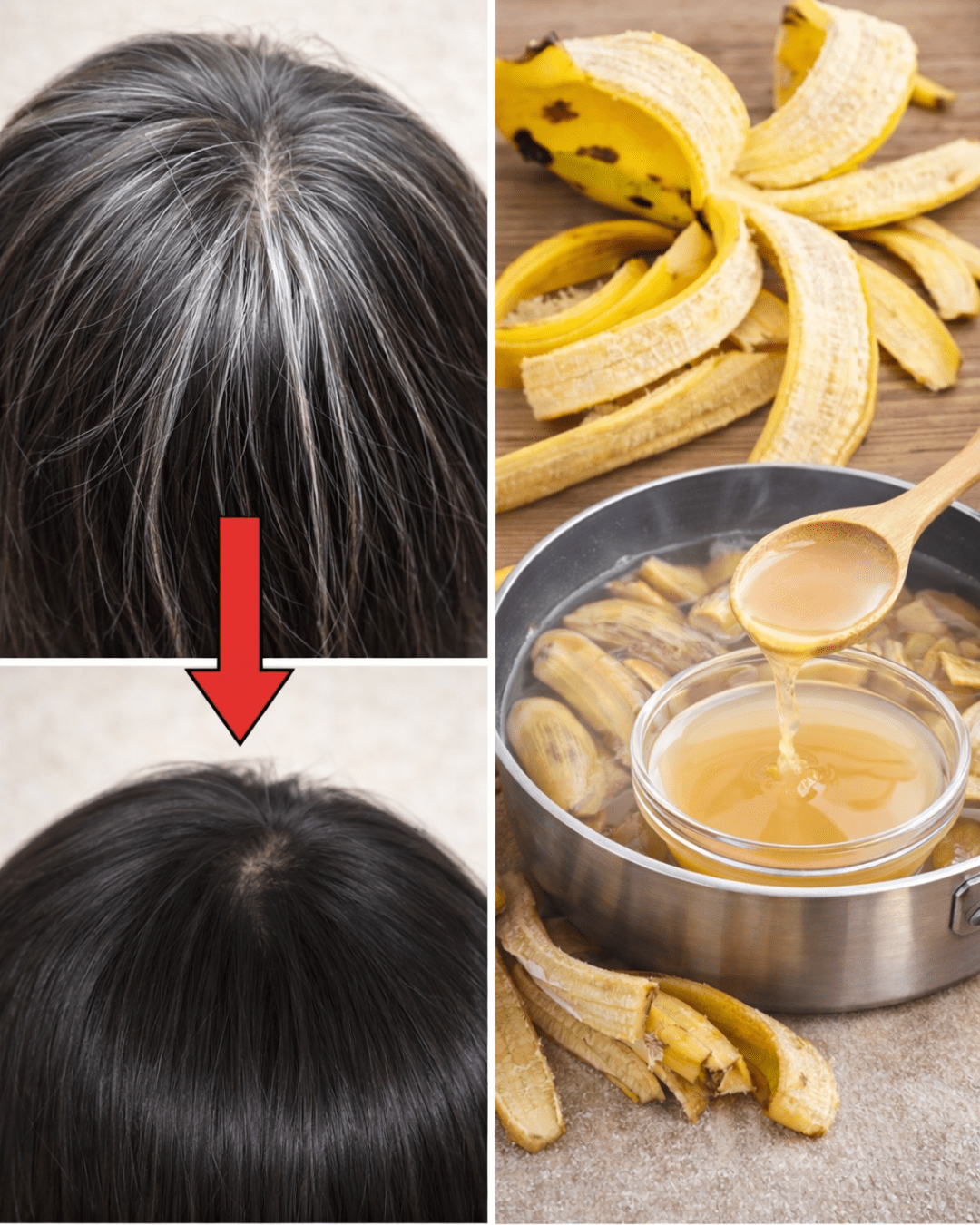
Gray hair appearing earlier than expected can feel frustrating and disheartening. Many people watch silver strands multiply and feel they look older than they are, while social media constantly shows “miracle” solutions promising to reverse graying quickly and naturally. Among these trending hacks, one stands out: rubbing banana peel on the scalp to supposedly turn white hair black in just a few minutes — or even stimulate very fast hair growth. It sounds simple, cheap, and appealing… but does it actually work?
In this article we’ll look honestly at the science (or lack thereof) behind the banana peel trend, separate myth from reality, and show you what banana peels can — and cannot — realistically do for your hair.
Here’s the promise we’ll keep until the very end: there is one small but smart way to use banana peels that many viral videos completely miss — and it might give you better results than the famous “3-minute gray reversal” method.

The Viral Claim: Can Banana Peel Really Turn Gray Hair Black in Minutes?
Social media is full of videos showing people mashing banana peels, applying the paste for 3–5 minutes, then rinsing to reveal “darker” hair. Some captions boldly claim: “White hair to black naturally – no dye!”
The appeal is obvious:
- Zero cost (kitchen waste)
- No harsh chemicals
- Very quick results
But the reality is far less exciting.
Science says:
Once a hair strand has grown out and lost its pigment (turned gray/white), the color cannot be naturally restored. The pigment (melanin) is produced only while the hair is still inside the follicle. After the hair emerges, it is essentially “dead” tissue — no amount of topical application can put melanin back into an already gray strand.
So any “instant color change” people film is usually one of these:
- Temporary shine or coating effect from the starchy residue
- Better lighting in the “after” shot
- Filters or editing
Bottom line:
No credible scientific study has ever shown that banana peel can reverse gray hair — especially not in 3–5 minutes. A few preliminary lab or animal studies have looked at banana compounds for antioxidant effects, but they are very far from proving human gray-hair reversal.

What Gray Hair Really Is (and Why Most “Cures” Don’t Work)
Hair turns gray when melanocytes (the cells that produce melanin) in the hair follicle become less active or die off. Main causes include:
- Natural aging
- Genetics
- Chronic stress (increases hydrogen peroxide in follicles)
- Nutritional deficiencies (especially vitamin B12, iron, copper, ferritin)
- Smoking
- Some autoimmune conditions
Because the root causes are mostly internal and long-term, quick topical fixes rarely make a real difference.

Banana Peels for Hair: What the Evidence Actually Supports
Banana peels are not useless — they do contain several nutrients that can benefit hair and scalp health when used sensibly.
Here are the realistic benefits backed by at least some scientific reasoning or user experience:
1. May improve hair shine and softness
Banana peels contain silica, a mineral involved in collagen formation. Healthy collagen can help hair feel stronger and look shinier.
Many people report their hair feels smoother and less frizzy after using banana-based masks.
2. Provides gentle scalp nourishment
Banana peels are rich in:
- Potassium → supports circulation
- Magnesium → helps reduce inflammation
- Antioxidants (catechins, dopamine, polyphenols) → fight free-radical damage
Better scalp circulation and less oxidative stress can create a healthier environment for hair growth — though the effect is mild.
3. Very mild support for hair strength
Silica and other minerals may help reduce breakage over time, especially when combined with moisturizing ingredients like coconut oil or yogurt.
What banana peels CANNOT do
- Turn gray hair black (or even noticeably darker)
- Make hair grow several inches “fast”
- Cure hair loss caused by genetics (androgenetic alopecia)
- Replace medical treatment for underlying deficiencies or scalp conditions

Practical Ways to Use Banana Peel for Hair (That Might Actually Help)
Here are three realistic, low-risk methods you can try at home.
Method 1: Banana Peel + Banana Hair Mask (Best for Shine & Softness)
Ingredients:
- 1–2 banana peels (inner white part)
- 1 ripe banana
- 1 Tbsp coconut oil or olive oil
- 1 tsp honey (optional)
Steps:
- Blend everything into a smooth paste.
- Apply to damp hair and scalp.
- Cover with a shower cap and leave on for 20–40 minutes.
- Rinse thoroughly with lukewarm water (may need mild shampoo).
- Use 1–2 times per week.
Method 2: Banana Peel Rinse (Simplest & Cleanest)
Steps:
- Collect 3–4 banana peels.
- Boil them in 500–700 ml water for 10–15 minutes.
- Let it cool completely, then strain out the peels.
- After normal shampooing, pour the rinse over your hair and scalp.
- Massage gently for 1–2 minutes, then leave it in (no need to rinse again) or rinse after 30 minutes.
Method 3: Banana Peel + Yogurt Mask (Extra Moisturizing)
Ingredients:
- Paste from 1–2 banana peels
- 3–4 Tbsp plain yogurt
Steps: Same as Method 1, but use yogurt instead of banana + oil.
Important:
Always do a patch test on your inner forearm 24 hours before full application — some people are sensitive to banana compounds.
Quick Comparison: Banana Peel vs. More Proven Options
| Goal | Banana Peel Effect | Strength of Evidence | More Proven Alternatives |
|---|---|---|---|
| Reverse gray hair | Almost none | Very low | Address deficiencies, stress management |
| Faster hair growth | Very mild (if any) | Low | Minoxidil, rosemary oil, balanced protein |
| Reduce breakage / add shine | Moderate (conditioning) | Moderate | Coconut/argan oil, protein treatments |
| Improve scalp health | Mild nourishment & circulation | Moderate | Scalp massage, tea tree oil, ketoconazole |
Timeline: What Results Can You Realistically Expect?
- Week 1–2 — Hair may feel softer and shinier after 2–3 applications.
- Month 1 — Possible reduction in breakage; scalp feels cleaner and less itchy for some.
- Month 2–3 — If you also improve diet/sleep/stress, you may notice slightly healthier-looking hair overall.
- Gray hair reversal — Almost never happens from topical banana peel alone.
Conclusion: Should You Try the Banana Peel Trend?
Banana peels won’t miraculously turn your gray hair black or make your hair grow several inches in weeks. Those viral claims are heavily exaggerated.
However, banana peels are a cheap, natural source of silica, potassium, and antioxidants that can give your hair a bit of extra conditioning and scalp nourishment — especially when used as a rinse or mask.
If you enjoy DIY hair treatments and want to avoid harsh chemicals, it’s worth experimenting. Just keep expectations realistic.
The small insider tip we promised earlier:
Many experienced users find that eating bananas regularly (the fruit itself) often gives better silica and potassium benefits for hair than topical peel use alone. Combine both approaches if you want to maximize the potential mild benefits.
Have you tried banana peel on your hair yet? What was your experience? Share in the comments — we’d love to hear!
FAQ
Q: How long does it take for banana peel to show results on hair?
A: Most people notice shinier, softer hair after 2–4 weeks of consistent use (1–2 times per week). Significant growth or color changes are not realistic.
Q: Can banana peel remove gray hair permanently?
A: No. Once a hair strand has lost its pigment, no topical remedy can restore the original color. Gray reversal claims are not supported by science.
Q: Is it safe to use banana peel on hair every day?
A: Daily use is usually unnecessary and may cause buildup. 1–2 times per week is enough. Always patch-test first.
Disclaimer:
This article is for informational purposes only and is not a substitute for professional medical advice. If you have sudden or patchy graying, significant hair loss, or scalp irritation, please consult a dermatologist or healthcare provider before trying any new remedies. Individual results vary.