 By admin
 Unraveling the Mystery: Is Early Childhood Bacterial Exposure Driving the Surge in Young Adult Colon Cancer?
Colorectal cancer rates are experiencing a concerning uptick among individuals in their 20s, 30s, and 40s. This perplexing trend stands in stark contrast to the decline observed in older demographics, where advancements in screening and healthier lifestyle choices have yielded positive outcomes. The shift is particularly troubling because colon cancer was traditionally considered a disease of older age; yet, it has now tragically become a leading cause of cancer-related mortality among younger men and the second leading cause among younger women.
Emerging research points to an unexpected early-life factor that may be accelerating this disease process, prompting critical questions about the silent exposures during childhood that could be playing a pivotal role. A groundbreaking study, recently featured in the prestigious journal Nature, proposes that exposure to a specific bacterial toxin called colibactin – produced by certain strains of E. coli – during the formative first decade of life could induce permanent DNA alterations. These changes, in turn, may expedite colon cancer development decades earlier than typically expected. Understanding this crucial link offers renewed hope for developing more effective awareness campaigns and preventative strategies for future generations.
The Alarming Ascent of Early-Onset Colorectal Cancer
For many years, colorectal cancer predominantly affected individuals over the age of 50. However, data from the American Cancer Society reveals a disturbing pattern: incidence rates in people under 50 have been consistently increasing by approximately 2-3% annually over recent decades. In the United States, projections suggest roughly 154,000 new cases in 2025, with a significant proportion impacting younger adults. Alarmingly, deaths are also on the rise within this younger cohort, even as overall mortality declines in older populations due to widespread screening and reduced smoking rates.
This generational divergence is not arbitrary. Experts have long suspected various modern lifestyle factors, including diets rich in processed foods, increasingly sedentary habits, and disruptions to the delicate gut microbiome. Nevertheless, a critical missing piece of the puzzle may involve early microbial exposures that subtly lay the groundwork for disease long before any symptoms manifest.
What the Latest Research Reveals About Colibactin’s Role
A landmark international study, spearheaded by researchers at the University of California San Diego and published in Nature in 2025, meticulously analyzed nearly 1,000 colorectal cancer genomes sourced from patients across 11 different countries. Scientists successfully identified distinct mutation patterns – specifically known as signatures SBS88 and ID18 – which were directly linked to colibactin. This potent toxin originates from particular E. coli strains commonly found within the human gut.
Crucially, these colibactin-associated signatures were found to be 3.3 times more prevalent in patients diagnosed with colorectal cancer before the age of 40 compared to those diagnosed after 70. The evidence suggests these characteristic DNA patterns are established early in life, often during childhood, effectively forming a “historical record” within the DNA that significantly escalates future cancer risk. As Dr. Ludmil Alexandrov, the study’s senior author, elucidated, acquiring such mutations by the age of 10 could advance the disease timeline, potentially leading to a diagnosis in a person’s 40s instead of their 60s. Interestingly, these early exposures do not always trigger immediate illness. Many colibactin-producing strains can colonize the gut quietly, allowing the toxin to inflict subtle, cumulative DNA damage over an extended period.
How Children Might Encounter Colibactin-Producing Bacteria
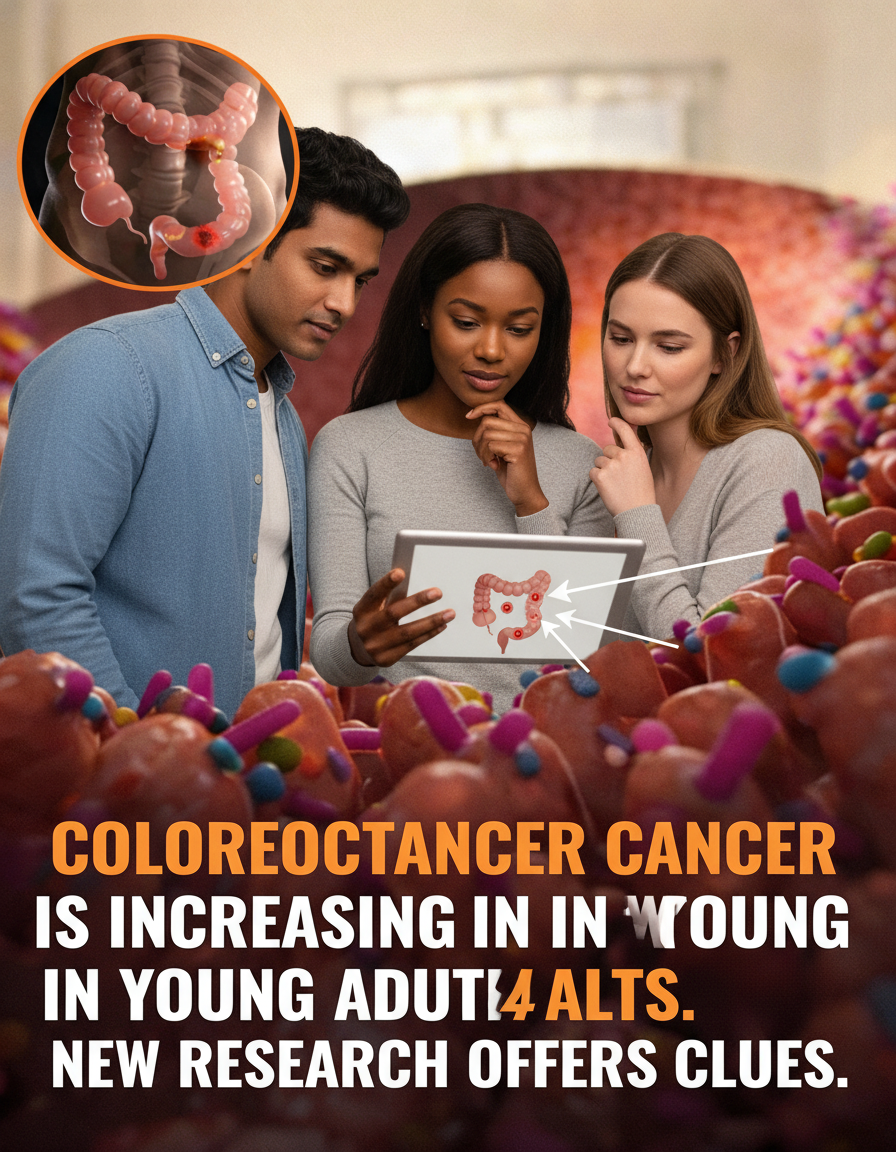
Bacteria capable of producing colibactin, including specific E. coli strains, can enter the human body through common daily exposures, primarily via contaminated food or water. Typical pathways include consuming undercooked meat, inadequately washed fruits and vegetables, or unpasteurized dairy products. For children, whose immune systems and gut microbiomes are still undergoing critical development, such exposures may exert a more profound and lasting impact.
Several contemporary childhood factors could amplify this vulnerability:
- Increased Rates of C-sections and Reduced Breastfeeding: These early life events significantly influence the initial establishment and diversity of a child’s gut microbiome.
- Frequent Antibiotic Use: Repeated courses of antibiotics can deplete beneficial gut bacteria, creating an environment where harmful, pathogenic strains like colibactin-producing E. coli may more easily thrive.
- Diets Low in Fiber and High in Ultra-processed Foods: Such dietary patterns can disrupt gut health, potentially favoring the growth of undesirable bacteria over protective ones.
These evolving societal and environmental shifts may partially explain why younger generations face elevated risks from the same types of bacteria that older generations encountered under different conditions.
Why This Discovery Matters for Younger Generations
This pivotal study underscores the profound influence of early-life events on an individual’s long-term health trajectory. Mutations induced by colibactin are frequently linked to crucial driver genes, such as APC, which initiate the cellular changes that silently accumulate over years. While it is important to note that not every exposure to colibactin-producing bacteria will inevitably lead to cancer – as numerous factors interact in disease development – this research undeniably emphasizes the critical role of gut health throughout a person’s lifespan.
Researchers further observe that these distinctive mutational signatures are more prevalent in geographical regions experiencing a sharp rise in early-onset colorectal cancer cases. This correlation strongly suggests that environmental factors and contemporary lifestyle influences are compounding the issue, making early detection and prevention even more urgent.
Actionable Steps to Support Colon Health Starting Today
Prioritizing prevention involves cultivating and sustaining a healthy gut environment at every stage of life. While no single habit can entirely eliminate risk, consistent and mindful choices collectively contribute to robust colon health. Here is a practical list of actions you can integrate into your daily routine:
- Prioritize Fiber-Rich Foods: Aim to consume a diverse array of colorful fruits, vegetables, whole grains, and legumes daily. These foods are essential for nourishing beneficial gut bacteria and promoting regular bowel movements.
- Include Fermented Foods: Incorporate foods like yogurt, kefir, sauerkraut, and kimchi into your diet to introduce beneficial probiotics that support a balanced gut microbiome.
- Stay Hydrated: Adequate water intake is crucial for digestive health and helps fiber move through the digestive system effectively.
- Limit Processed Foods and Sugars: Reduce consumption of highly processed foods, sugary drinks, and unhealthy fats, which can negatively impact gut health and inflammation.
- Engage in Regular Physical Activity: Exercise contributes to overall well-being, including digestive health, by promoting gut motility and reducing inflammation.
- Discuss Screening with Your Doctor: If you have a family history of early-onset colorectal cancer or experience any concerning symptoms, consult your healthcare provider about appropriate screening recommendations, even if you are under 50.