 By admin
 Unpacking the Link: High-Fat Dairy and a Potential Reduction in Dementia Risk
Dementia casts a long shadow globally, instilling widespread concern about memory loss, the erosion of daily independence, and the future for both individuals at risk and their families. For many years, conventional wisdom has advised limiting full-fat dairy products like cheese and cream, primarily due to concerns about saturated fats and their perceived impact on cardiovascular and brain health. However, a significant new large-scale study is challenging this long-held perspective, revealing an intriguing association between a higher intake of these specific foods and a potentially reduced risk of dementia over several decades.
What makes this research particularly noteworthy is its specificity: not all dairy products exhibited this protective link; only the high-fat varieties stood out. Could savoring a piece of aged cheddar or a rich dollop of cream offer benefits beyond just culinary delight? Continue reading to delve into the study’s core findings, understand why experts advocate for a balanced approach, and explore practical considerations for incorporating dairy mindfully into your daily diet.
Groundbreaking Research: Dairy Consumption and Cognitive Health
Published in Neurology, the esteemed medical journal of the American Academy of Neurology, this extensive 25-year investigation originating from Sweden tracked nearly 28,000 adults, with an average starting age of 58. Researchers meticulously monitored participants’ dietary habits through detailed food diaries, comprehensive questionnaires, and in-depth interviews, subsequently tracking the incidence of dementia over the long term.
The pivotal discovery? Individuals who consumed greater quantities of high-fat cheese (defined as more than 20% fat, encompassing varieties like cheddar, Brie, or Gouda) and high-fat cream (30-40% fat, such as heavy whipping cream) demonstrated a lower risk of developing dementia. Specifically, those consuming 50 grams or more of high-fat cheese daily (approximately 2 ounces or a generous slice) experienced a roughly 13% lower risk of all-cause dementia compared to those consuming less than 15 grams. For high-fat cream, a daily intake of 20 grams or more (around 1.5 tablespoons) was associated with approximately a 16% lower risk when compared to no consumption.
Crucially, the study found no clear association with reduced dementia risk for low-fat cheese, low-fat cream, milk (regardless of fat content), butter, or other dairy products. The research also highlighted stronger links for vascular dementia (a type of dementia related to impaired blood flow to the brain) and, in certain groups without a specific genetic risk factor (APOE ε4 non-carriers), for Alzheimer’s disease. Yet, as with all observational studies, this is not the complete picture.
Exploring the ‘Why’: Potential Explanations for the Association
Experts are quick to emphasize that this was an observational study, meaning it identifies patterns and associations but does not establish a definitive cause-and-effect relationship. It’s important to consider that individuals who consumed more high-fat cheese and cream often exhibited other beneficial lifestyle traits: they tended to have higher education levels, lower rates of obesity, heart disease, diabetes, and high blood pressure – all factors independently known to promote robust brain health. These confounding variables could influence the observed outcomes.
Beyond these lifestyle factors, several other possibilities might explain the observed link:
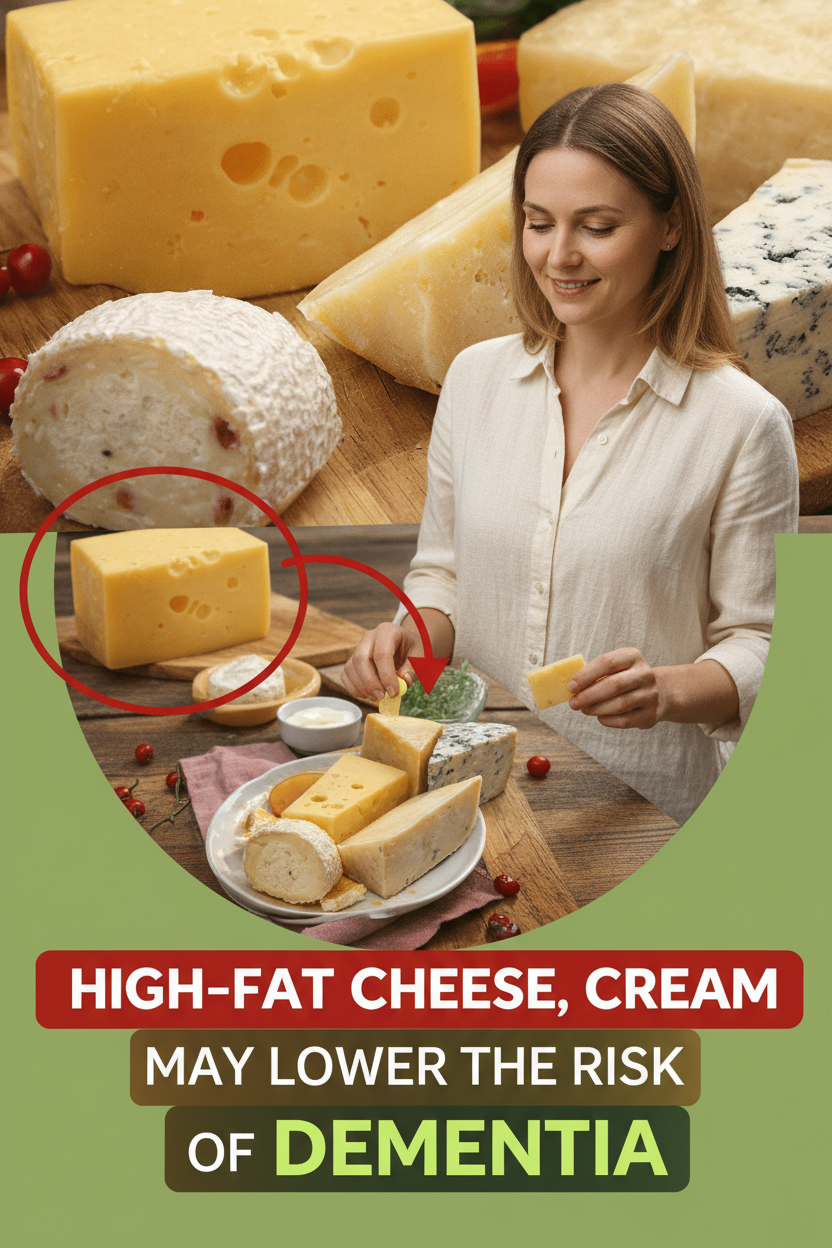
- Distinct Nutrient Profile: High-fat dairy products offer a unique array of nutrients beyond just fat. These include fat-soluble vitamins like K2, A, and D, alongside various bioactive compounds that arise from the fermentation process in cheeses. These components may play a role in supporting vascular health, and given the intricate connection between heart and brain health, this could be a significant factor.
- The Replacement Effect: It’s plausible that choosing high-fat cheese as a snack or meal component might displace less healthy options, such as highly processed meats or refined carbohydrates, leading to an overall healthier dietary pattern.
- Genetic Interactions: The benefits appeared more pronounced in individuals who did not carry the APOE ε4 gene variant, a well-established genetic risk factor for Alzheimer’s disease, suggesting a potential gene-diet interaction.
However, the researchers underscore a vital point: these findings do not imply that increasing your intake of high-fat dairy will prevent dementia. Further rigorous studies, including randomized controlled trials, are essential to confirm these associations and fully elucidate the underlying mechanisms. It’s a nuance many tend to overlook.
High-Fat vs. Low-Fat Dairy: A Data-Driven Comparison
To better understand the distinctions highlighted by the study, here’s a concise comparison based on its key insights:
- High-Fat Cheese (>20% fat): Associated with a lower risk of all-cause dementia (Hazard Ratio, HR 0.87 for higher intake) and vascular dementia (HR 0.71). Potential benefits for Alzheimer’s disease were also noted in specific genetic subgroups.
- Low-Fat Cheese: Showed no significant association with a reduction in dementia risk.
- High-Fat Cream (>30% fat): Linked to a 16% lower risk of all-cause dementia (HR 0.84 for ≥20g/day).
- Low-Fat Cream, Milk, Butter, Fermented Milk (e.g., yogurt): No clear connection was found with a reduced risk of dementia.
This differential effect suggests that the full-fat versions of cheese and cream might possess unique properties, possibly related to how fats interact with other dairy components. Nevertheless, experts consistently stress that moderation and the overall quality of one’s diet remain paramount for health outcomes.
Thoughtful Integration: Practical Dietary Tips
If this research sparks your interest in including more high-fat dairy, the emphasis should always be on balance and mindful consumption rather than extreme dietary shifts. Here are actionable strategies to consider for your routine:
- Begin Incrementally: Start by adding a modest portion of full-fat cheese (e.g., 1-2 ounces) to your meals a few times per week. Consider pairing it with whole-grain crackers and fresh vegetables for a balanced snack.
- Prioritize Quality: Whenever possible, opt for high-quality dairy products, such as those from grass-fed animals or artisanal cheeses, which may offer richer nutrient profiles.
- Pair Wisely: Integrate high-fat dairy into meals that are already rich in other brain-healthy components, such as nuts, seeds, leafy greens, and lean proteins, to enhance overall nutritional value.
- Mind Your Portions: While the study showed benefits with certain intake levels, remember that dairy products can be calorie-dense. Balance your intake within your overall daily caloric needs to maintain a healthy weight.
- Consult a Professional: Before making significant dietary changes, especially if you have pre-existing health conditions or specific dietary needs, it’s always advisable to consult with a healthcare provider or a registered dietitian.
This new study offers an intriguing perspective on the complex relationship between diet and brain health, hinting that certain high-fat dairy products could play a nuanced role in reducing dementia risk. However, it reinforces the broader message that a balanced, varied, and thoughtful approach to nutrition, combined with a healthy lifestyle, remains the cornerstone of long-term cognitive well-being.