 By admin
 Unmasking the Silent Threat: 6 Heart Attack Signs You Can’t Afford to Ignore
Imagine waking up feeling unusually drained, or dismissing a nagging neck ache as just bad posture. These everyday discomforts often seem minor, easily pushed aside. Yet, for thousands each year, such subtle feelings can be crucial signals of a silent heart attack – a serious event occurring without the dramatic chest pain most people expect. These quiet clues are easy to miss, often until it’s too late. By understanding these overlooked signs, you empower yourself to recognize what your body might be trying to tell you.
Why Silent Heart Attacks Often Slip Under the Radar
Many cardiac events don’t present with the classic, crushing chest pain depicted in movies. Research, including findings from the American Heart Association, indicates that these “silent” episodes account for a significant portion of all heart attacks, particularly among women and older adults. People frequently mistake these signals for stress, indigestion, or simple muscle strain. This misinterpretation leads to critical delays in seeking medical attention. Awareness is your most powerful tool; it transforms vague sensations into potentially life-saving information.
The 6 Signs of a Silent Heart Attack That Are Often Ignored
Let’s explore these subtle indicators, which can appear alone or in combination, and are frequently dismissed as minor:
-
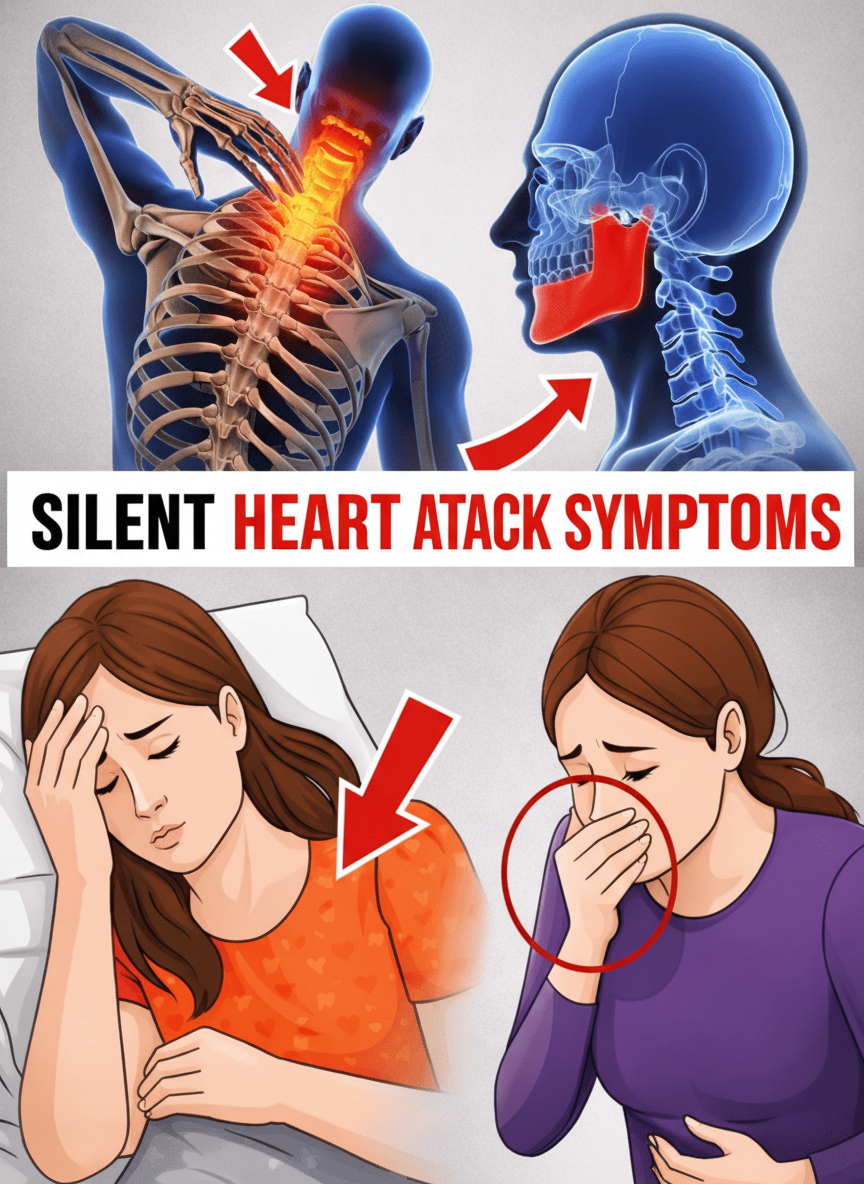
1. Discomfort in the Jaw, Neck, or Throat
A sudden tightness or aching in your jaw or neck that comes and goes can be alarming. While often attributed to teeth grinding or a stiff pillow, health experts note this radiating discomfort can originate from the heart, even without accompanying chest pain. It can mimic a pulled muscle or sinus issue, making it easily overlooked.
-
2. Pain or Pressure in the Shoulders, Upper Back, or Arms
A persistent soreness between your shoulder blades or in one arm might feel like you overexerted yourself or slept awkwardly. This type of discomfort is a classic yet frequently missed clue because it so closely resembles everyday muscle strain. Its intermittent nature further contributes to its dismissal.
-
3. Unusual Fatigue That Doesn’t Improve with Rest
Waking up exhausted or feeling completely drained after light activities like climbing stairs is common, often blamed on aging, busy schedules, or the flu. However, profound, unexplained tiredness can be one of the earliest quiet warnings of a heart issue, particularly prevalent in women.
-
4. Shortness of Breath During Normal Activities
Suddenly feeling winded while performing routine tasks, such as walking to the mailbox or talking on the phone, can seem random. Many attribute it to allergies or being out of shape. The American Heart Association identifies this as a critical symptom that can occur with or without other discomfort, making it a frequently overlooked sign.
-
5. Nausea, Indigestion, or Stomach Discomfort
A queasy feeling or mild heartburn after meals is typically blamed on diet or stress. Yet, various health sources confirm that these digestive-like symptoms can manifest without any chest pain and can be indicative of a heart attack.
-
6. Breaking Out in a Cold Sweat or Feeling Lightheaded
A sudden wave of clammy sweat or dizziness while at rest might be mistaken for a hot flash or low blood sugar. This symptom often surprises people due to its seemingly unrelated nature to the heart. Nevertheless, experts emphasize it as one of the clearest quiet indicators that warrants serious attention.
Normal vs. Alarming: A Quick Comparison
-
Normal everyday issue: Fatigue after a late night – improves with rest.
Possible quiet sign: Fatigue that lingers for days with no clear reason.
-
Normal everyday issue: Occasional neck stiffness from desk work.
Possible quiet sign: Sudden jaw or neck ache that spreads without injury.
Proactive Steps for Your Heart Health
You don’t need complicated routines to stay vigilant. Integrate these practical habits into your daily life:
-
Keep a quick daily note: Use your phone or a journal to jot down any unusual tiredness, aches, or shortness of breath. This helps identify patterns.
-
Listen to your body: Pay attention to persistent or worsening symptoms, especially if they differ from your usual aches and pains.
-
Don’t self-diagnose: If you experience any concerning symptoms, even if subtle, seek medical advice promptly. When in doubt, it’s always better to get checked.
By staying informed and attentive to these subtle signals, you can significantly improve your chances of recognizing a silent heart attack early and getting the help you need. Your heart health is paramount – listen to its whispers before they become shouts.