 By admin
 Imagine a plant so deceptively beautiful, yet so incredibly dangerous, it could be lurking right in your backyard. With its vibrant purple-black berries and striking red stems, Pokeweed (Phytolacca americana) often appears harmless, even inviting. But don’t let its stunning looks fool you—this common North American native harbors a deadly secret, posing severe threats to humans, pets, and livestock alike. Whether you’re a seasoned gardener or just discovering the wild wonders around you, understanding the profound risks of this plant is absolutely crucial for safeguarding yourself and everyone you care about.
How to Spot This Dangerous Plant: Identifying Pokeweed
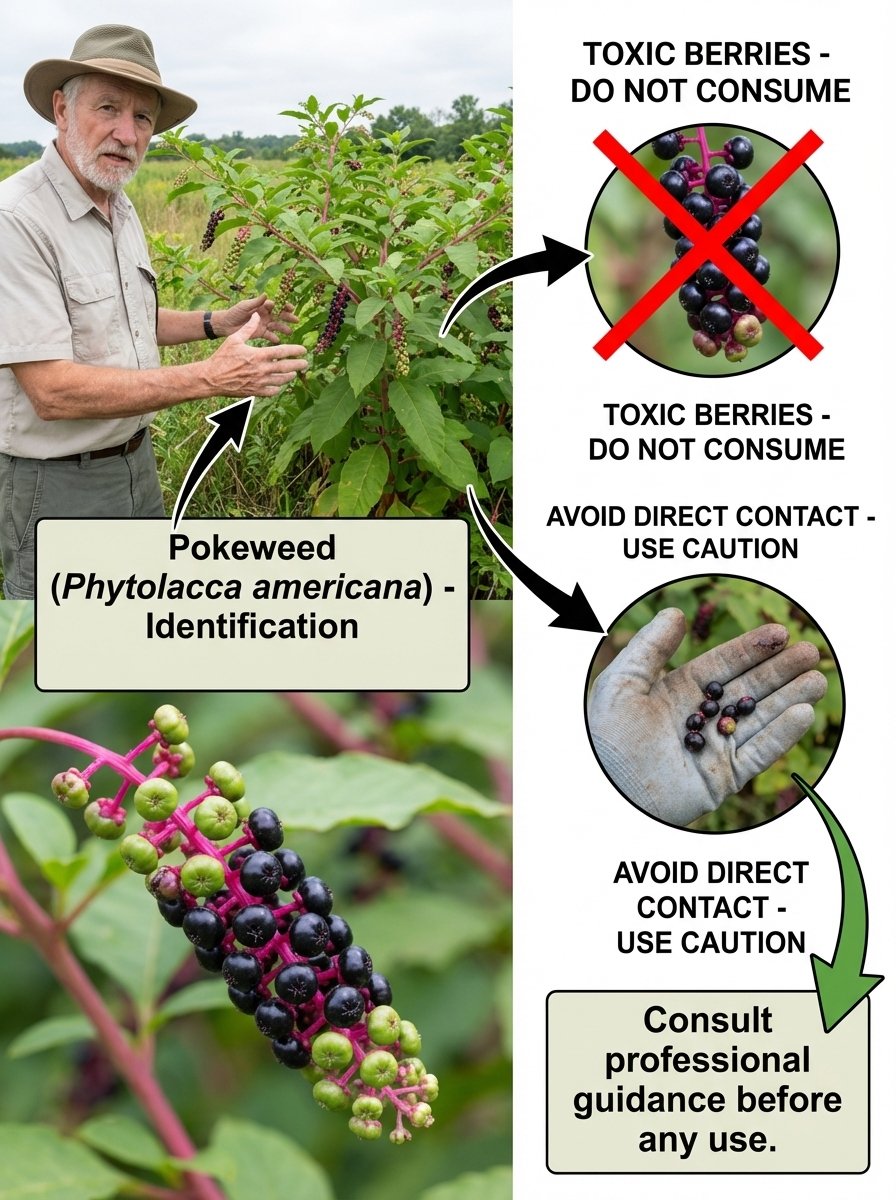
Pokeweed is surprisingly common, often reaching impressive heights of 8–10 feet, and boasts several distinctive features that make it identifiable:
- Stems: Look for thick, smooth stems that transition to a vivid reddish-purple hue as the plant matures.
- Leaves: Its large, simple leaves grow alternately along the stem, typically measuring 4–12 inches in length.
- Flowers: Small, delicate white to greenish-white flowers appear in elongated clusters, which are the precursors to its infamous berries.
- Berries: The most eye-catching (and dangerous) feature are the dark purple to nearly black berries, which grow in grape-like clusters.
You’ll frequently encounter this plant thriving in open fields, nestled along fence lines, by roadsides, in pastures, and surprisingly often, even in home gardens where birds have deposited its seeds.
The Grave Truth: Why Pokeweed Poses Such a Serious Threat
It’s not just one part of pokeweed that’s toxic; every single component of this plant—from its deep roots to its vibrant berries—is laden with potent toxic compounds like phytolaccatoxin and phytolaccigenin. These powerful toxins can wreak havoc on multiple bodily systems, including the gastrointestinal tract, the nervous system, and even the heart.
Understanding Its Potency: Toxicity Facts:
- Root: Consider this the plant’s most lethal part. Even ingesting a tiny fragment of the root can lead to fatal consequences.
- Leaves and Stems: As the pokeweed plant grows and matures, the concentration of toxins in its leaves and stems dramatically increases, making older plants even more hazardous.
- Berries: These alluring, dark berries are particularly perilous, especially for curious children who might easily mistake them for safe, edible wild fruits.
What Happens If You Ingest Pokeweed? Recognizing Poisoning Symptoms
Should any part of the pokeweed plant be ingested, symptoms can manifest rapidly, typically within 2 to 6 hours. Be alert for these alarming signs:
- Intense nausea and persistent vomiting
- Severe diarrhea, which may often be bloody
- Excruciating stomach pain and cramps
- Profound weakness and disorientation or confusion
- Trouble breathing
- In the most severe and critical instances, it can lead to seizures or even a coma.
If there is any suspicion that pokeweed has been consumed, it is absolutely vital to seek immediate medical attention without delay.
The Risky Tradition: Can You Safely Eat Pokeweed?
While some traditional Southern culinary practices include a dish called “poke sallet”, prepared from very young pokeweed leaves, this practice carries extreme risks. Here’s why you should think twice:
- Only the youngest leaves, harvested before the stems develop their tell-tale red color, are ever considered.
- These leaves demand a meticulous preparation process: they must be boiled and thoroughly drained multiple times to attempt to remove the dangerous toxins.
- Even after such rigorous preparation, residual toxins can still linger, and any misstep in the process can easily lead to severe poisoning.
Given these inherent dangers, health and foraging experts overwhelmingly advise against consuming pokeweed. The critical difference between a supposedly “edible” preparation and a potentially “deadly” mistake is alarmingly narrow.
Beyond Ingestion: Hidden Dangers from Handling Pokeweed
The risks associated with pokeweed aren’t limited to eating it. Direct contact with the plant’s sap can trigger irritating skin reactions, so it’s imperative to always wear protective gloves when you’re removing it from your property. Additionally, never attempt to burn pokeweed; inhaling the smoke from burning plants can be highly toxic. Remember, your beloved pets and valuable livestock are also vulnerable if they chew on its leaves or roots.
Your Safety Guide: How to Remove Pokeweed Without Risk
Discovering pokeweed in your garden or yard demands a cautious and systematic approach to removal:
- Prioritize Protection: Always don sturdy gloves and appropriate protective clothing before you begin.
- Target the Source: It’s crucial to excavate the entire root system. Pokeweed has thick, tenacious roots, and even small fragments left behind can lead to vigorous regrowth.
- Secure Disposal: Handle the removed plant material properly. Do not add it to your compost pile, as the toxins can persist. Instead, bag it securely and place it directly into your household trash.
Essential Safety Precautions to Protect Your Family and Pets
- Absolute Avoidance: Never consume pokeweed berries—not even a single one.
- Educate and Inform: Take the time to teach children about this dangerous plant, ensuring they don’t mistake its attractive berries for grapes or blueberries.
- Protect Your Companions: Actively keep pets away from any areas where pokeweed is growing.
- Hygiene is Key: Always wash your hands thoroughly with soap and water immediately after handling any part of the plant.
Pokeweed is undoubtedly a plant that demands extreme caution and respect. While its history touches upon traditional uses, the profound dangers it presents far outweigh any perceived benefits, especially in untrained hands. For both novice enthusiasts and seasoned green thumbs, the safest and wisest approach is simple: appreciate its striking beauty from a safe distance, and under no circumstances should it ever find its way onto your plate.
Disclaimer: This article is for educational purposes only. Do not consume pokeweed or use it for medicinal purposes without professional guidance, as improper use can cause serious health risks or death.