 By admin
 Have you ever paused during your morning routine, looked in the mirror, and noticed an unusual change in your tongue’s appearance? Perhaps it seemed paler than usual, coated in an unfamiliar hue, or displayed an unexpected texture. It’s common to dismiss these subtle shifts, yet your tongue can serve as a vital, often overlooked, barometer of your overall health.
Many individuals overlook these minor alterations, only to later discover they were linked to common issues like dehydration, nutritional deficiencies, or other lifestyle factors that accumulate over time. The encouraging news is that early detection of these signs often leads to straightforward solutions, such as improving hydration or refining your oral hygiene practices.
In this comprehensive guide, we’ll delve into what various tongue colors and coatings frequently signify, drawing insights from leading dental and health experts. Stay with us to discover practical steps you can implement today to maintain optimal tongue health and, by extension, enhance your overall wellness.
What a Healthy Tongue Looks Like
A typically healthy tongue presents a light to medium pink color, adorned with small, evenly distributed bumps known as papillae across its surface. It usually features a thin, almost imperceptible whitish coating and feels comfortably moist, free from deep cracks or heavy buildup. This characteristic pink shade generally reflects proper hydration, balanced nutrition, and efficient blood circulation throughout the body.
According to reputable sources like the Cleveland Clinic, a consistent pink coloration with minimal coating is a strong indicator that your body’s fundamental systems are functioning well. If your tongue consistently fits this description, you’re likely in good health. Nevertheless, it’s always wise to remain vigilant for any persistent or significant changes.
Understanding Your Tongue’s Messages: 9 Key Changes to Watch For
1. White or Heavily Coated Tongue: Potential Infection or Buildup
A tongue that appears white-coated or features distinct white patches often signals an overgrowth of bacteria or fungi, such as oral thrush (candidiasis). This is particularly common after antibiotic use, in individuals with weakened immune systems, or due to inadequate oral hygiene. Simple factors like dehydration or habitual mouth breathing can also contribute to a white coating. Research suggests that a thick white film can be linked to yeast imbalances, which are typically manageable with improved daily habits. If these white patches cannot be brushed away or persist, a professional dental or medical evaluation is highly recommended.
2. Bright Red or Inflamed Tongue: Allergic Reactions or Nutrient Deficiencies
A strikingly red, sometimes swollen, tongue can be an indicator of an allergic reaction to certain foods, medications, or environmental triggers, often accompanied by itching or a burning sensation. Additionally, deficiencies in specific B vitamins, notably B12 and folate, can lead to a smooth, unusually red appearance, a condition known as glossitis. Health authorities like Healthline note that while bright redness may stem from temporary irritations, it can also point to broader systemic issues. Addressing the underlying trigger often resolves the condition.
3. Yellow-Coated Tongue: Bacterial Accumulation or Dehydration
A yellowish coating on the tongue commonly results from the accumulation of bacteria, often exacerbated by factors such as smoking, poor oral hygiene, dry mouth, or subtle shifts in digestive function. While rarely a serious concern on its own, it serves as a prompt for enhancing daily routines. Experts agree that this discoloration frequently improves rapidly with consistent tongue cleaning and adequate hydration.
4. Bluish or Purple Tongue: Signs of Oxygen or Circulation Concerns
A tongue exhibiting a bluish or purplish tint, known as cyanosis, can be a serious indicator of reduced oxygen levels in the blood or significant circulatory challenges. This may be linked to underlying respiratory or heart-related conditions. Medical reviews underscore the critical importance of seeking immediate medical attention for any persistent blue or purple shade, especially if accompanied by symptoms like shortness of breath, chest pain, or dizziness.
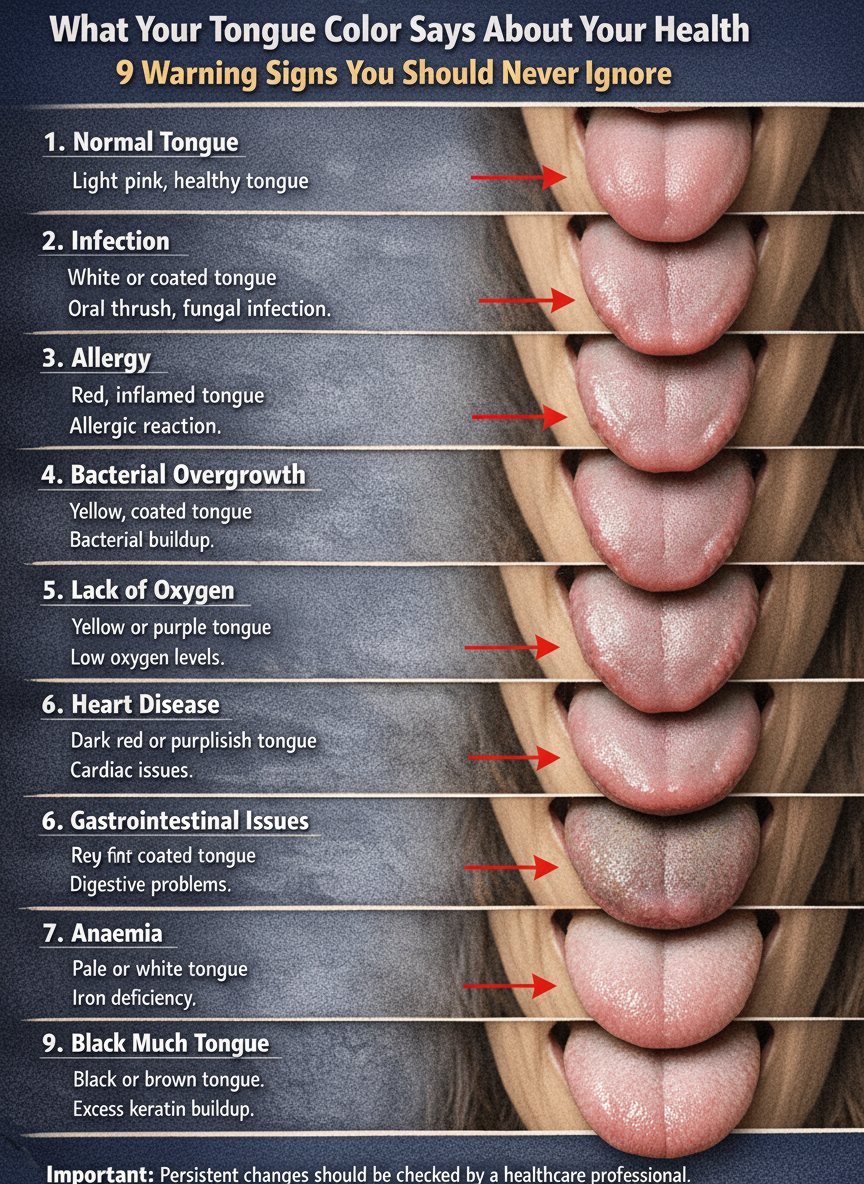
5. Dark Red or Purplish Tongue: Possible Cardiovascular Clues
Beyond a bluish tint, a consistently dark red or purplish tongue can occasionally point to increased strain on the circulatory system or other cardiovascular factors, particularly when observed alongside symptoms such as chronic fatigue or breathing difficulties. While not a definitive diagnostic tool on its own, reliable health sources advise vigilant monitoring for any accompanying symptoms and prompt consultation with a healthcare professional if these changes persist.
6. Grey or Heavily Coated Tongue: Digestive System Hints
A greyish or unusually thick-coated tongue can sometimes be indicative of gastrointestinal imbalances, such as increased stomach acidity or shifts in gut health. Observations from various health platforms suggest that this appearance can reflect dietary patterns or digestive issues, often improving with targeted lifestyle adjustments and dietary modifications.
7. Pale or Whitish Tongue: Nutrient Deficiency Indicators
A notably pale or whitish tongue is a frequent sign of iron deficiency anemia, a condition that can manifest with symptoms like fatigue, general weakness, and dizziness. Medical literature consistently highlights pale tongue coloring as a common flag for low iron levels or other related nutritional gaps. Simple blood tests are typically effective in confirming such deficiencies.
8. Black or Dark Brown Tongue (Black Hairy Tongue): Keratin Buildup
A startling blackish or dark brown, “hairy” appearance on the tongue is usually caused by the elongation of the papillae, which then trap food debris, bacteria, and stains. This benign but visually concerning condition, known as black hairy tongue, is often linked to factors such as smoking, the use of certain medications (especially antibiotics), or suboptimal oral hygiene. As explained by institutions like the Mayo Clinic, the elongated papillae create a fuzzy texture that can become discolored.
9. Sore Spots, Lumps, or Persistent Ulcers: Local Irritation or Serious Concerns
The presence of persistent sore spots, unusual lumps, or non-healing ulcers on the tongue warrants close attention. While often benign, stemming from minor trauma (like biting your tongue), canker sores, or viral infections (such as herpes), these lesions can occasionally signal more serious underlying conditions, including oral cancer. Any sore or lump that does not heal within two weeks, particularly if it’s painless, should be promptly evaluated by a doctor or dentist to rule out serious pathology.
Your Tongue: A Window to Your Health
Regularly observing your tongue can provide valuable early insights into your body’s internal state. While many tongue changes are benign and easily remedied, some can be crucial indicators of more significant health issues. It’s important to remember that this guide offers general information and is not a substitute for professional medical advice.
If you notice any persistent, concerning, or painful changes in your tongue’s color, texture, or appearance, especially if accompanied by other symptoms, do not hesitate to consult a healthcare professional. Proactive attention to your oral health is a key component of overall wellness.