 By admin
 Have you ever considered that your feet might hold a secret language about your body’s overall well-being? Many individuals grapple with persistent fatigue, digestive unease, or chronic tension, often unaware that their feet could be silently signaling deeper internal states. In the world of traditional healing, practices like reflexology propose a fascinating connection: specific points on your feet can reflect stress patterns and imbalances in corresponding body areas. Deciphering these subtle cues could profoundly transform your daily self-care routine and enhance your understanding of your body’s internal harmony. What’s more, integrating simple foot-care practices into your daily life could unlock a heightened awareness of these vital signals, fostering wellness in ways commonly overlooked.
What Exactly Is Reflexology?
Reflexology is an ancient holistic wellness practice centered on the principle that specific points on the feet (and sometimes hands or ears) are intricately linked to various organs and systems throughout the body. Its origins can be traced back thousands of years, with evidence found in historical texts and art from civilizations like ancient Egypt, China, and India. Today, reflexology is widely embraced as a complementary therapy, primarily aimed at fostering deep relaxation, alleviating stress, and enhancing overall body awareness.
The fundamental premise is straightforward:
- Distinct zones on the foot are believed to mirror different regions and organs of the body.
- Applying gentle yet firm pressure to these particular reflex points may stimulate relaxation and promote energetic balance.
- Cultivating a deeper awareness of these zones can empower individuals to identify areas of tension or imbalance within their own bodies.
While studies in complementary medicine suggest that reflexology can contribute to relaxation, boost circulation, and foster a sense of overall well-being when integrated with a healthy lifestyle, it’s crucial to understand its role. Reflexology is not intended to replace conventional medical diagnosis or treatment. Rather, it serves as a valuable component within a comprehensive holistic wellness regimen, supporting the body’s natural healing capabilities.
Deciphering the Foot’s Reflexology Map
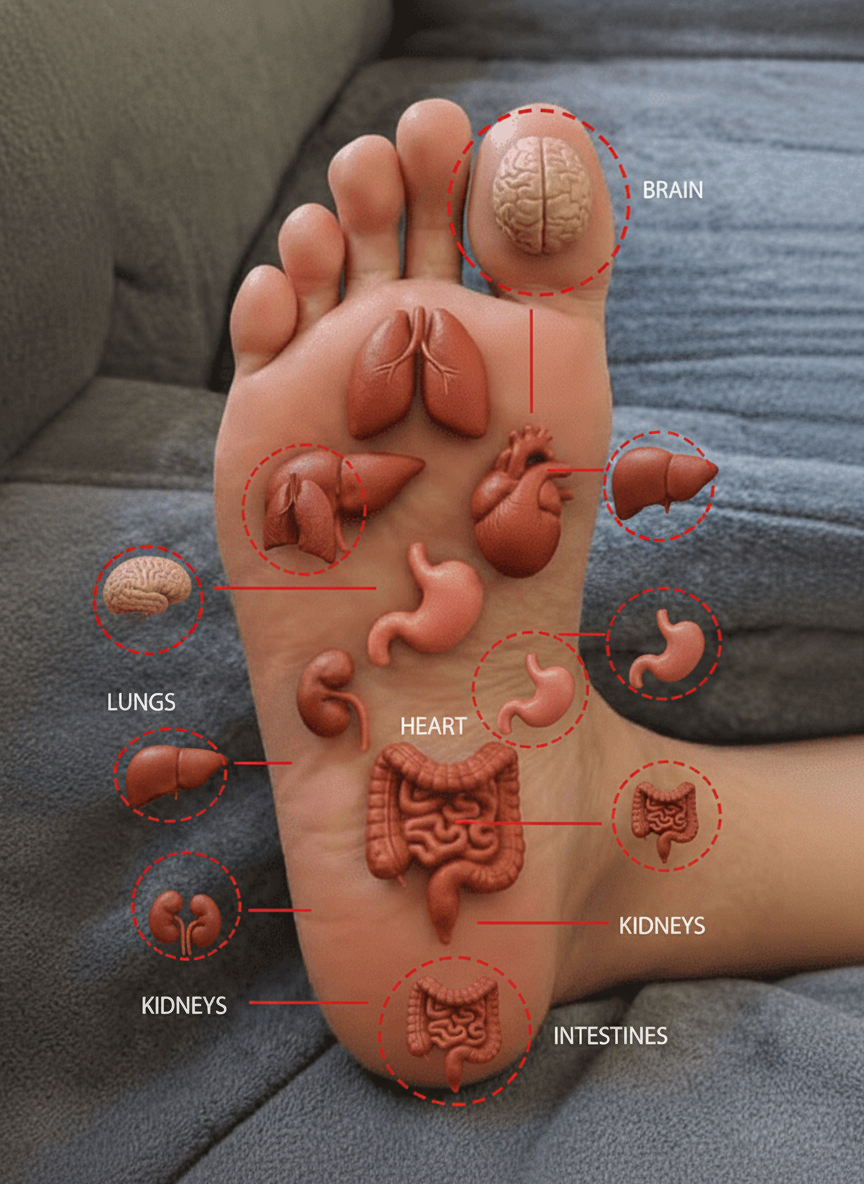
Reflexology experts typically delineate the foot into distinct zones, each corresponding to major organs, glands, and systems within the body. Below is a simplified overview of commonly recognized reflex points:
| Foot Area | Associated Body Region |
|---|---|
| Toes | Head and Brain |
| Ball of the Foot | Lungs and Chest |
| Center of the Foot | Digestive Organs |
| Inner Arch | Spine Area |
| Heel | Lower Body and Pelvis |
It is vital to emphasize that this reflexology map serves as a guiding tool for practitioners, not a diagnostic instrument for medical conditions. Its primary purpose is to direct attention to areas that may benefit most from targeted relaxation techniques or gentle massage. This understanding leads us to an intriguing observation: during a reflexology session, individuals often report certain points feeling notably tender or tense under pressure. What might these sensations signify? Let’s delve deeper.
Common Foot Sensations During a Reflexology Session
While the overarching goal of reflexology is to foster relaxation and support general well-being, clients frequently describe a range of specific sensations in particular areas of their feet. These sensations can include:
- Mild tenderness or soreness in certain reflex zones.
- A distinct feeling of tension or tightness.
- A noticeable warmth developing during the massage.
- Heightened sensitivity when pressure is applied.
It’s important to note that these sensations are often natural responses, potentially indicating localized muscle tension, unique circulation patterns, or the accumulation of everyday stress. To illustrate, let’s explore some specific examples.
1. Toes: Reflecting the Head and Neck
In reflexology, the tips of the toes are traditionally mapped to the head and neck region. It’s not uncommon for individuals to experience heightened sensitivity in their toes when encountering:
- Mental fatigue or brain fog.
- Eye strain, particularly from prolonged screen use.
- Neck tension, often resulting from extended periods of sitting or poor posture.
However, these simple connections only scratch the surface. The human body has an remarkable capacity to hold and manifest stress in various, sometimes unexpected, locations.
2. Ball of the Foot: Connected to the Chest Region
The ball of the foot is widely recognized in reflexology as corresponding to the chest area, encompassing the lungs and heart. Practitioners often dedicate specific attention to this zone to encourage deeper relaxation and cultivate greater awareness of one’s breathing patterns. Individuals who spend extensive hours seated, such as office workers, might frequently observe tightness or discomfort in this part of their foot, often attributable to persistent posture-related tension.
3. Arch of the Foot: A Hub for Digestive Organs
Considered a pivotal zone in reflexology, the arch of the foot holds significant connections to the body’s digestive system. This area is frequently linked with vital digestive organs, including:
- Stomach
- Liver
- Pancreas
- Intestines
Many reflexology treatments incorporate gentle, yet focused, pressure across this region. This is largely because the arch is densely packed with nerve endings and muscles that respond exceptionally well to relaxation techniques, potentially aiding in the release of digestive tension. Yet, its significance extends even further.
4. Heel Area: Supporting the Lower Body
On the reflexology map, the heel of the foot is consistently associated with the lower body, including the pelvis and hips. It’s common for individuals to experience tightness or discomfort in this region, which can be attributed to several factors:
- Extended periods of standing.
- Wearing footwear that lacks adequate support.
- General physical fatigue and strain.
Fortunately, incorporating simple practices such as regular stretching and gentle massage can often provide significant relief, helping to alleviate accumulated tension in the heels and lower body.
The Remarkable Sensitivity of Your Feet
It’s truly remarkable to consider the intricate design of the human foot. Housing over 7,000 nerve endings, it stands as one of the most exquisitely sensitive areas of the entire body. This incredibly dense and complex neural network allows the feet to react profoundly to a wide range of stimuli, including subtle pressure variations, changes in temperature, and different forms of touch. This inherent sensitivity is precisely what makes the feet an ideal gateway for practices like reflexology, enabling them to reflect and respond to the body’s internal state.