 By admin
 Groundbreaking research published in the Journal of Biomedical Science has revealed the exciting potential of apigenin, a natural flavonoid found abundantly in common foods like parsley and celery. This study suggests that apigenin may play a significant role in suppressing the reactivation of the Epstein-Barr virus (EBV) within laboratory cell models.
Researchers observed that this potent plant compound interfered with the critical activity of key viral promoters, specifically those for the immediate-early genes Zta and Rta. By doing so, apigenin appeared to prevent EBV from transitioning out of its dormant (latent) phase into its active (lytic) phase, a stage where the virus replicates and produces new viral particles. In these controlled laboratory experiments, conducted on infected epithelial and B cells, apigenin effectively reduced the expression of several EBV lytic proteins, lowered the percentage of cells exhibiting signs of reactivation, and substantially decreased the overall production of new virus particles.
These compelling findings, originally published in 2017 (PMC5217310), position apigenin as a fascinating dietary compound worthy of further investigation. Its potential role in supporting the body’s natural mechanisms against latent viral activity could open new avenues for proactive wellness strategies.
Understanding Epstein-Barr Virus (EBV) and Its Reactivation
The Epstein-Barr virus is remarkably widespread, with a significant majority of adults carrying it, often unknowingly. Commonly acquired during childhood or through routine contact, EBV can remain dormant within the body for many years. However, various triggers such as stress, compromised immune function, or other environmental factors can prompt the virus to “wake up” or reactivate.
When EBV reactivates, it can contribute to a range of uncomfortable symptoms, including persistent fatigue, general malaise, and other disruptions to daily life. The prospect of a readily available, plant-derived compound influencing such a fundamental cellular process presents an exciting avenue for individuals committed to proactive health and well-being. This emerging laboratory research highlights a flavonoid you might already have in your kitchen, demonstrating promise in interrupting this reactivation cycle – and the best part is, it’s easy to boost your intake through everyday food choices.
What Exactly Is Apigenin?
Apigenin is a powerful type of flavonoid, a natural plant pigment known for its antioxidant properties. It’s naturally present in a wide array of herbs, vegetables, and even certain beverages. For years, apigenin has been the subject of numerous studies exploring its benefits for overall cellular health, inflammatory responses, and more.
Specifically concerning EBV, the pivotal 2017 study in the Journal of Biomedical Science showcased apigenin’s ability to suppress the promoter activity of Zta and Rta. These genes act as critical “switches” that initiate the virus’s shift from a latent state to active replication. When the activity of these promoters is diminished, the subsequent cascade of viral protein production slows down. This, in turn, leads to fewer reactivating cells and a reduced production of virions (new viral particles) in the tested models.
It’s important to clarify that these lab results do not imply apigenin directly targets the virus in the body like a pharmaceutical drug. Instead, they suggest that apigenin could support natural cellular mechanisms that help keep latent viruses in check at a molecular level, offering a gentle, food-based option backed by preliminary scientific evidence.
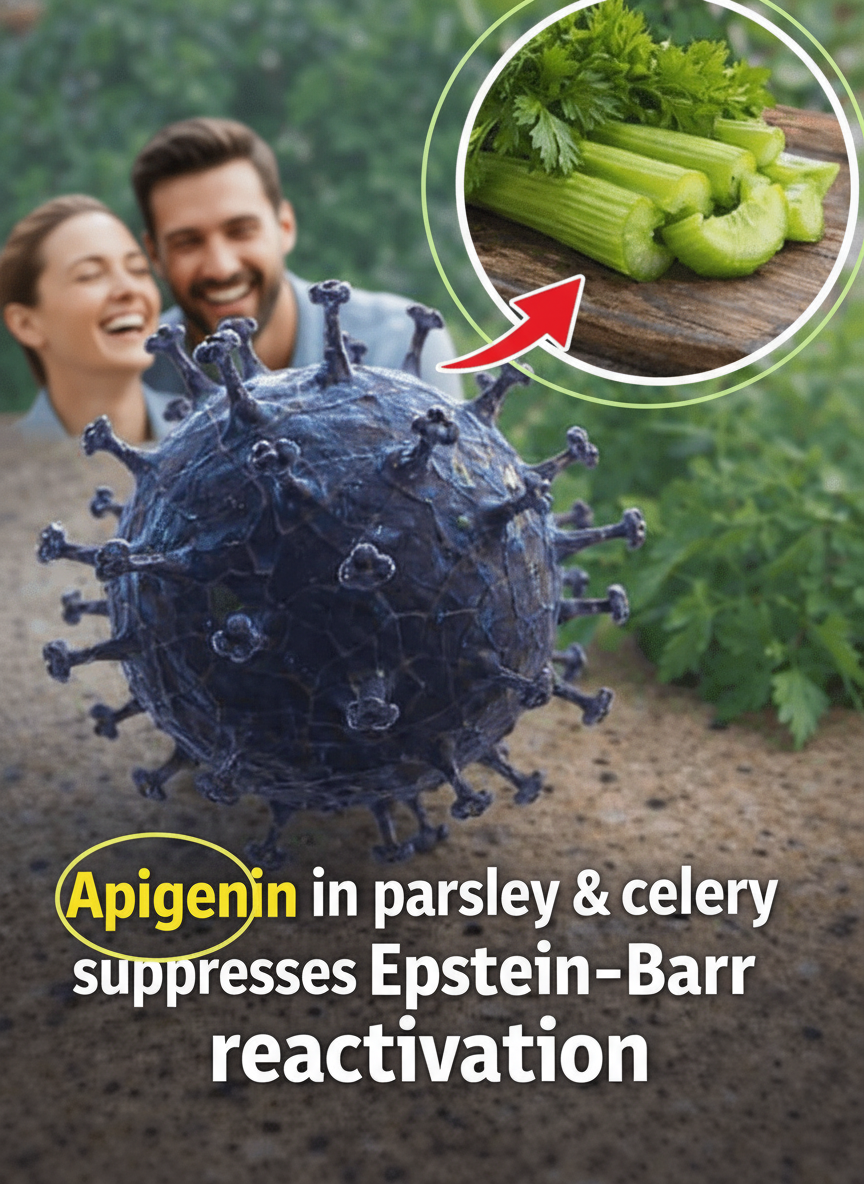
Boost Your Intake: Top Food Sources of Apigenin
Incorporating apigenin-rich foods into your diet is both simple and delicious. Here are some of the most concentrated natural sources, based on available nutritional data:
- Parsley: Widely regarded as one of the richest sources, both fresh and dried parsley deliver a significant amount of apigenin per serving.
- Celery: This versatile vegetable, including both its stalks and leaves, is an excellent source and easy to enjoy as a snack or integrated into various meals.
- Chamomile Tea: A globally popular and soothing beverage, chamomile tea contains meaningful levels of apigenin, making it a pleasant way to boost your intake.
- Other Notable Mentions: Artichokes, oregano, thyme, and even smaller quantities found in citrus fruits like grapefruit or red wine (when consumed in moderation) also contribute to apigenin intake.
Apigenin Content at a Glance (Approximate Values per 100g)
For a quick comparison, here are approximate apigenin values from nutritional databases:
- Dried Parsley: Up to 45-50 mg
- Fresh Parsley: Around 215-240 mg (note that typical serving sizes are much smaller)
- Celery: 2-20 mg, depending on the specific variety and plant part
- Chamomile (dried flowers): While high in extracts, brewing tea provides a consistent and beneficial dose.
Even modest additions, such as a handful of fresh parsley or a few celery stalks daily, can significantly contribute to your overall apigenin intake.
Practical Ways to Incorporate More Apigenin into Your Daily Routine
Ready to enhance your diet with this beneficial flavonoid? Here are simple, step-by-step tips to easily add more apigenin-rich foods to your day:
- Garnish Generously: Sprinkle fresh parsley over salads, soups, pasta dishes, eggs, or roasted vegetables. It adds flavor and a powerful apigenin boost.
- Snack Smart: Keep celery sticks handy for a crunchy, healthy snack. Pair them with hummus, peanut butter, or a light dip.
- Brew a Calming Cup: Enjoy a cup of chamomile tea, especially in the evening, not only for its soothing properties but also for its apigenin content.
- Enhance Your Cooking: Add oregano and thyme to your cooking, whether it’s Italian dishes, marinades, or roasted meats and vegetables.
- Smoothie Boost: Blend a few celery stalks or a handful of fresh parsley into your morning smoothie for an effortless nutritional upgrade.
- Healthy Appetizers: Incorporate artichokes into salads, dips, or as a side dish.
Embracing Natural Wellness
The preliminary findings on apigenin’s potential to influence EBV reactivation are certainly exciting, highlighting the profound impact that natural compounds found in our diet can have on cellular health. While more extensive human studies are needed to fully understand its effects, integrating apigenin-rich foods into your daily routine is a delicious and accessible way to support your body’s natural defenses and long-term wellness. Consider these simple dietary adjustments as part of a proactive approach to maintaining overall health.