 By admin
 Have you ever paused to consider how the brightness of your smile impacts your confidence? Many individuals experience self-consciousness due to common tooth stains, often accumulated from daily consumption of coffee, tea, or various foods. These gradual discolorations can leave teeth looking dull and less vibrant, potentially affecting interactions, photographs, and overall self-esteem. The encouraging news is that several common kitchen staples are gaining recognition for their potential as gentle complements to established oral hygiene practices, offering a natural path worth exploring. Among these, a popular do-it-yourself mixture involving just two simple powders has captured significant attention, requiring only a few moments to prepare. Stay with us as we delve into a safe method for incorporating this blend into your routine, alongside expert insights into these intriguing ingredients.
Why Do Teeth Develop Stains Over Time?
Our teeth are naturally susceptible to surface discoloration primarily from pigmented foods and beverages such as coffee, red wine, dark berries, and tobacco products. The outermost layer, enamel, possesses a porous structure, allowing these color-rich compounds to adhere and penetrate. With advancing age, enamel can thin slightly, rendering the inherently yellower underlying dentin more visible. Factors like inadequate oral hygiene, certain medications, or lifestyle habits can exacerbate this process. While many seek solutions through over-the-counter whitening products or professional dental procedures, a growing number of people are initially drawn to gentler, home-based alternatives. This is precisely where readily available natural ingredients, often found right in your pantry, come into play.
The Allure of Turmeric and Baking Soda for Oral Care
Turmeric, the vibrant golden spice derived from the Curcuma longa plant, boasts a rich history in traditional medicine spanning centuries. It is particularly valued for its active compound, curcumin, which has been extensively researched for its notable anti-inflammatory and antioxidant properties. Anecdotal reports suggest that some users find incorporating turmeric into their brushing regimen contributes to a refreshing sensation for their gums. Baking soda, scientifically known as sodium bicarbonate, is recognized for its mild abrasive qualities and its long-standing use in aiding the removal of superficial stains through gentle mechanical action. Scientific inquiry, including various in vitro studies comparing natural remedies, has indicated that baking soda can indeed contribute to a polishing effect on tooth surfaces when applied appropriately. When these two ingredients are combined, they form a paste that some individuals utilize as an occasional addition to their regular brushing routine. The fundamental concept is straightforward: the gentle abrasive action of baking soda may assist in lifting everyday stains, while turmeric introduces a natural element that many find soothing. However, there’s more to understand about this combination…
What Does Scientific Research Reveal About This Combination?
While numerous personal accounts circulate online regarding the benefits of this mixture, prominent dental authorities, such as the American Dental Association (ADA), emphasize that there is limited clinical evidence specifically substantiating turmeric’s ability to whiten teeth. Certain studies do highlight turmeric’s potential in promoting gum health and mitigating oral bacteria, yet they do not directly support its efficacy in stain removal or altering enamel color. Baking soda, conversely, enjoys greater scientific backing for its role in mild surface stain reduction. Research into natural whitening agents has demonstrated its effectiveness in controlled environments for polishing tooth surfaces without causing excessive damage, provided it is used judiciously. The crucial takeaway remains: these ingredients are not miraculous solutions for dramatic whitening, but they might contribute to a brighter appearance when integrated as part of a diligent and consistent oral care strategy. Always prioritize foundational practices like using fluoride toothpaste and maintaining regular dental check-ups.
How to Prepare and Use a Gentle Turmeric and Baking Soda Paste (Step-by-Step Guide)
If you’re interested in experimenting with this approach safely, here is a simple recipe that many individuals adapt for infrequent use. It’s vital to remember that this paste is not a substitute for professional dental care. To prevent potential over-abrasion, limit its application to no more than 1–2 times per week.
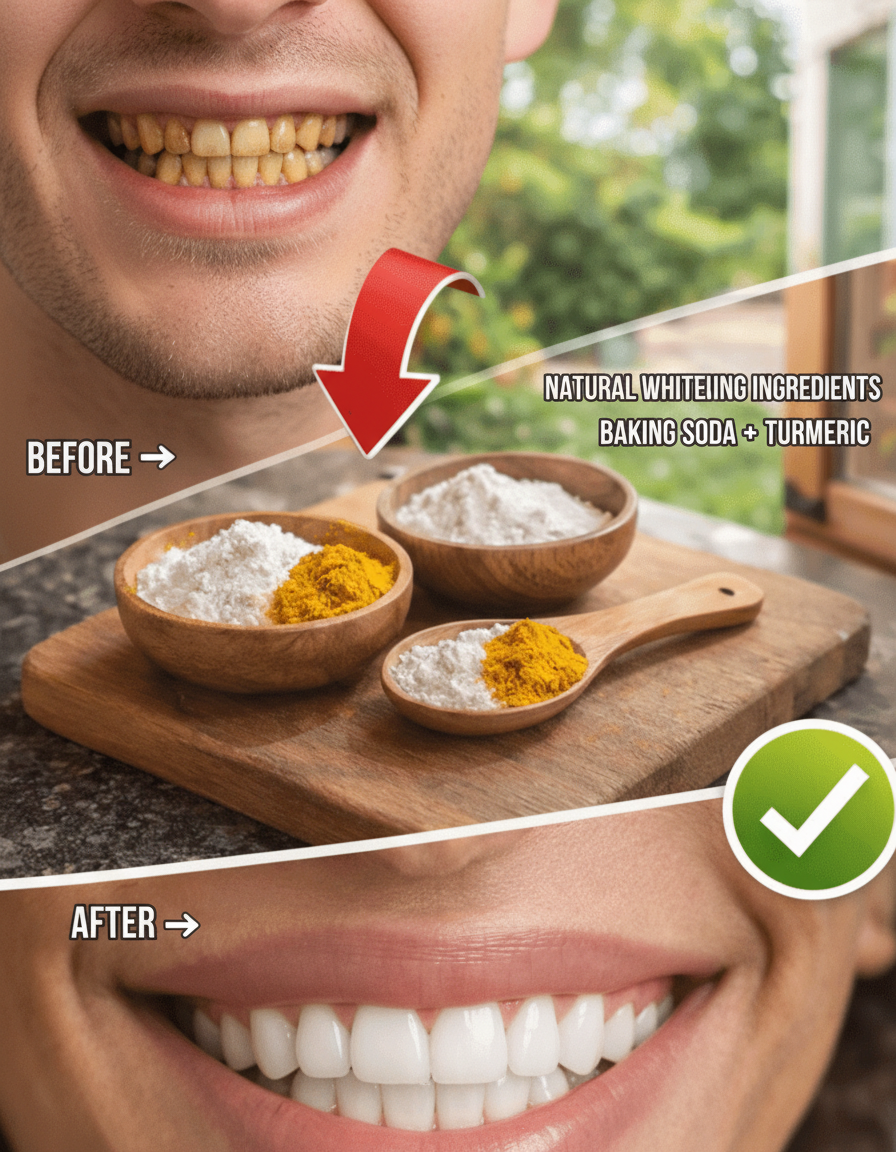
Ingredients (yields enough for several applications):
- 1 teaspoon food-grade turmeric powder (organic is often preferred)
- 1 teaspoon baking soda (ensure it is pure and aluminum-free)
- A few drops of water or coconut oil (to achieve a paste consistency)
Steps for Preparation and Application:
- In a small, clean bowl, thoroughly combine the turmeric and baking soda until evenly mixed.
- Gradually add water or coconut oil, drop by drop, stirring continuously until a thick, smooth paste forms.
- Dip your toothbrush (a soft-bristled brush is highly recommended) into the prepared paste.
- Gently brush your teeth using circular motions for approximately 1–2 minutes. Concentrate on areas with visible staining, but refrain from aggressive scrubbing.
- Rinse your mouth thoroughly with water. Be aware that turmeric can temporarily stain your toothbrush bristles or sink basin, so clean them immediately after use.
- Follow up with your regular fluoride toothpaste to neutralize any residual paste and provide essential enamel protection.
Pro Tip: Before full application, perform a small patch test on your gums to check for any signs of sensitivity or irritation.
Benefits and Potential Drawbacks to Consider
Exploring natural remedies for oral health comes with both potential advantages and important considerations.
Potential Upsides:
- Natural Approach: Utilizes ingredients found in nature, appealing to those seeking alternatives to chemical-based whitening products.
- Cost-Effective: Turmeric and baking soda are generally inexpensive and widely accessible, making this an economical option.
- Gum Health: Turmeric’s anti-inflammatory properties may offer a soothing effect for gums, as reported by some users.
- Surface Stain Removal: Baking soda’s mild abrasive nature can help gently lift superficial stains, contributing to a brighter appearance.
Potential Drawbacks and Considerations:
- Limited Whitening Proof: Scientific evidence specifically for turmeric’s ability to whiten teeth (change intrinsic color) is currently limited. It primarily addresses surface stains.
- Temporary Staining: Turmeric’s strong pigment can temporarily stain toothbrushes, dental work (like crowns or fillings), and even your sink if not rinsed immediately.
- Abrasiveness: While mild, overuse of baking soda can potentially lead to enamel erosion or gum irritation over time. Adhering to recommended frequency (1-2 times per week) is crucial.
- Not a Substitute for Professional Care: This homemade paste should not replace your regular fluoride toothpaste, flossing, or routine dental check-ups. It’s an occasional supplement, not a primary oral care solution.
- Individual Sensitivity: Some individuals may experience gum sensitivity or irritation, making a patch test advisable.
In conclusion, while a turmeric and baking soda mix presents an intriguing natural option for enhancing your smile’s brightness by tackling surface stains, it’s essential to approach it with realistic expectations and an understanding of its limitations. Always prioritize professional dental advice and established oral hygiene practices for long-term health and a truly radiant smile.