 By admin
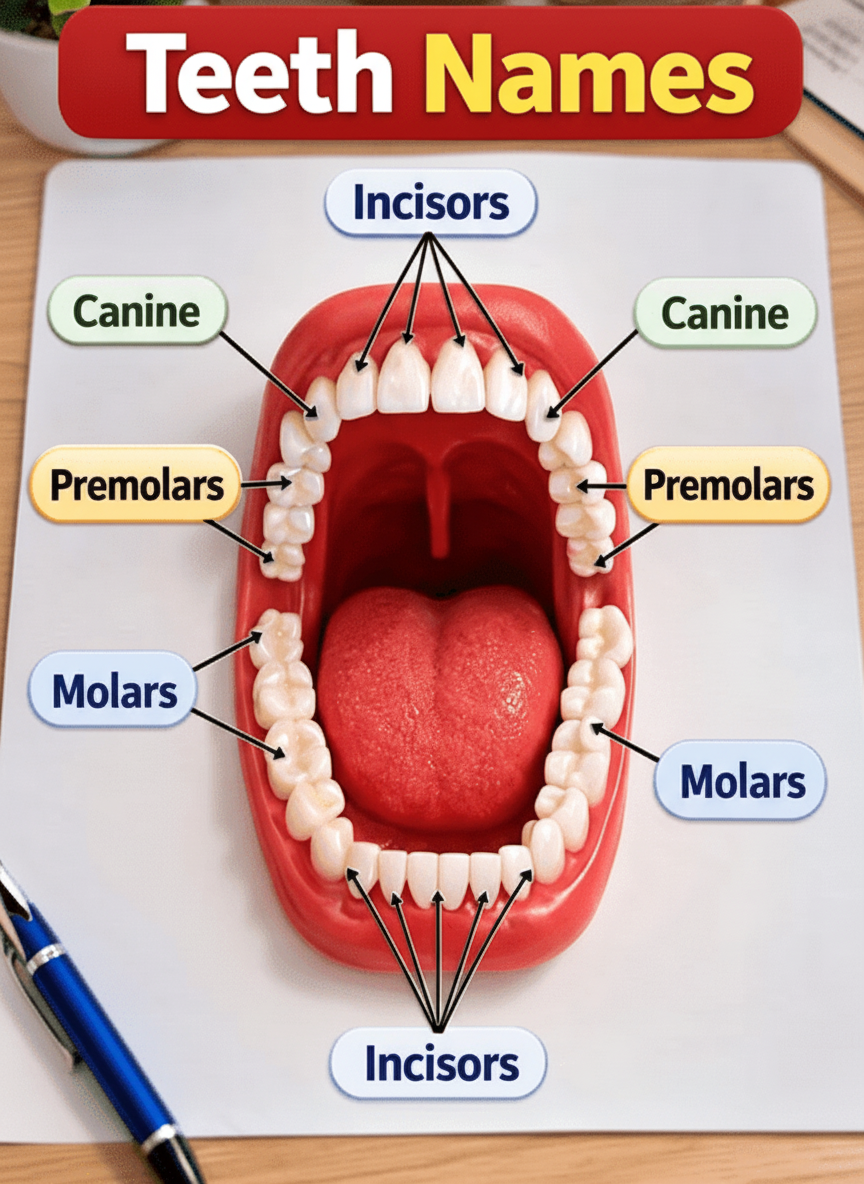
 Daily brushing is a habit for most, yet many adults don’t truly understand their teeth’s intricate design and specific functions. Each tooth type plays a unique role in processing food and maintaining oral health. Misunderstanding these roles can lead to damaging habits.
The good news? Understanding your four main types of teeth makes protecting your smile simpler. Plus, discover a surprisingly simple daily habit dentists wish more adults practiced, revealed at the end!
Incisors: Your Smile’s First Cutters
The eight flat, thin teeth at the front of your mouth are incisors (four top, four bottom). Their crucial job is slicing food into manageable pieces – think of them as your mouth’s precision scissors for apples or sandwiches.
However, their sharp, thin design isn’t for heavy tasks. Excessive force can cause chips or fractures. Dental research often shows front teeth are commonly damaged by misuse, not normal chewing.
Avoid straining incisors with habits like:
- Opening plastic packaging or tape
- Biting fingernails
- Cracking nuts/seeds with front teeth
- Holding objects (pins, bottle caps)
These actions weaken teeth designed only for cutting. Next, discover teeth built for greater strength.
Canines: The Powerful Tearing Teeth
Next to incisors are canines, identified by their sharp, pointed shape (four total: two top, two bottom). Their robust design is perfect for tearing tougher foods, a legacy from historical diets.
Canines are remarkably strong and deeply anchored. With the longest roots in your mouth, they provide exceptional stability, guiding your bite and stabilizing surrounding teeth.
Their key roles:
- Tearing fibrous foods
- Guiding bite alignment
- Stabilizing adjacent teeth
However, misusing canines (e.g., tearing packaging) causes enamel wear. Strong teeth are not tools. After tearing, the next teeth take over further breakdown.
Premolars: Your Mouth’s Grinding Gears
Between canines and molars are eight premolars (four top, four bottom), also called bicuspids. Their flat surfaces with small cusps are ideal for crushing and grinding food into smaller, digestible pieces.
Premolars are the crucial intermediate stage: incisors cut, canines tear, and premolars begin crushing. This is vital for efficient digestion, as properly broken-down food allows better nutrient absorption. Rushing chewing overworks your digestive system.
Worn or sensitive