 By admin
 Are you noticing subtle changes like stiff joints, dull skin, or difficulty reading small print? It’s common for adults to wonder if their daily diet is truly meeting their body’s evolving needs. The truth is, small nutritional gaps can significantly impact how we feel. But here’s the good news: simple, everyday foods can help bridge these gaps. And by the end, you’ll discover one surprisingly easy habit often overlooked by older adults.
Why Vitamins A, D, E, and K Become More Crucial with Age
As we age, our bodies naturally become less efficient at absorbing and utilizing certain nutrients. A common mistake is continuing to eat the same way we did years ago, even though our nutritional requirements have subtly shifted. Fat-soluble vitamins – A, D, E, and K – play vital roles in numerous bodily functions. Nutrition research consistently shows these vitamins are often lower in the diets of older adults.
- Vitamin A: Supports vision and immune balance.
- Vitamin D: Essential for strong bones and muscle strength.
- Vitamin E: Protects cells and supports skin health.
- Vitamin K: Crucial for normal blood clotting and bone structure.
Crucially, these vitamins often work synergistically. A diet rich in a variety of colorful foods provides a more balanced nutritional foundation. Let’s explore the everyday foods that quietly supply these vital nutrients.
Vitamin A: For Vision and Immune Health
Many adults experience changes in night vision or find reading in dim light challenging. Vitamin A is key to maintaining normal vision and a healthy immune system. Fortunately, Vitamin A-rich foods are often vibrant and easy to incorporate into meals.
Common sources include:
- Carrots
- Pumpkin
- Sweet potatoes
- Apricots
- Red bell peppers
- Liver (in small amounts)
Did you know plant foods contain beta-carotene, which your body converts into Vitamin A as needed? This makes colorful vegetables a gentle and effective way to boost your intake.
Simple meal ideas:
- Add shredded carrots to salads.
- Roast pumpkin cubes with a touch of olive oil.
- Blend apricots into smoothies.
- Include red peppers in stir-fries.
Pro Tip: Vitamin A is best absorbed when consumed with a small amount of healthy fat, like olive oil or avocado.
Vitamin D: The Bone Strength Essential
Vitamin D is a nutrient frequently discussed with older adults, and for good reason. Reduced time outdoors as we age means less natural sunlight exposure, which is vital for the body’s Vitamin D production. Low Vitamin D intake is linked to reduced bone density and muscle weakness in older populations.
Food sources of Vitamin D:
- Fatty fish (salmon, sardines – naturally high)
- Egg yolks (moderate)
- Fortified milk, plant beverages, and spreads (added Vitamin D)
- Mushrooms exposed to sunlight (moderate)
Practical daily tips:
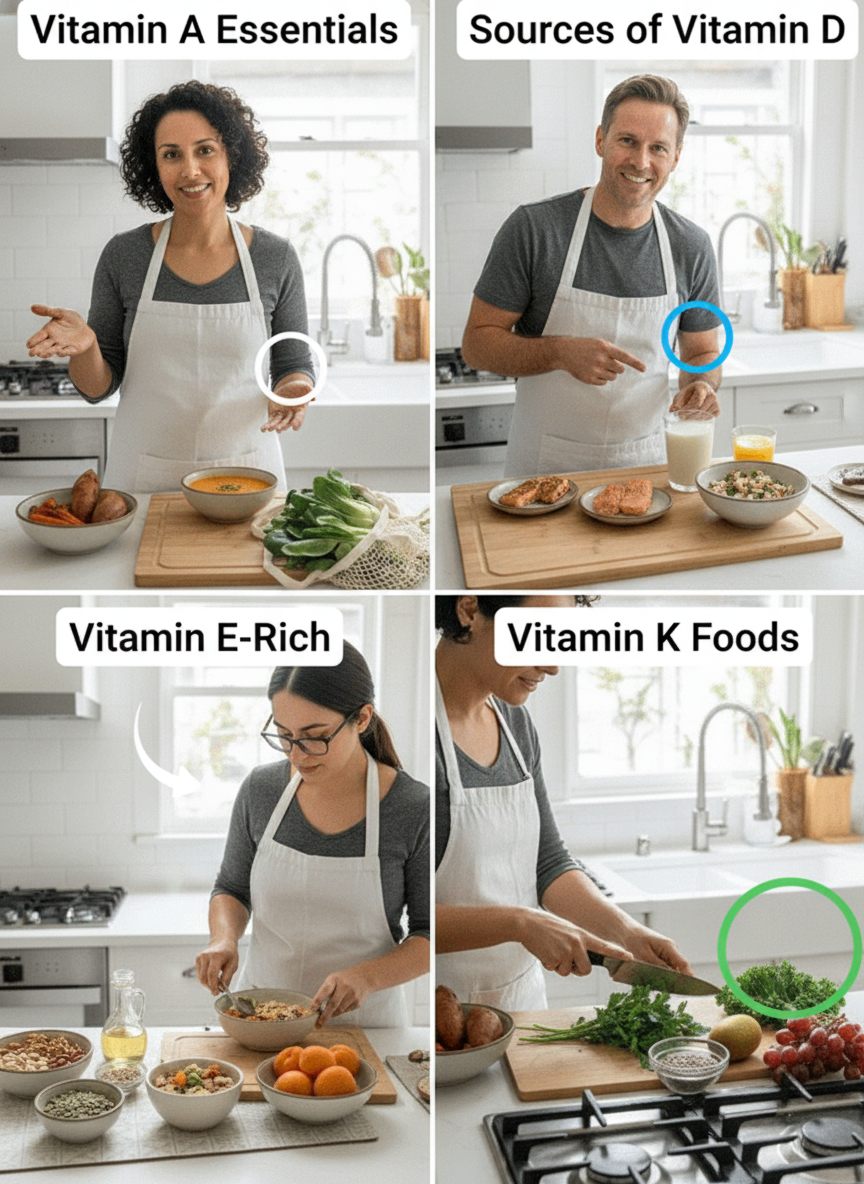
- Add canned sardines to salads.
- Enjoy eggs for breakfast.
- Drink a glass of fortified milk with lunch.
- Include salmon once or twice a week.
Vitamin E: Your Cellular Guardian
While often associated with skin health, Vitamin E’s role is far broader. It acts as a powerful antioxidant, protecting your cells from daily wear and tear caused by metabolism and environmental stress. Research suggests diets rich in nuts and seeds contribute to better overall nutrient balance.
Foods naturally rich in Vitamin E:
- Almonds
- Hazelnuts
- Sunflower seeds
- Pine nuts
- Kiwi fruit
- Vegetable oils (e.g., sunflower, olive oil)
Small portions are sufficient:
- A small handful of almonds.
- A tablespoon of sunflower seeds sprinkled on yogurt.
Vitamin K: For Healthy Bones and Blood
Vitamin K is often less talked about but equally vital, especially for older adults. It plays a critical role in normal blood clotting and contributes significantly to maintaining strong bone structure. There are two main forms: K1 from plants and K2 from animal products and fermented foods.
Excellent sources of Vitamin K include:
- Leafy green vegetables (kale, spinach, collard greens – rich in K1)
- Broccoli
- Brussels sprouts
- Natto (fermented soybeans – rich in K2)
- Certain cheeses (K2)
- Egg yolks (K2)
Integrating these into your diet is straightforward:
- Add a handful of spinach to your morning smoothie.
- Enjoy a side of steamed broccoli with dinner.
- Include kale in salads or soups.
The Overlooked Habit: Prioritizing Nutrient Absorption
You’ve learned about essential vitamins and their food sources. But here’s the surprisingly simple habit many older adults overlook: mindful eating and proper digestion. Even with the right foods, if your digestive system isn’t functioning optimally, nutrient absorption can suffer.
Simple ways to support absorption:
- Chew Thoroughly: Breaks down food, aiding digestion.
- Eat Slowly: Allows your body to signal fullness and process food better.
- Stay Hydrated: Water is crucial for all bodily functions, including digestion.
- Consider Probiotics: Healthy gut flora can enhance nutrient absorption.
By focusing not just on what you eat, but how you eat, you empower your body to make the most of every nutritious meal. Small changes in your diet and habits can lead to significant improvements in your energy, comfort, and overall vitality after 50. Start incorporating these simple foods and habits today to nourish your body from within.