 By admin
 Unlock Daily Wellness: What Happens When You Practice Legs Up The Wall Every Day?
In our modern lives, many of us spend countless hours seated at desks, standing for extended periods, or simply contending with gravity’s relentless pull. This often leaves our lower bodies feeling heavy, fatigued, and swollen by day’s end. The accumulation of fluid and tension in the legs can lead to discomfort, sap our energy, and even subtly impact our overall sense of well-being.
Fortunately, there’s a remarkably simple, equipment-free practice rooted in yoga – known as Legs Up the Wall, or Viparita Karani – that offers a gentle yet powerful antidote to these daily stressors. Widely praised by medical professionals and yoga experts alike, it’s considered one of the most accessible and undervalued habits for enhancing circulation and promoting deep relaxation. But what profound changes could you experience if you integrated this into your daily routine? Continue reading to uncover the transformative potential, learn the precise technique often overlooked, and discover a crucial tip about timing that could amplify your results.
Why This Restorative Pose Is Gaining So Much Attention
Legs Up the Wall is a gentle, restorative inversion where you lie comfortably on your back with your legs extending vertically against a wall. Unlike more demanding inversions such as headstands or handstands, this pose requires absolutely no strength, balance, or prior yoga experience, making it universally accessible.
Research into yoga practices, particularly restorative poses like Viparita Karani, indicates their significant positive influence on the body’s stress response systems, actively fostering a state of relaxation. Experts at institutions like the Cleveland Clinic explain that by elevating the legs above the heart, gravity naturally assists the return of pooled fluids from the lower extremities back towards the core. This process effortlessly supports improved venous and lymphatic circulation.
However, enhanced circulation is just the beginning. The deeper benefits of this simple daily practice are truly remarkable…
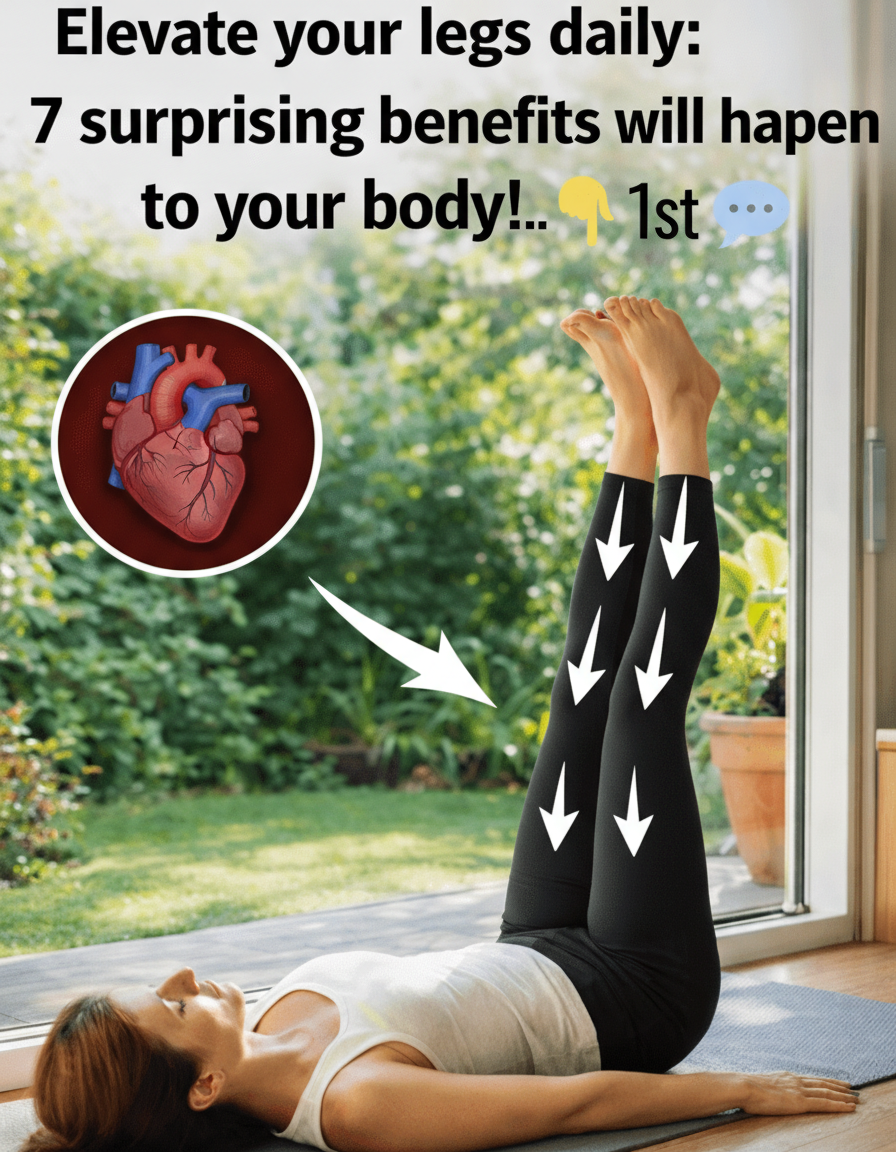
7 Potential Transformations Your Body May Experience with Daily Practice
While individual outcomes can vary and this practice is not a substitute for medical treatment, consistent daily engagement – even for just 5 to 15 minutes – may lead to these noticeable improvements, supported by general insights from yoga research and expert observations:
- Significant Reduction in Leg Fatigue and Swelling: After a long day, legs often feel heavy due to fluid retention. Elevating them encourages efficient venous and lymphatic return, which many practitioners report dramatically eases that ‘puffy’ or ‘achy’ sensation in the ankles and calves. Studies on mild inversions consistently show improved fluid dynamics in the lower body.
- Profound Mental Calm and Reduced Stress Levels: This pose effectively activates the parasympathetic nervous system – your body’s ‘rest and digest’ mode – helping to downshift everyday tension and anxiety. Research links restorative yoga to measurable reductions in stress markers, and practitioners frequently describe a profound sense of quiet mental clarity after just a few minutes.
- Gentle Relief for Lower Back Tension: By allowing the spine to flatten against the floor, Legs Up the Wall can decompress the lumbar area, providing soothing relief. Many find it particularly beneficial after prolonged periods of sitting or standing, offering a sensation akin to a gentle spinal release.
- Boosted Overall Circulation and Energy: Gravity becomes your ally, assisting blood flow back to the heart and upper body. This improved circulation can leave you feeling more invigorated and less ‘stuck’ or sluggish. Healthline experts, among others, frequently highlight this as a key advantage for individuals with sedentary jobs.
- Enhanced Preparation for Restful Sleep: Incorporating this pose into your evening routine helps to calm and regulate the nervous system, facilitating a smoother transition into deep, restorative sleep. Several studies on yoga’s impact on sleep quality point to poses like Viparita Karani as highly effective for pre-bedtime relaxation.
- Mild Stretch for Hamstrings and Hips: Even in its passive form, this pose provides a gentle lengthening stretch for the hamstrings and inner hips. This can help alleviate tightness that accumulates from daily activities and movement patterns.
- A Renewed Sense of Refreshment and Recovery: Many describe feeling ‘reset’ or ‘rebooted’ after practicing Legs Up the Wall – a quick, profound recharge that positively influences the remainder of their day or prepares them for a peaceful night.
The Correct Technique: Mastering Legs Up the Wall (Avoid Common Mistakes)
While seemingly simple, adopting the correct technique is crucial to maximize benefits and prevent any strain. Here’s how to perform Viparita Karani effectively:
- Prepare Your Space: Lay a yoga mat or a folded blanket on the floor, positioned perpendicular to a clear wall. Have a small pillow or a folded towel handy for under your head if you need extra neck comfort.
- Get Into Position: Begin by sitting sideways against the wall, ensuring one of your hips is touching it. From this position, carefully swing your legs up the wall as you simultaneously lower your back to the floor. Gently scoot your hips as close to the wall as feels comfortable for you – ideally, your sit bones should be near or gently touching the wall’s base.
- Adjust for Comfort: Allow your arms to rest comfortably by your sides, palms facing up, or place your hands gently on your belly. If you experience significant tightness in your hamstrings, simply slide your hips a few inches away from the wall until you find a comfortable stretch without strain. Your legs can be straight or slightly bent, whatever feels best.
- Duration and Release: Stay in this restorative pose for 5 to 15 minutes, breathing deeply and evenly. To exit, gently bend your knees, push off the wall, and roll onto one side, resting there for a moment before slowly sitting up.
Making Legs Up the Wall a daily ritual is a small commitment with potentially significant rewards for your physical and mental well-being. This simple inversion is a testament to how accessible and profound wellness practices can be, offering a moment of calm and rejuvenation in our busy lives.