 By admin
 The demands of daily life, particularly prolonged standing or walking, frequently lead to significant discomfort in the feet. This tension often doesn’t stop there; it can radiate upwards, manifesting as tightness in the calves and lower back, thereby hindering fluid movement and overall comfort. Such widespread stiffness commonly arises from extended physical activity or inadequate footwear support, resulting in accumulated muscular tension that negatively impacts posture and general well-being. The good news? A remarkably simple, accessible solution might be right in your home: a tennis ball. But that’s not the only secret we’ll uncover – continue reading for an unexpected insight that could supercharge your self-care routine.
Understanding How a Tennis Ball Can Help with Foot Tension
Our feet bear the brunt of our body weight throughout the day, and consequently, routine activities can cause significant tension in their intricate muscles and connective tissues. A prime culprit is often the plantar fascia, a robust band of tissue stretching across the sole of your foot. When this tissue becomes taut, it can generate pain and stiffness that extends beyond the foot itself. Here’s where the humble tennis ball comes into play: gently rolling it underfoot can effectively stimulate this crucial area, encouraging a profound sense of muscular release. Scientific findings, including those published in the Journal of Bodywork and Movement Therapies, highlight how self-myofascial release techniques can significantly enhance mobility and alleviate muscle stiffness. This isn’t a complex therapeutic procedure; it’s a straightforward, accessible method for anyone seeking relief.
Consider your body a meticulously interconnected network. Tension in one region, such as your feet, can profoundly impact others, potentially disrupting alignment in your hips and lower back. By proactively targeting foot tension, you might observe remarkable improvements in your overall physical comfort and posture. The best part? This effective remedy requires no specialized gear, just an everyday item you probably already own.
Why This Technique Might Benefit Your Back as Well
The impact of foot tension extends far beyond the soles of your feet. It often ascends the kinetic chain, contributing to undue stress and discomfort in the lower back. Suboptimal foot mechanics, frequently exacerbated by unsupportive footwear, can subtly alter your natural gait and overall posture. Engaging in regular tennis ball rolling beneath your foot provides a gentle, yet effective, form of massage. This action can significantly boost localized circulation and foster relaxation not only in your feet but also in these interconnected areas further up the leg and back.
Research on myofascial release, as detailed in reputable publications from the American Physical Therapy Association, consistently demonstrates that these techniques are highly effective in diminishing perceived tension across the entire body. But the benefits don’t end with just the physical rolling. Integrating mindful breathing exercises during your session can profoundly amplify the therapeutic experience. Indeed, countless individuals attest to feeling noticeably looser and more aligned after weaving this simple practice into their daily wellness routine. It represents an effortless, yet powerful, strategy to support your body’s intrinsic alignment and reduce back pain.
Step-by-Step Guide to Using a Tennis Ball for Foot Rolling
Eager to experience this relief yourself? Follow this straightforward, step-by-step guide to safely incorporate tennis ball foot rolling into your home routine.
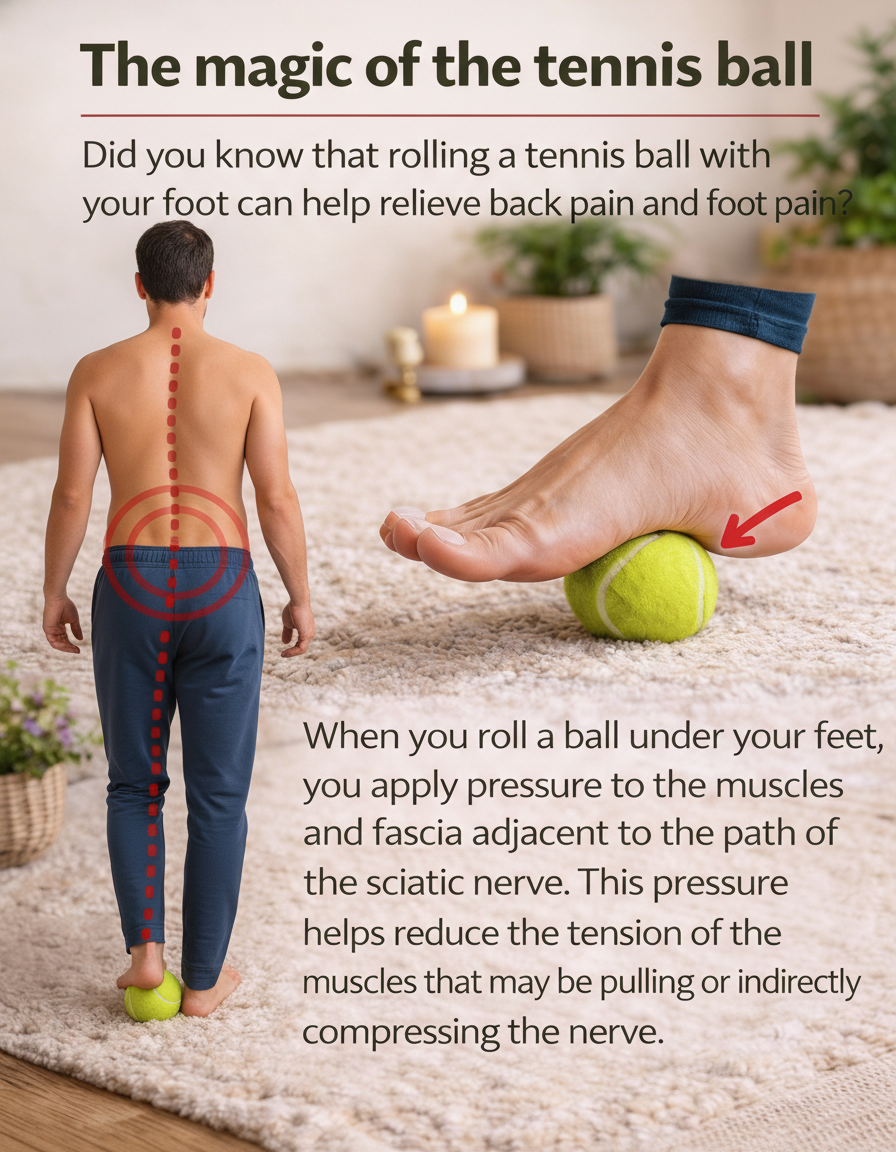
- Prepare Your Setup: Locate a standard tennis ball and ensure you have a stable, non-slip surface, such as a carpeted area or a yoga mat.
- Find Your Stance: Choose a comfortable standing or seated position. If you opt to stand, ensure you have a wall or sturdy chair nearby for support and balance.
- Position the Ball: Place the tennis ball on the floor directly beneath the arch of one foot.
- Begin the Roll: Initiate a gentle rolling motion, moving your foot slowly from the heel towards your toes and back again. Apply only light to moderate pressure. Should you encounter any particularly sensitive areas, pause on them for a brief few seconds.
- Modify Pressure: If the sensation becomes too intense, simply shift to a seated position to reduce the amount of body weight applied. Target 1 to 2 minutes of rolling for each foot.
- Alternate Feet: Once complete, repeat the entire sequence with your other foot.
This entire self-care practice is incredibly simple and can be completed in mere minutes, fitting easily into any schedule.
Key Benefits of Incorporating Tennis Ball Rolling into Your Routine
Embracing this simple technique offers a multitude of compelling advantages for your overall well-being. Here’s a concise overview of the primary benefits you can anticipate, presented for easy reference:
| Benefit | Description | How It Helps Daily Life |
|---|---|---|
| Enhanced Circulation | The targeted rolling action actively stimulates blood flow to the feet. | This can significantly accelerate recovery post-activity and promote healthier foot tissue. |
| Increased Flexibility | Consistent, gentle stimulation can dramatically improve the range of motion and suppleness within the foot. | This translates to greater ease and comfort during walking, standing, and various daily movements. |
| Posture Support | By alleviating tension in the feet, this practice directly contributes to improved whole-body alignment. | Consequently, it can effectively mitigate strain and discomfort in interconnected regions, including the lower back and hips. |
| Relaxation Effect | When combined with intentional deep breathing, foot rolling fosters a profound sense of calm and stress relief. | It’s an excellent method for unwinding and de-stressing after a demanding day. |
| Cost-Effective | Utilizing an everyday item you likely already possess, this method offers an accessible and budget-friendly solution for self-care. | No expensive equipment or appointments are necessary. |
These compelling points underscore the significant value of integrating this practice into your routine. Extensive general wellness research consistently affirms that such proactive self-care methods are instrumental in enhancing physical comfort and quality of life. Moreover, consistent application can yield surprising cumulative benefits that deepen over time.
When and How Often to Practice This Technique
Optimizing the timing of your tennis ball routine can significantly enhance its benefits and your overall experience. Consider incorporating this practice during these key moments:
- After Work or Prolonged Standing: To immediately counteract the day’s accumulated foot and back tension, promoting swift relief and relaxation.
- Post-Exercise: Aid muscle recovery and reduce stiffness after physical activity, preparing your body for its next challenge.
- Before Bed: Integrate it into your nightly wind-down routine to soothe tired feet, calm your nervous system, and potentially improve sleep quality.
For best results, aim for daily practice, even if only for a few minutes. Consistency is key to unlocking the full, long-term advantages of this simple yet powerful self-care technique.