 By admin
 Understanding Tonsil Stones: Why These Smelly White Deposits Form in Your Mouth
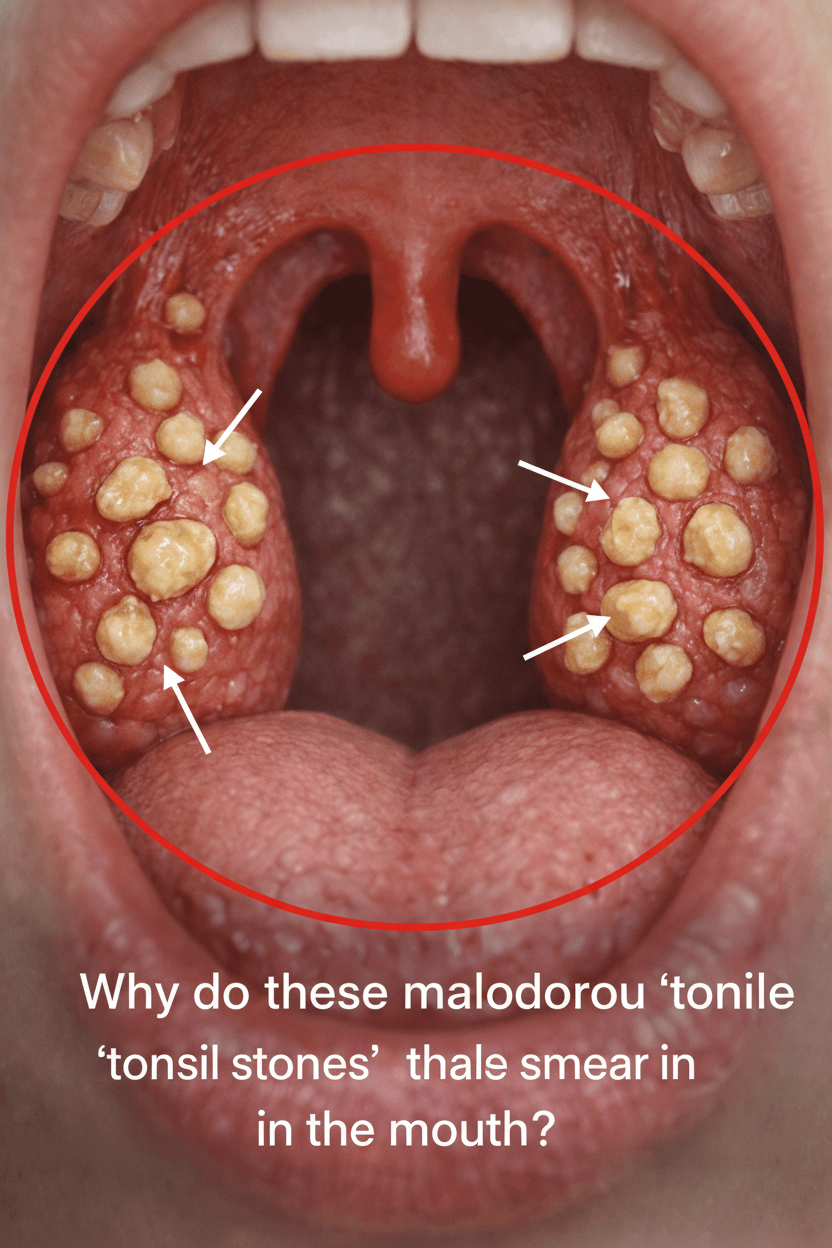
Have you ever noticed small, firm, white or yellowish formations in your throat that emit a truly unpleasant odor, often likened to rotten eggs, cheese, or sulfur? These aren’t actual stones, but rather calcified deposits known as tonsil stones, or medically as tonsilloliths (and sometimes tonsillar calculi). They develop within the natural folds and pockets, called crypts, of your tonsils, located at the very back of your throat.
What Tonsil Stones Are Made Of
These peculiar deposits begin to form when various substances become lodged in the tonsillar crypts and gradually solidify. The primary components typically include:
- Dead skin cells and oral debris
- Microscopic food particles
- Bacteria and fungi
- Mucus, often from post-nasal drip
- Calcium salts and other minerals present in saliva
Over time, bacteria within these trapped materials break them down, leading to the production of foul-smelling volatile sulfur compounds (VSCs), which are responsible for the distinctive rotten, cheesy, or sulfuric odor.
Why They Appear (Most Common Reasons)
Several factors contribute to the formation of tonsil stones, making some individuals more prone to them than others. The most common reasons include:
- Deep Tonsil Crypts: Individuals with naturally larger or more deeply pitted tonsils possess more areas where debris can easily accumulate and become trapped.
- Chronic Tonsil Inflammation: Frequent or persistent low-grade tonsillitis can cause the tonsillar crypts to enlarge, creating more opportunities for material to get stuck.
- Post-Nasal Drip: An excess of mucus dripping from the sinuses down the back of the throat can readily become ensnared within the tonsil crypts.
- Suboptimal Oral Hygiene: Inadequate brushing and flossing allow bacteria and food particles to build up, increasing the amount of debris available to lodge in the tonsils.
- Dry Mouth (Xerostomia): Conditions like dehydration, mouth breathing, or certain medications can reduce saliva production. Less saliva means reduced natural cleansing action, leading to greater accumulation of debris.
- Certain Dietary Habits: For some individuals, diets rich in dairy or high in sugar may potentially contribute to increased mucus production or foster bacterial growth, exacerbating the problem.
Common Symptoms (Beyond the Smell)
Beyond the distinctive foul odor, tonsil stones can manifest through various other symptoms. While some individuals remain asymptomatic, only discovering the stones by sight or smell, others may experience:
- Visible Spots: Small white or yellowish dots or bumps may be noticeable on the tonsils, especially when examining with a flashlight while saying “ahhh.”
- Persistent Bad Breath (Halitosis): A chronic unpleasant breath that resists improvement even with diligent brushing and mouthwash use.
- Foreign Body Sensation: A feeling as if something is lodged at the back of the throat.
- Mild Throat or Ear Discomfort: A subtle sore throat or referred ear pain can sometimes occur.
- Coughing Up Debris: Occasionally, individuals may cough up tiny, solid, and malodorous fragments.
Are Tonsil Stones Dangerous?
Generally, tonsil stones are considered harmless. They are benign growths and, in the overwhelming majority of instances, do not lead to cancer or severe infections. Nevertheless, particularly large tonsilloliths or a persistent issue with chronic tonsil stones can sometimes result in more bothersome complications, such as:
- Frequent episodes of sore throat.
- Persistent halitosis (bad breath) that impacts social interactions and self-confidence.
- In very rare cases, if an infection develops, it could potentially lead to a tonsillar abscess.
How to Manage & Reduce Tonsil Stones Naturally
Managing and preventing tonsil stones often involves simple yet consistent practices. Focusing on daily habits is typically the most effective strategy:
Daily Prevention Habits (Most Effective)
- Saltwater Gargles: Rinse your mouth and gargle with warm salt water (mix ½ teaspoon of salt in 250 ml of warm water) 2-3 times daily. This helps dislodge debris and reduces bacterial load.
- Water Flossing: Employ a water flosser (such as a Waterpik) set to a low-pressure setting to gently irrigate and flush out the tonsil crypts.
- Tongue Cleaning: Incorporate daily tongue brushing or using a tongue scraper to remove bacteria and debris from the back of your tongue.
- Maintain Hydration: Drink plenty of water (aim for 2.5–3 liters per day) to ensure consistent saliva flow, which aids in natural cleansing.
- Choose Alcohol-Free Mouthwash: Opt for mouthwashes containing essential oils or chlorhexidine, avoiding alcohol-based products that can dry out the mouth.
- Limit Dairy Before Bed: Some individuals find that reducing dairy intake before sleep can help minimize mucus production.
Gentle Removal (If Visible & Loose)
If a tonsil stone is clearly visible and appears loose, you may attempt to remove it gently:
- Use a clean cotton swab or a soft-bristled toothbrush to carefully press around the stone, rather than directly on it. Many stones can be dislodged this way.
- Crucial Warning: Never use sharp objects like toothpicks or fingernails to attempt removal. This poses a significant risk of injury, bleeding, or infection to your delicate tonsil tissue.
When to see an ENT doctor
While most tonsil stones are manageable at home, certain situations warrant a consultation with an Ear, Nose, and Throat (ENT) specialist. Seek professional medical advice if you experience:
- Tonsil stones that are exceptionally large or cause significant pain.
- Frequent episodes of sore throats or recurring tonsillitis.
- Halitosis that persists despite rigorous oral hygiene practices.
- Swollen tonsils accompanied by a fever.
- Difficulty or pain when swallowing, or any breathing difficulties.
In severe, chronic, and recurring cases where other treatments have failed, a tonsillectomy (surgical removal of the tonsils) might be considered as a