 By admin
 Uncovering the Causes: 8 Health Conditions Linked to Excessive Drooling During Sleep
Waking up to a damp pillow, with traces of saliva at the corner of your mouth, can be an embarrassing and frustrating experience. While occasional drooling during sleep is common and often harmless, persistent or excessive nocturnal drooling – medically known as sialorrhea or ptyalism – can raise questions about your health. If you find yourself consistently drooling in your sleep, disrupting your rest and confidence, it might be more than just a quirky habit.
The good news is that understanding the potential reasons behind drooling while sleeping can empower you to take appropriate next steps. However, it’s crucial to recognize that frequent sleep drooling isn’t always benign. Reputable health organizations, such as the Mayo Clinic and Cleveland Clinic, indicate that it can sometimes signal underlying health issues that warrant medical attention. Let’s delve into why this phenomenon occurs and which conditions might be contributing to it. 😴
Why Drooling While Sleeping Occurs More Frequently at Night
During our waking hours, we unconsciously swallow saliva about 1-2 liters daily, a natural reflex that keeps our mouths moist and aids digestion. However, as we drift into sleep, these reflexes slow down significantly, and our facial and throat muscles relax. This relaxation, especially when combined with mouth breathing, can lead to saliva pooling in the mouth and eventually escaping.
Excessive drooling while sleeping becomes more pronounced when there’s an interference with normal swallowing mechanisms, an increase in saliva production, or impaired muscle control. Many individuals dismiss nocturnal drooling as simply ‘how they sleep,’ but recurring episodes – particularly when accompanied by other symptoms – can be a signal from your body that a closer look is needed. Research consistently shows that certain medical conditions can amplify this natural process, transforming occasional sleep drooling into a chronic problem.
🩺 The 8 Conditions Most Commonly Associated with Nocturnal Drooling
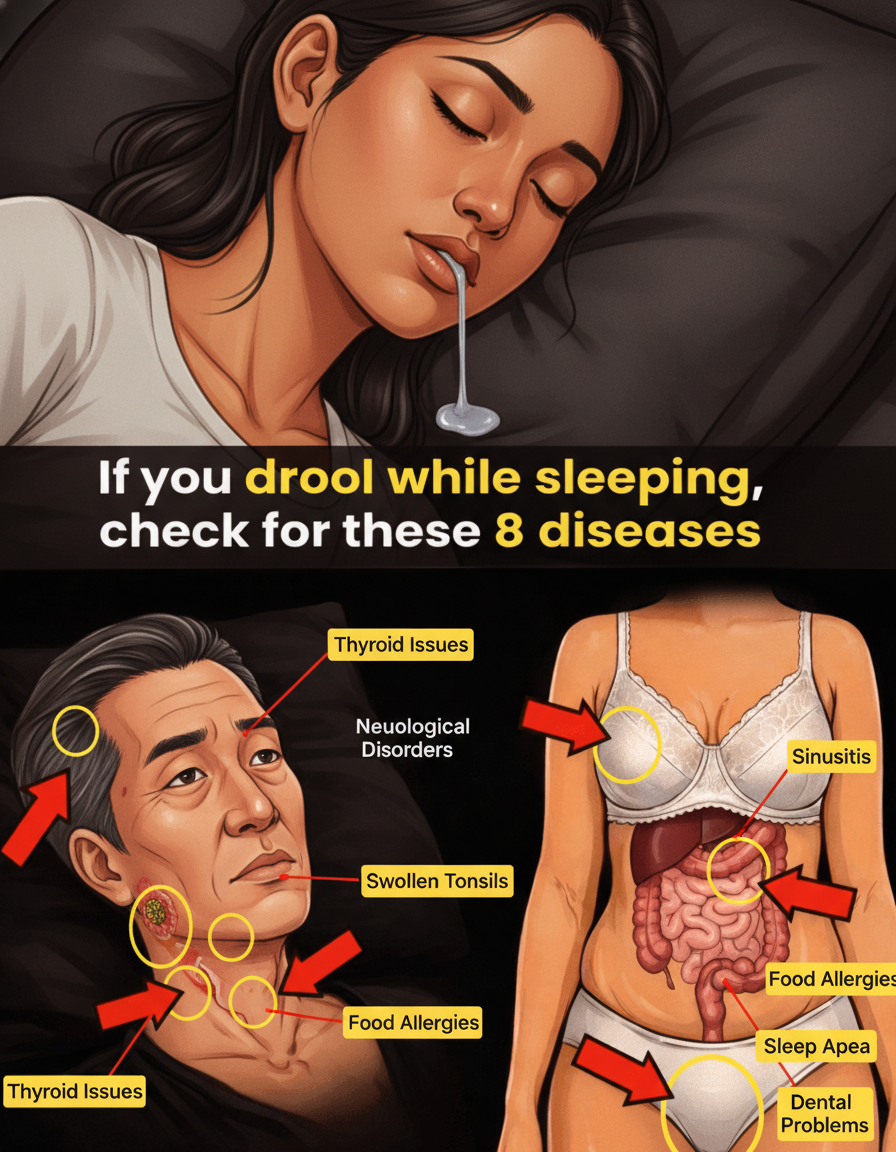
Here are eight conditions that medical experts frequently link to excessive drooling during sleep, often highlighted in medical literature:
8. Nasal Congestion or Chronic Sinus Issues
Blocked nasal passages due to allergies, a common cold, or chronic sinusitis often compel individuals to breathe through their mouths during sleep. When air flows primarily through the mouth instead of the nose, saliva can escape more easily. Those with persistent nasal congestion frequently wake up not only experiencing drooling while sleeping but also with a dry throat or a headache. Addressing the root cause of allergies or sinus problems can often alleviate this issue.
7. Gastroesophageal Reflux Disease (GERD)
Acid reflux is well-known for causing heartburn, but it can also trigger an increase in saliva production. This happens as your body attempts to neutralize the stomach acid that has risen into the esophagus. Lying flat exacerbates reflux symptoms, thereby increasing the likelihood of drooling while sleeping. Many individuals observe a clear connection when both symptoms occur simultaneously during the night.
6. Side Effects from Certain Medications
Some pharmacological treatments can stimulate saliva glands, leading to increased production. Medications such as certain antipsychotics, Alzheimer’s treatments, or drugs that influence cholinergic pathways are known culprits. The result can be noticeable drooling while sleeping that was not present before commencing the medication. Discussing alternatives or adjusting medication timing with your doctor can often provide relief.
5. Obstructive Sleep Apnea (OSA)
In Obstructive Sleep Apnea, the muscles in the throat relax excessively, causing a partial or complete blockage of the airway. This often leads to mouth breathing and the pooling of excess saliva. Research from organizations like the American Academy of Sleep Medicine has demonstrated a strong correlation between untreated sleep apnea and drooling while sleeping, frequently accompanied by loud snoring and persistent daytime fatigue.
4. Throat Infections or Irritation
Conditions like swollen tonsils, strep throat, or chronic post-nasal drip can overwhelm the normal swallowing reflexes. Temporary infections might cause short-term drooling while sleeping. However, recurring episodes could indicate chronic irritation or inflammation that warrants medical investigation.
3. Stroke or Recent Neurological Events
A stroke can result in weakened facial muscles, often affecting one side of the face, making it difficult to keep the mouth closed during sleep. The sudden onset of drooling while sleeping, especially when accompanied by facial drooping or changes in speech, requires immediate medical evaluation as it could be a sign of a neurological event.
2. Parkinson’s Disease
A significant majority, up to 80%, of individuals with Parkinson’s disease experience drooling, often as an early symptom. This is primarily due to a reduced frequency of swallowing and impaired muscle coordination. For many, drooling while sleeping can become one of the most troublesome symptoms of the condition.
1. Other Progressive Neurological Conditions
Conditions such as Amyotrophic Lateral Sclerosis (ALS), multiple sclerosis (MS), or cerebral palsy impact the nerve signals to facial and throat muscles. Poor control over saliva is a common symptom, and drooling while sleeping frequently becomes more pronounced as these conditions progress.
📊 Quick Comparison: Common Conditions and Their Clues
Here’s a brief overview of common conditions linked to nocturnal drooling and their associated signs:
| Condition Group | Primary Reason for Drooling While Sleeping | Common Accompanying Signs |
|---|---|---|
| Sleep Apnea & Nasal Congestion | Mouth breathing, blocked airways | Loud snoring, daytime fatigue, dry mouth |
| GERD & Infections | Increased saliva production, throat irritation | Heartburn, sore throat, difficulty swallowing |
| Medications & Stroke | Stimulated salivary glands, impaired muscle control | New onset of drooling, speech changes, facial weakness |
| Parkinson’s & Other Neurological Issues | Reduced swallowing frequency, coordination problems | Tremors, stiffness, gait changes, progressive muscle weakness |
❤️ When to Seek Medical Advice
While an occasional wet pillow is usually nothing to worry about, persistent or excessive drooling while sleeping, especially when accompanied by other concerning symptoms, should prompt a visit to your healthcare provider. Understanding the potential underlying causes is the first step toward finding an effective solution and improving your overall sleep quality and well-being. Don’t hesitate to discuss your concerns with a doctor, as they can accurately diagnose the issue and recommend the most appropriate course of action.