 By admin
 What Exactly Are Tonsil Stones?
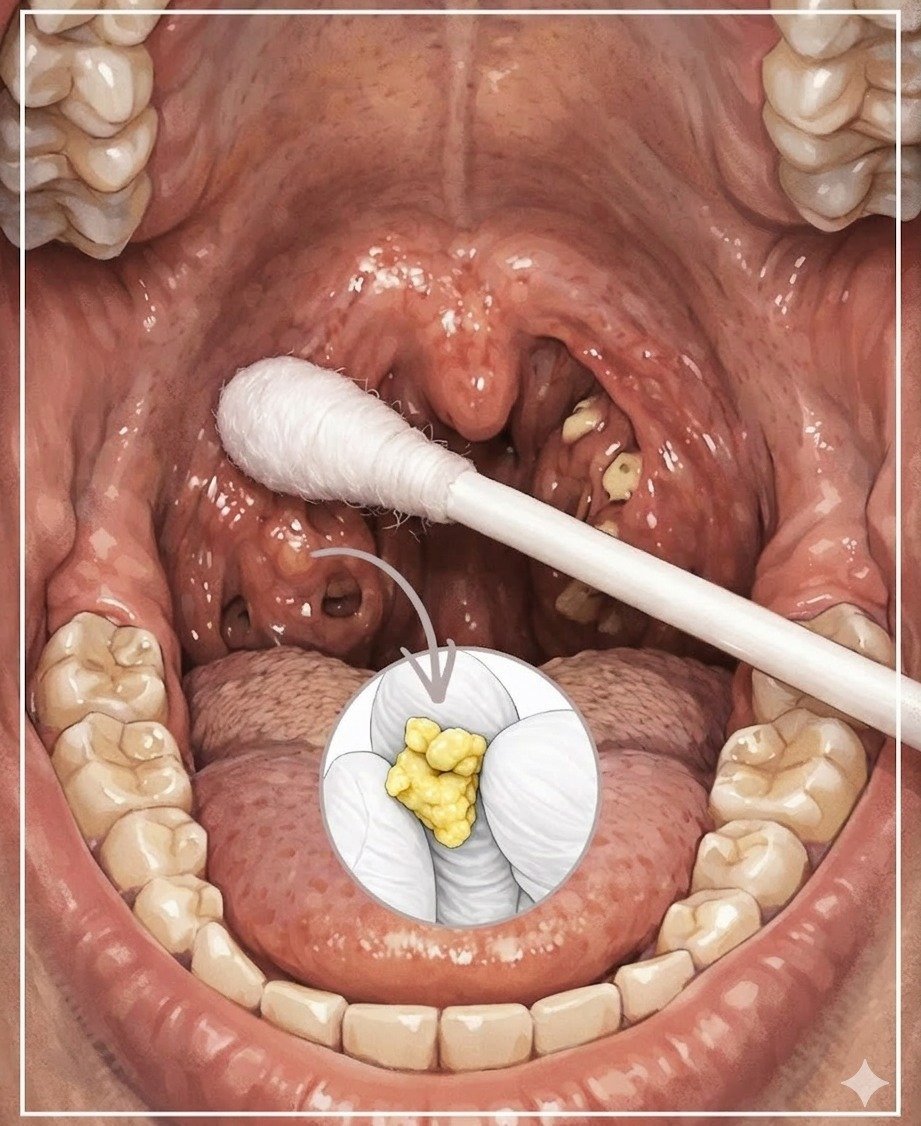
Tonsil stones, officially known in the medical community as Tonsilloliths, are small, calcified formations that can develop within the crevices of your Tonsils.
It’s not uncommon for individuals to occasionally discover tiny whitish or yellowish fragments emerging from their throat. These deposits can vary in consistency, sometimes soft and other times quite firm, and they frequently emit a notably unpleasant odor.
Despite their appearance, which can sometimes resemble pus, tonsil stones do not inherently indicate an infection. Consequently, observing white or yellow spots on the tonsils doesn’t automatically necessitate a course of antibiotics.
The Formation Process of Tonsil Stones
Within the structure of the tonsils are tiny, naturally occurring indentations known as Tonsillar crypts. Over time, these small spaces can become collecting points for various materials, including:
-
Tiny food particles
-
Shed dead cells from the oral cavity lining
-
Bacteria
-
Mucus
As these substances accumulate and gather, they can gradually condense and solidify, eventually forming the small, often calcified deposits we identify as tonsil stones.
The distinctive and potent odor linked to tonsil stones arises from the anaerobic bacteria present within these formations, which release volatile sulfur compounds—a well-known contributor to bad breath.
Recognizing the Symptoms of Tonsil Stones
It’s common for many individuals to have tonsil stones without ever being aware of their presence. However, when symptoms do manifest, they can include:
-
Chronic or persistent bad breath, medically termed Halitosis
-
A feeling as if something is lodged or stuck in the back of the throat
-
Slight discomfort or pain when swallowing
-
Small, visible white or yellowish spots on the surface of the tonsils