 By admin
 Many individuals aspire to achieve longer, healthier-looking hair but often face frustration due to slow growth and persistent shedding. Modern life’s daily stresses, inadequate nutrition, and aggressive styling techniques can leave strands feeling weak and lackluster. This common struggle often leads people to seek simple, at-home remedies to enhance their hair’s natural vitality.
You’ve likely encountered the widespread online discussion surrounding the combination of onion and Vaseline for achieving impressive hair growth results. But does this trending hack truly live up to its hype? In this comprehensive article, we’ll meticulously break down the popular onion and Vaseline hair method, examine the limited scientific insights available for these ingredients, and provide practical advice for trying it safely at home. Stay with us until the end for an honest perspective on realistic outcomes and how to best integrate this into your hair care regimen.
Why This Viral Hair Hack Has Captured Global Attention
Social media platforms, particularly TikTok, have been inundated with videos touting the transformative power of onion and Vaseline for hair. The concept appears straightforward: extract fresh onion juice and blend it with petroleum jelly (Vaseline) to create a thick, mask-like consistency. However, this isn’t a groundbreaking discovery. Natural remedies featuring onion have been utilized for generations in traditional beauty practices, especially in regions where fresh produce is readily available.
The allure is clear: it’s an affordable, DIY solution utilizing common kitchen ingredients, promising visible improvements without the need for expensive commercial products. Nevertheless, before embarking on this journey, it’s prudent to distinguish between anecdotal buzz and verified facts.
What Scientific Research Suggests About Onion for Hair Growth
Onions are rich in sulfur compounds, potent antioxidants, and various other nutrients essential for overall well-being. A notable 2002 study, published in the Journal of Dermatology, investigated the topical application of crude onion juice twice daily for individuals experiencing alopecia areata (a specific form of patchy hair loss). Researchers observed significant hair regrowth in a majority of participants after several weeks, a stark contrast to a control group using tap water.
Further insights from reputable sources like Healthline and Medical News Today highlight onion’s anti-inflammatory and antimicrobial properties, which could foster a healthier scalp environment. Improved blood circulation to hair follicles might also indirectly encourage the development of stronger, fuller-looking strands over time. It’s crucial to note, however, that most existing evidence primarily focuses on onion juice alone for specific conditions, not in combination with Vaseline. Moreover, individual results can vary significantly, and no large-scale studies conclusively confirm dramatic daily hair growth from this method.
Understanding the Role of Vaseline (Petroleum Jelly) in Hair Care
Vaseline, a well-known occlusive agent, functions by forming a protective barrier that effectively seals in moisture. Many individuals apply it to hair ends to minimize split ends, impart a healthy shine, and shield against environmental damage from elements like wind or sun. While beneficial for hair health, experts from Healthline and other sources emphasize that there is no substantial scientific evidence to suggest Vaseline directly promotes faster hair growth or stimulates follicles.
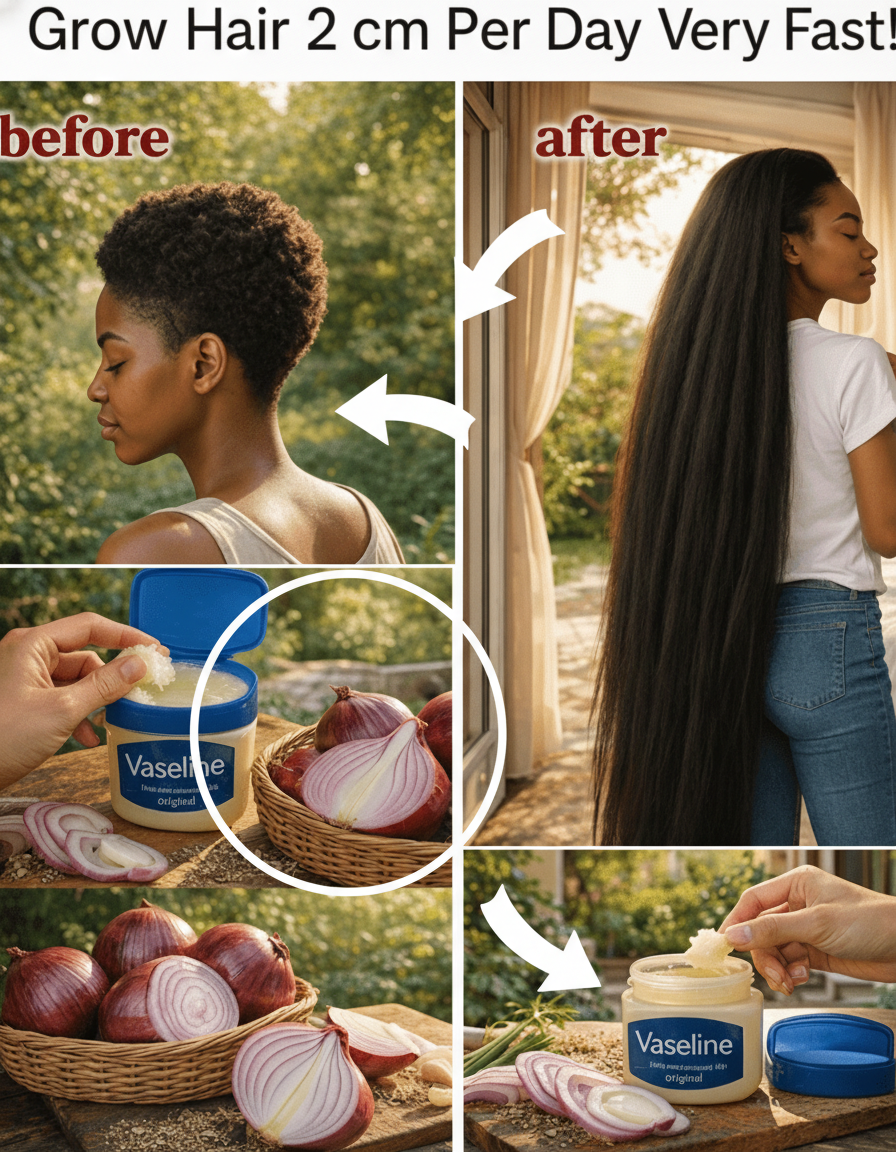
Essentially, it won’t “grow” new hair. Instead, by reducing breakage and combating dryness, it can contribute to hair appearing longer and healthier, as fewer strands snap off. A common concern is that excessive use on the scalp might clog pores, potentially leading to product buildup. Therefore, judicious application and thorough cleansing are paramount.
How the Onion and Vaseline Method Is Applied in Practice
The viral application typically involves blending onion juice with Vaseline to create a thick, manageable paste. The underlying theory is that the onion delivers its potential nourishing components, while Vaseline acts as an occlusive seal, theoretically enhancing absorption and minimizing mess. However, it’s vital to clarify realistic expectations: normal, healthy hair typically grows approximately 0.3–0.4 mm per day (which translates to roughly 1 cm per month), as confirmed by sources such as Live Science and Cleveland Clinic. Claims of 2 cm daily growth drastically exceed biological capabilities—no topical concoction can alter this fundamental biological process.
What many users anecdotally report includes reduced hair shedding, a softer hair texture, or the illusion of faster progress due to less breakage. Here’s why this combination might feel effective for some:
- Onion’s sulfur content may contribute to keratin production, the primary structural protein of hair.
- Vaseline creates a moisturizing and protective seal.
- The ritual itself often encourages consistent and attentive scalp care.
Yet, this isn’t the complete picture. Overuse could potentially lead to scalp irritation, especially for sensitive skin, or result in excessive greasiness.
Key Benefits Users Often Report (Anecdotal):
- May help maintain essential moisture and alleviate dryness.
- Could support a cleaner and healthier scalp environment.
- Utilizes inexpensive and easily accessible ingredients.
- Offers a fun, empowering DIY beauty project.
Potential Drawbacks and Considerations:
- A distinct, strong onion odor that can linger.
- Risk of scalp irritation or allergic reactions in sensitive individuals.
- Greasy residue if not thoroughly washed out.
- No guaranteed results for all users, and effectiveness varies.
Step-by-Step Guide: How to Safely Try the Onion and Vaseline Mask
Considering experimenting with this viral method? Follow these actionable steps to ensure a safe application:
- Prepare Your Onion Juice: Peel and chop 1-2 medium-sized onions. Blend them into a fine paste, then strain through a cheesecloth or fine sieve to extract the juice.
- Mix with Vaseline: In a small, clean bowl, combine 1-2 tablespoons of fresh onion juice with 1 teaspoon of pure petroleum jelly (Vaseline). Mix thoroughly until you achieve a smooth, consistent paste. Adjust quantities as needed to get a workable consistency.
- Perform a Patch Test: Before applying to your entire scalp, dab a small amount of the mixture onto a discreet area of your skin (e.g., behind your ear or inner forearm). Wait 24 hours to check for any signs of irritation, redness, or allergic reaction.
- Apply to Scalp and Hair: Once the patch test is clear, section your hair and gently apply the paste directly to your scalp using your fingertips. Massage it in circular motions for 5-10 minutes to stimulate circulation. You can also apply a small amount to your hair strands, focusing on the ends, if desired.
- Leave On: Cover your hair with a shower cap to prevent mess and enhance absorption. Leave the mask on for 30 minutes to 1 hour. Avoid leaving it on for extended periods, especially overnight, to prevent irritation.
- Rinse Thoroughly: Rinse your hair extensively with lukewarm water. You may need to shampoo twice to completely remove the greasy residue and eliminate the onion smell. Follow with your regular conditioner.
- Frequency: Use this mask once or twice a week. Consistent, moderate use is generally recommended over infrequent, heavy applications.