 By admin
 Has a viral health claim about cassava left you wondering if your favorite dish is a ticking time bomb? Millions rely on this versatile root, but a recent online “doctor’s revelation” has sparked widespread panic, suggesting hidden dangers lurk within, specifically claiming “eating cassava causes…” serious issues.
So, what’s the real story? Is cassava a silent threat, or is it actually a powerhouse of nutrition? It’s time to uncover the facts.
Cassava, often recognized by its other names such as yuca or manioc, is a starchy root vegetable that forms a significant part of global diets. This versatile crop is frequently enjoyed boiled, fried, or transformed into popular products like tapioca and gluten-free cassava flour.
Its widespread appeal stems from its affordability and high caloric content, positioning cassava as a vital and indispensable food source for countless communities across the globe.
Unlocking Cassava’s Surprising Health Benefits
Before we dive into any potential concerns, it’s crucial to first highlight the impressive array of health advantages that cassava brings to the table:
1. A Powerful Energy Booster
Loaded with complex carbohydrates, cassava serves as an exceptional and sustained source of energy, fueling your body efficiently.
2. A Naturally Gluten-Free Alternative
For individuals navigating gluten intolerance or celiac disease, cassava flour offers a fantastic and widely embraced naturally gluten-free option for baking and cooking.
3. Packed with Vitamin C
This root vegetable delivers a decent dose of vitamin C, an essential nutrient known for bolstering your immune system and promoting vibrant, healthy skin.
The Alarming Truth: Understanding Cassava’s Hidden Cyanide Risk
This is precisely the point where the sensational “doctor reveals” claims often originate and gain traction online.
Naturally embedded within cassava are compounds called cyanogenic glycosides. These are precursors that, if not handled correctly, have the potential to release cyanide, a highly toxic substance, upon consumption.
So, Is Cassava Actually Poisonous?
The short answer is: not necessarily, and often, not at all.
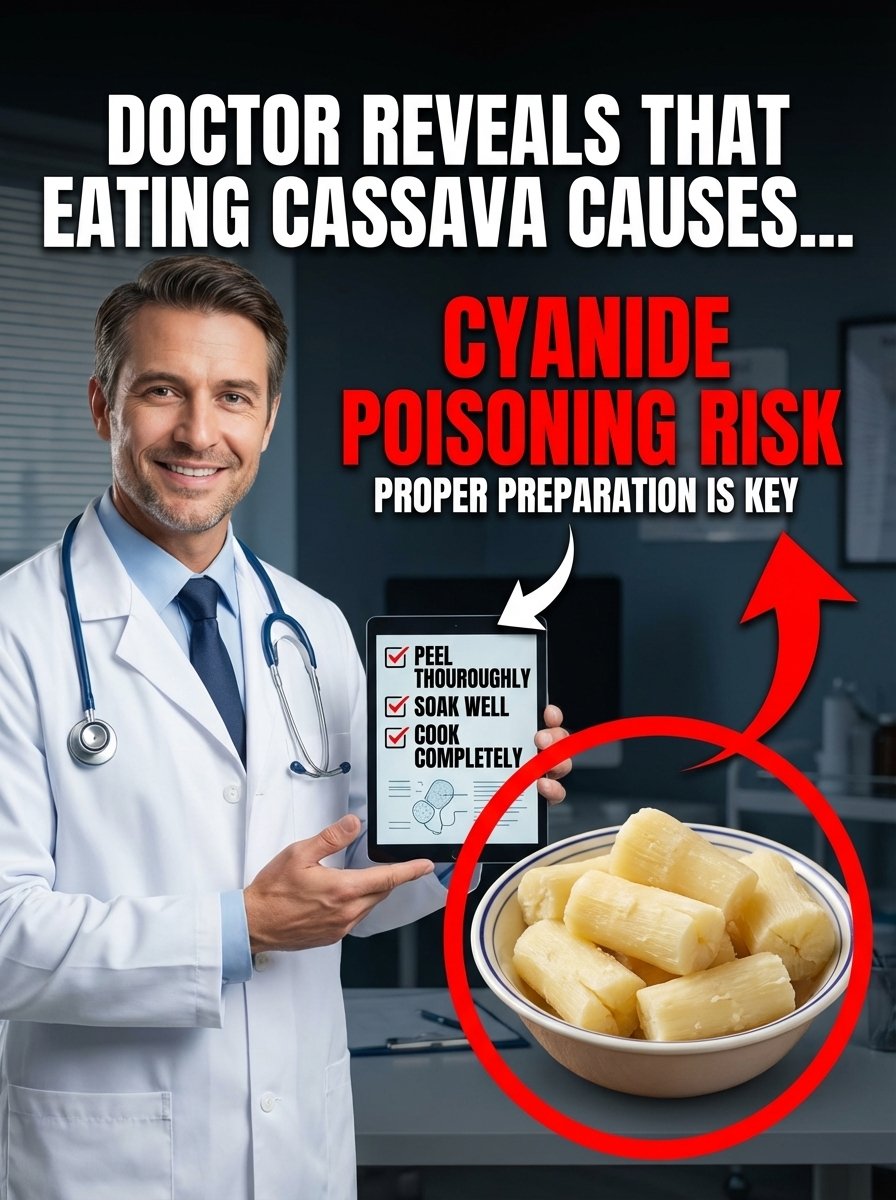
👉 The critical takeaway is that correct and thorough preparation effectively eliminates the vast majority of these potential toxins.
Nevertheless, issues can arise, and the risks become significant if cassava is:
- Ingested in its raw form
- Insufficiently soaked or not cooked to completion
- Consumed excessively and habitually, particularly within diets already deficient in protein
So, What Exactly CAN Improperly Prepared Cassava Cause?
If cassava is not processed and cooked with the necessary care, it could potentially result in several adverse health outcomes:
1. Acute Cyanide Poisoning (Uncommon, Yet Potentially Fatal)
The symptoms of acute cyanide toxicity may manifest as dizziness, severe headaches, persistent nausea, and in the most critical instances, irreversible neurological damage.
2. Potential Thyroid Dysfunction
Long-term, high consumption of improperly processed cassava can introduce compounds that might interfere with the body’s essential iodine uptake, leading to potential disruptions in thyroid gland function.
3. Risk of Nutritional Imbalances
An over-reliance on cassava as a primary food source, especially without supplementing it with a diverse and balanced diet, can contribute to significant protein and vital micronutrient deficiencies over time.
The Good News: How to Enjoy Cassava Safely!
Rest assured, cassava becomes perfectly safe and delicious once it undergoes the correct preparation methods:
- Ensure the root is peeled completely and thoroughly
- Soak it in water, particularly if you are preparing bitter cassava varieties
- Cook it extensively through methods like boiling, steaming, or frying until tender
- Under no circumstances should you consume cassava raw
Indeed, it’s a testament to its safety when properly handled that billions of individuals across the globe incorporate cassava into their daily diets without issue.
So, Do You Need to Cut Cassava Out of Your Diet?
Absolutely not! For the vast majority of people, cassava can, and often does, form a perfectly healthy and beneficial component of a balanced diet.
Nevertheless, it’s prudent to exercise a degree of caution and mindfulness if:
- Your cassava consumption is extremely frequent and in very large quantities
- Your overall dietary intake is significantly lacking in essential proteins
- You are regularly consuming cassava products that have not been adequately or properly processed
The Final, Unfiltered Verdict
The sensational viral claim suggesting that “cassava causes harm” is, in reality, a partial truth that has been significantly overblown and exaggerated.
👉 Ultimately, the truth boils down to a straightforward principle:
Cassava is a safe, nourishing, and valuable food source when meticulously prepared — but can indeed pose health risks if consumed without proper processing.