 By admin
 The Silent Link: How Your Emotions Affect Your Organs & What Seniors Can Do
We often separate our emotions from our physical health, but what if your feelings were quietly influencing your body’s most vital organs? Imagine a moment of intense frustration – a red face, heavy breathing, that tightness in your chest. These aren’t just fleeting sensations. Repeated emotional “storms” can gradually strain your internal systems.
The truth is, powerful emotions like anger, grief, worry, stress, and fear don’t just reside in your mind; they actively shape your body’s function over time. The surprising part? Simple, daily habits can calm these emotional reactions and support your organs in ways you might never have expected. What you’re about to learn could profoundly change how you approach your emotional and physical well-being.
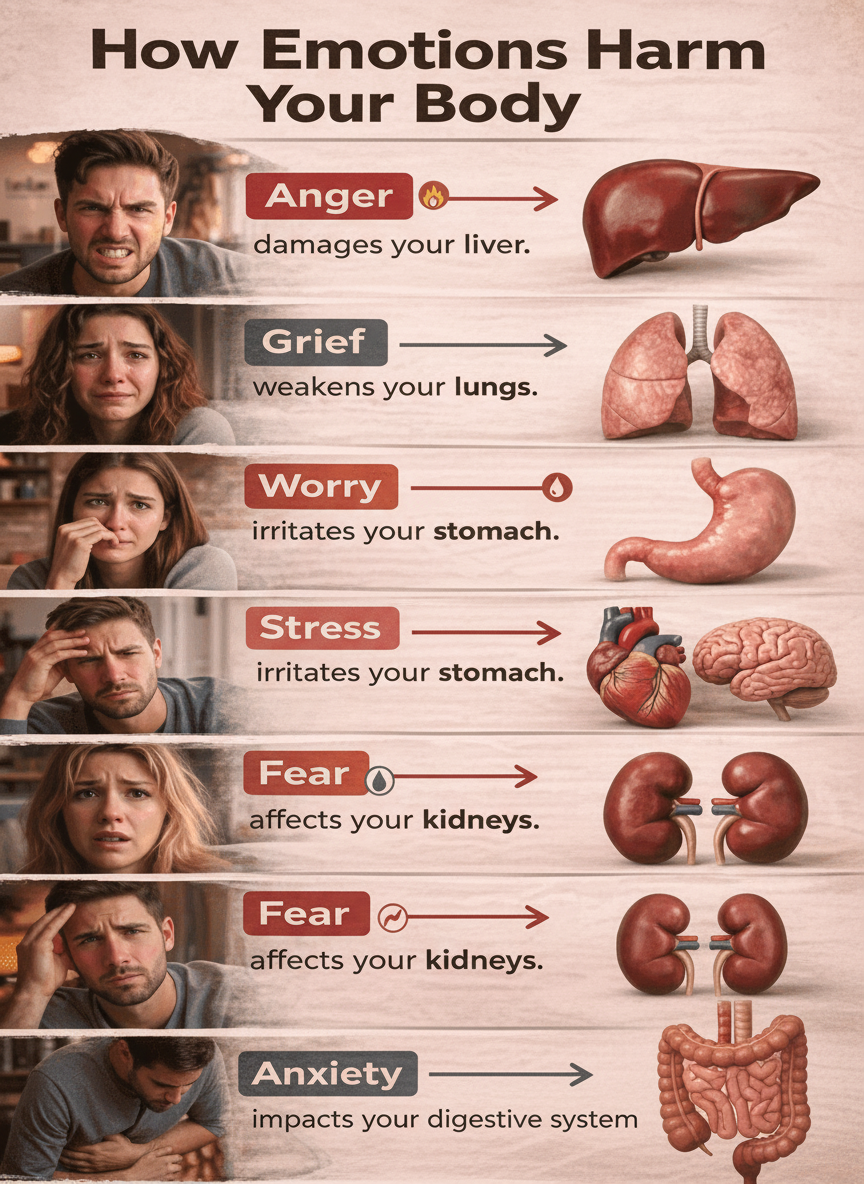
Anger and the Liver: The Price of Explosive Emotions
Anger is a potent human emotion. When it surges, your body instantly enters a survival mode: heart rate and blood pressure soar, and stress hormones flood your bloodstream. Over time, chronic anger can place immense strain on multiple bodily systems.
Traditional medicine often links anger to the liver, a crucial organ for processing stress chemicals and regulating metabolism. Modern research supports this connection, suggesting that chronic anger and hostility may contribute to higher inflammation and increased cardiovascular risk.
During intense anger, you might experience:
- Blood pressure spikes
- Elevated stress hormones
- Muscle tension
- Shallow breathing
However, the narrative isn’t all negative. When anger is expressed constructively rather than suppressed or explosively, your body recovers faster, and the stress response dissipates. Healthy ways to manage anger include:
- Practicing slow, deep breathing for a few minutes
- Taking a short walk outdoors
- Journaling about what triggered the feeling
- Communicating calmly with a trusted individual
Even brief breathing exercises can significantly reduce your body’s stress signals.
Grief and the Lungs: When Sadness Changes Your Breath
Grief is a natural response to loss, yet many older adults notice tangible physical changes when sadness persists. Frequent sighing, heavier breathing, and a significant drop in energy are common indicators. This isn’t coincidence; emotional distress directly influences breathing patterns.
When consumed by deep sadness, breathing often becomes shallow and irregular. Studies in behavioral medicine indicate that emotional states can indeed impact respiratory rhythm and oxygen intake. This doesn’t imply direct lung damage, but rather that emotional turmoil can diminish the efficiency of your breathing and your overall energy levels.
What many overlook is the simple power of deep breathing exercises to alleviate emotional tension. Try this basic routine:
- Inhale slowly through your nose for four seconds
- Hold your breath for two seconds
- Exhale gently through your mouth for six seconds
- Repeat this sequence five times
Many seniors report feeling noticeably calmer within minutes.
Worry and the Stomach: How Anxiety Manifests in Digestion
That familiar “butterflies in your stomach” sensation before a stressful event is no mere figment of imagination. Your digestive system is intricately linked to your brain via what scientists call the gut-brain axis. When worry becomes a constant companion, your digestion can react in various disruptive ways.
Common stress-related digestive symptoms include:
- Stomach discomfort or pain
- Changes in appetite
- Bloating
- Slower digestion
Research in gastroenterology confirms that stress significantly influences gut motility and sensitivity. The good news? Small lifestyle adjustments can bring remarkable calm to your digestive system. Helpful habits include:
- Eating slowly and chewing your food thoroughly
- Avoiding heavy meals late at night
- Ensuring adequate hydration
- Practicing relaxation techniques before meals
Even just five minutes of calm breathing before eating can noticeably improve digestion.
Stress and the Heart & Brain: The Hidden Cost of Constant Alert
Chronic stress is a pervasive health challenge today. Unlike brief, acute stress that helps us react quickly, prolonged stress keeps your body in a constant state of alert. This sustained response can negatively impact several critical systems.
Studies in health psychology reveal that long-term stress can detrimentally affect:
- Sleep quality
- Concentration and cognitive function
- Markers of heart health
- Mood stability
Think of chronic stress like an engine running continuously without rest; eventually, its components begin to wear down. But there’s a powerful antidote: consistent, small daily habits. By consciously integrating moments of calm and self-care into your routine, you can mitigate the damaging effects of stress on your heart, brain, and overall well-being. Prioritizing emotional health isn’t just about feeling better; it’s about protecting your physical health for years to come.