 By admin
 Forget everything you think you know about heart attacks. While the classic image involves sudden, crushing chest pain, for women, the reality is startlingly different – and tragically, often silent. This crucial distinction is precisely why so many women unknowingly put their lives at risk, dismissing critical warning signs as mere stress, indigestion, or everyday fatigue, thereby losing precious time for life-saving medical intervention.
It’s a sobering truth: heart disease remains the leading cause of death for women across the globe. Understanding the distinct and often subtle symptoms of a heart attack in women isn’t just important—it’s absolutely vital, and it could ultimately save a life, perhaps even yours.
Within this essential guide, we’re going to meticulously uncover both the prevalent and less-known indicators of a heart attack in women, delve into the reasons behind these symptomatic differences, and provide clear instructions on precisely when to seek immediate emergency medical assistance.
Why Heart Attack Symptoms in Women Are So Often Overlooked
While both men and women can certainly experience chest pain during a heart attack, women are significantly more prone to encountering subtle or what are often termed ‘atypical’ symptoms. Disturbingly, these less obvious signs can manifest days or even weeks prior to the full-blown cardiac event itself.
Several key factors contribute to why women frequently hesitate to seek crucial medical help:
-
The symptoms simply don’t feel like they’re connected to the heart
-
Any discomfort or pain is often mild, vague, or intermittent
-
Exhaustion or nausea is easily dismissed as stress, the flu, or general unwellness
-
A pervasive fear of overreacting, appearing dramatic, or inconveniencing others
Tragically, this critical delay in seeking care can result in far more severe and irreversible heart damage, along with a significantly elevated risk of life-threatening complications.
Classic vs. Silent Heart Attack Symptoms: What to Watch For
Classic symptoms (can occur in both men and women):
-
Intense chest discomfort, pressure, or a feeling of crushing tightness
-
Pain radiating outwards to the arm (especially the left), neck, jaw, or back
-
Sudden and unexplained shortness of breath
-
Breaking out in cold sweats or experiencing sudden dizziness
Symptoms more commonly experienced by women:
Women frequently report symptoms that are not directly chest-related, which is precisely why these are often labeled as “silent” or “atypical” heart attack indicators.
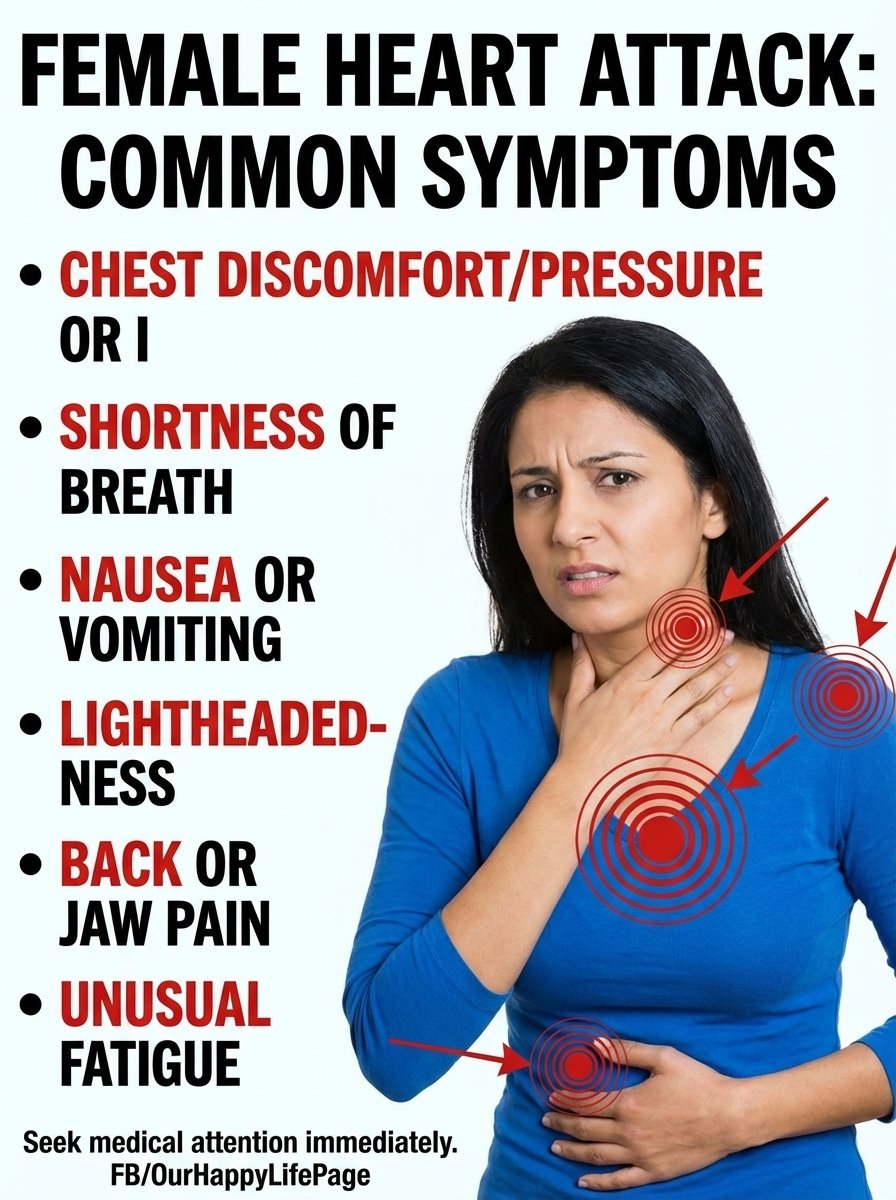
Most Common Heart Attack Symptoms in Women to Never Ignore
1. Unusual and Overwhelming Fatigue
Feeling profoundly exhausted without any discernible cause is one of the most frequently reported early warning signs among women. This isn’t just everyday tiredness—it often feels:
-
Completely overwhelming and debilitating
-
Abrupt in its onset
-
Disproportionate to your recent activity levels
Some women describe feeling utterly drained even after performing simple, routine tasks like making the bed or walking only a short distance.
2. Persistent Shortness of Breath
You might suddenly feel as though you:
-
Are struggling to catch your breath
-
Are breathing noticeably faster than is normal for you
-
Are experiencing breathlessness even when completely at rest
This alarming symptom can manifest with or without any accompanying chest discomfort and may appear suddenly or worsen gradually over time.
3. Chest Discomfort (Often Not Severe Pain)
Instead of sharp, agonizing pain, women may experience:
-
A sensation of pressure
-
An uncomfortable tightness
-
A burning feeling
-
A feeling of fullness
Rather than a piercing pain, it might feel more like an uncomfortable, squeezing pressure that can come and go intermittently.
4. Pain in the Back, Neck, Jaw, or Shoulders
Heart attack pain in women frequently migrates beyond the chest area. It might manifest as discomfort in:
-
The upper back region
-
The neck or throat area
-
The jawline
-
One or both shoulders
-
Either arm
This type of pain can often be described as a dull ache, a persistent tightness, or a general discomfort rather than a sharp, acute sensation.
5. Nausea, Indigestion, or General Stomach Discomfort
Many women tragically misinterpret heart attack symptoms as common ailments such as:
-
Severe acid reflux
-
Food poisoning
-
A bout of the stomach flu
However, critical warning signs can include:
-
Unexplained nausea or vomiting
-
A heavy, uncomfortable, or churning sensation in the stomach area
-
Indigestion that persists and doesn’t respond to usual remedies
6. Dizziness or Lightheadedness
You might suddenly experience feelings of being:
-
Faint or woozy
-
Unsteady on your feet
-
As if you are about to lose consciousness
This symptom can be a direct result of reduced blood flow from the heart and is a sign that should absolutely never be ignored.
7. Sudden Cold Sweats
Breaking out in a sudden, cold, clammy sweat without any apparent reason—especially when this occurs alongside other concerning symptoms—can be a critical and urgent warning sign of a heart attack.
Early Warning Signs Appearing Days or Weeks Before
It’s important to recognize that some women may experience subtle symptoms that precede a heart attack by several days or even weeks, such as:
-
Unusual or inexplicable fatigue
-
Persistent sleep disturbances or insomnia
-
Increased feelings of anxiety or unease
-
Intermittent shortness of breath
-
Mild discomfort in the chest or upper body that comes and goes
While these early indicators are often easy to dismiss, they can be your body’s urgent signal, silently asking for critical medical attention.
When Should You Seek Emergency Help IMMEDIATELY?
You must call emergency services without delay if you or someone you’re with experiences any of the following:
-
Chest discomfort that lasts for more than a few minutes, or if it subsides and then repeatedly returns
-
Unexplained shortness of breath, regardless of whether chest discomfort is present
-
Pain that begins to spread to the back, jaw, neck, or arm(s)
-
A sudden onset of dizziness, nausea, or breaking out in cold sweats
-
Extreme, unexplained fatigue that presents alongside other concerning symptoms
Do not hesitate or wait. Prompt medical treatment is absolutely crucial and can significantly preserve heart muscle function and ultimately save lives.
Why Women’s Heart Attack Symptoms Are Uniquely Different
Researchers have identified several contributing factors that are believed to play a significant role in these differences:
-
Inherent differences in heart and blood vessel anatomical structures
-
The profound influence of hormonal fluctuations throughout a woman’s life
-
A higher predisposition to developing disease in smaller arteries (microvascular dysfunction)
-
Variations in pain perception and how nerve responses are processed
Due to these complex factors, women are considerably more likely to experience less obvious or ‘silent’ symptoms—however, the underlying danger and severity are every bit as real and life-threatening.
Essential Steps to Reduce Your Heart Attack Risk
While it’s true that not every heart attack can be entirely prevented, you can significantly lower your personal risk by actively embracing the following proactive measures:
-
Adopting a well-balanced, heart-healthy dietary regimen
-
Maintaining consistent physical activity throughout your week
-
Effectively managing and reducing stress levels
-
Completely avoiding smoking and exposure to secondhand smoke
-
Diligently controlling your blood pressure, cholesterol, and blood sugar levels
-
Ensuring you receive regular health checkups and screenings
Beyond lifestyle adjustments, paying close attention to your body and taking any suspicious symptoms seriously is just as paramount for your heart health.
Final Thoughts: Always Trust Your Instincts
If at any point something feels fundamentally wrong, please, do not ignore that feeling. Women’s heart attack symptoms are frequently subtle, but their potential danger is absolutely no less severe. Trust your gut instincts, seek medical help at the earliest opportunity, and empower the women in your life by encouraging them to learn and recognize these crucial signs as well.
Increased awareness truly saves lives. 💙