 By admin
 The Silent Cues: 12 Critical Early Cancer Warning Signs You Must Not Ignore
Cancer often begins its journey subtly, developing gradually and without immediate alarm. In its nascent stages, it frequently manifests through understated or vague symptoms that are easily brushed aside. Many individuals mistakenly attribute these early warning signs to the natural process of “aging,” everyday stress, a minor infection, or simply “how things are now.” By the time more pronounced indicators emerge — such as severe pain, noticeable lumps, or dramatic, unexplained weight loss — the disease may have already progressed significantly.
Recognizing these initial, often overlooked, symptoms — especially when several appear concurrently or persist for an extended period (weeks rather than days) — is paramount. Early detection can dramatically improve treatment outcomes, often leading to a highly treatable stage. This comprehensive guide, informed by leading health authorities including the American Cancer Society, the World Health Organization, the Mayo Clinic, and extensive patient registries, outlines 12 of the most consistently reported early-to-mid-stage signs across various major cancer types.
-
1. Unexplained Weight Loss A significant, unintentional loss of 5–10% or more of your total body weight over a span of 6 to 12 months, without any changes to your diet or exercise routine. This isn’t about actively trying to shed pounds.
Commonly Linked Cancers: Pancreatic, stomach, lung, esophageal, colorectal, and lymphoma.
Why Often Dismissed: People might think, “I’m finally eating healthier” or “It’s just stress from work.”
-
2. Persistent Fatigue That Doesn’t Improve With Rest Experiencing extreme tiredness or profound weakness that feels distinct from regular exhaustion. This fatigue persists even after getting adequate sleep (e.g., 8–10 hours) and doesn’t resolve with rest.
Commonly Linked Cancers: Leukemia, lymphoma, colon, stomach, and pancreatic cancers.
Why Often Dismissed: It’s frequently attributed to “just getting older” or a “demanding lifestyle.”
-
3. New or Changing Lumps / Thickened Areas The appearance of any new lump, swelling, or an area of thickened tissue. Pay particular attention to regions like the breast, testicle, neck, armpit, groin, or under the jaw. This sign is concerning if it doesn’t resolve or disappear after 2–3 weeks.
Commonly Linked Cancers: Breast, lymphoma, sarcoma, and thyroid cancers.
Why Often Dismissed: Often rationalized as “probably a cyst” or “it doesn’t hurt, so it’s fine.”
-
4. Non-Healing Sores or Ulcers A sore, ulcer, or a persistent white or red patch in your mouth, on your lip, tongue, skin, or genitals that fails to heal within three weeks or more.
Commonly Linked Cancers: Oral, skin (specifically squamous cell carcinoma), cervical, and vulvar cancers.
Why Often Dismissed: Often mistaken for a “canker sore” or believing “it’ll heal on its own.”
-
5. Persistent Cough, Hoarseness, or Trouble Swallowing A cough that lingers for more than 3–4 weeks (especially if accompanied by blood), chronic hoarseness in your voice, or a sensation of food getting stuck in your throat or chest.
Commonly Linked Cancers: Lung, throat, esophageal, and thyroid cancers.
Why Often Dismissed: Frequently blamed on “allergies” or “acid reflux.”
-
6. Changes in Bowel or Bladder Habits Noticeable shifts in your regular bowel or bladder patterns, including:
- New or worsening constipation or diarrhea lasting for several weeks.
- Stools that appear unusually narrow or “pencil-thin.”
- Any presence of blood in your stool (either bright red or dark/tarry).
- Increased frequency, urgency, or the presence of blood in your urine.
Commonly Linked Cancers: Colorectal, bladder, prostate, and ovarian cancers.
Why Often Dismissed: Often attributed to “IBS” (Irritable Bowel Syndrome) or “prostate issues” in men.
-
7. Unusual Bleeding or Discharge Any unexpected bleeding or discharge, such as:
- Postmenopausal bleeding, regardless of the amount.
- Bleeding between menstrual periods.
- Blood found in urine, stool, sputum, or vomit.
- Unusual vaginal discharge, particularly after menopause.
Commonly Linked Cancers: Endometrial, cervical, colorectal, bladder, and lung cancers.
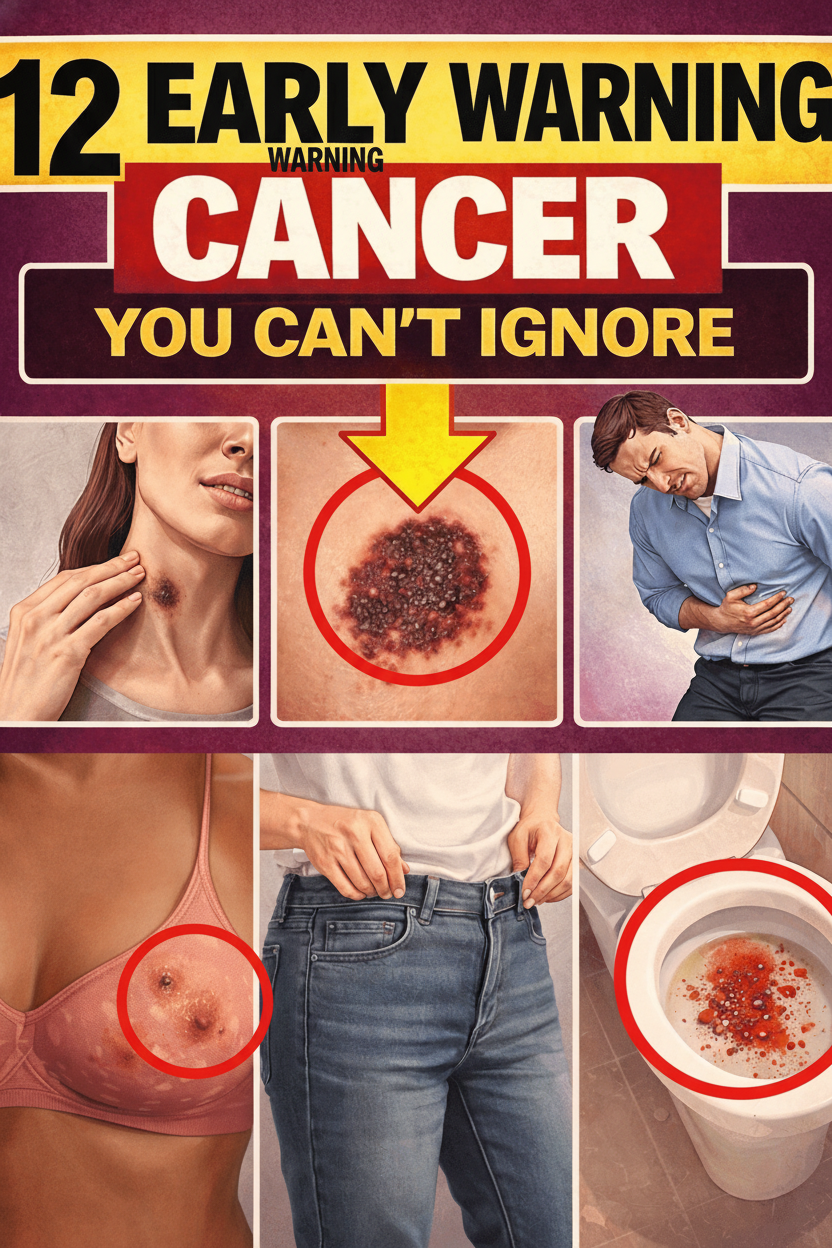
Why Often Dismissed: Frequently dismissed as “hemorrhoids” or a “one-time occurrence.”
-
8. Skin Changes That Don’t Heal Vigilance for changes in your skin is crucial, including:
- A new mole or an existing mole that is changing (look for asymmetry, irregular borders, multiple colors, a diameter greater than 6 mm, or evolution over time – the ABCDE rule).
- A non-healing sore or ulcer, especially on sun-exposed skin.
- A persistent rash or scaly patch that doesn’t resolve.
Commonly Linked Cancers: Melanoma, basal cell carcinoma, and squamous cell carcinoma.
Why Often Dismissed: Often trivialized as “just a pimple” or “dry skin.”
-
9. Persistent Pain in One Location Ongoing pain localized to a specific area that doesn’t respond to usual remedies. This could include bone pain (especially worsening at night), headaches that become more severe over time, or persistent abdominal or back pain.
Commonly Linked Cancers: Bone, brain, pancreatic, colorectal, and ovarian cancers.
Why Often Dismissed: Commonly attributed to a “muscle strain” or “stress.”
-
10. New-Onset or Worsening Diabetes After Age 50 A sudden onset of blood sugar spikes, frequent urination, extreme thirst, or a new diagnosis of type 2 diabetes, particularly if there’s no strong family history or pre-existing obesity. This is especially relevant for individuals over 50.
Commonly Linked Cancers: Pancreatic cancer (this is one of the most significant links).
Why Often Dismissed: Often explained away as “just getting older.”
-
11. Persistent Itching Without Rash Generalized itching, particularly affecting the palms, soles of the feet, or back, without any visible skin changes or rash.
Commonly Linked Cancers: Lymphoma, liver, and pancreatic cancers.
Why Often Dismissed: Frequently attributed to “dry skin” or “allergies.”
-
12. Night Sweats & Fever Without Infection Experiencing drenching night sweats or a low-grade fever that comes and goes, without accompanying symptoms of a cold, flu, or any other apparent infection.
Commonly Linked Cancers: Lymphoma, leukemia, and liver cancers.
Why Often Dismissed: Often blamed on “hormones” or “hot flashes.”
Quick Urgency Guide – When to Act
Understanding when to seek medical attention is crucial. Here’s a guide to the urgency of various situations:
- Emergency (Seek ER or doctor same day)
- Sudden, severe headache accompanied by vision changes, speech difficulties, or unexplained weakness – these could indicate a stroke or a brain tumor.
- Heavy, unexplained bleeding from any orifice (e.g., vomit, stool, urine) or significant postmenopausal bleeding.
- Sudden and unexplained inability to swallow or breathe properly.
- Urgent (Consult a doctor within days)
- Any amount of postmenopausal bleeding.
- A new lump discovered, especially if combined with unexplained weight loss or persistent fatigue.
- Persistent bloating, feeling full quickly (early satiety), combined with urinary urgency.
- Prompt (Schedule an appointment within 1–2 weeks)
- Any combination of two or three of the warning signs listed above that persist for more than 3–4 weeks.
- New-onset diabetes after age 50, particularly if accompanied by persistent abdominal or back pain.
The Bottom Line: Don’t Ignore the Whispers
Cancer rarely announces itself with a scream in its early stages; instead, it often communicates through subtle whispers. These include persistent fatigue, unexplained aches, or changes in your body that just don’t feel right. Being attuned to these early cancer warning signs and seeking timely medical advice is your best defense. Trust your instincts, advocate for your health, and remember that early detection is a powerful tool in the fight against cancer. If you experience any of these symptoms, especially if they are new, worsening, or persistent, consult a healthcare professional without delay.