 By admin
 Are you struggling with blurry vision, squinting at screens, or finding small print impossible to read? You’re not alone. In a desperate search for clearer eyesight, many are turning to a viral online trend: combining crushed eggshells with carrots for a ‘natural’ eye boost. But hold on a second – what if this seemingly harmless remedy isn’t just ineffective, but actually *dangerous* for your precious vision? The internet is buzzing with this simple, cheap, and tempting “hack,” yet the critical truth about its safety and effectiveness is often completely ignored.
Unpacking the Viral Eggshell and Carrot Eye Health Trend
This popular online movement involves taking finely crushed eggshells and mixing them with carrots, frequently prepared as a fine powder or a blended paste. The underlying premise is deceptively straightforward:
• Eggshells are touted as a potent source of calcium
• Carrots are celebrated for their rich vitamin A content
• The combination is marketed as a powerful duo to “enhance eye health”
On the surface, this concept seems perfectly reasonable. After all, carrots have been lauded for their vision-boosting properties for generations. However, this is precisely where the narrative takes an intriguing turn, revealing a much more complex reality.
The vast majority of these widely shared viral posts tend to overstate benefits or drastically simplify the intricate mechanisms of how nutrients truly function within the human body.
Crucially, they almost always conveniently omit or downplay the significant safety implications involved in such practices.
Why This Eye Health Trend Exploded Online
Individuals are naturally drawn to supposed “natural cures” like this due to several compelling factors:
• They are often incredibly inexpensive to prepare
• They carry the appealing perception of being completely “natural”
• They tantalizingly promise rapid, effortless improvements
Yet, it’s vital to remember that the label “natural” does not automatically equate to being either safe or genuinely effective for your health.
Unmasking the Truth: Do Carrots Actually Boost Eye Health?
It’s time to distinguish scientific facts from widespread myths surrounding carrots and vision.
Indeed, carrots are an excellent source of beta-carotene, a powerful compound that your body efficiently converts into vitamin A. This essential nutrient is fundamental for sustaining normal visual function, particularly excelling in aiding sight during dim or low-light conditions.
Extensive scientific research consistently highlights that:
• Vitamin A is crucial for maintaining the delicate surface of the eye
• It significantly contributes to robust night vision capabilities
• It plays a vital role in the overall healthy functioning of your eyes
However, and this point cannot be stressed enough, it’s imperative to understand that simply consuming more carrots will not miraculously elevate your vision beyond its healthy, normal parameters.
The Pervasive Misconception About Carrots
A deeply ingrained belief held by many is that:
“Eating an abundance of carrots automatically translates to vastly sharper vision”
Yet, the reality paints a different picture:
• If your body already receives an adequate intake of vitamin A, consuming additional carrots will not lead to further enhancements in your visual acuity
• Many common changes in vision, particularly as we age, are often linked to natural physiological processes rather than solely dietary deficiencies
It’s crucial to set realistic expectations when it comes to dietary interventions for eye health.
The Unsettling Question: Are Eggshells Actually Safe for Consumption?
Now, let’s turn our attention to the critical component of this trend that most individuals either ignore or are simply unaware of: the eggshells themselves.
While eggshells are predominantly composed of calcium carbonate, a mineral essential for bone health, the act of consuming them carries a series of significant and often underestimated potential risks.
Serious Potential Concerns You Must Know
• Unsterilized eggshells can harbor dangerous bacteria such as Salmonella, posing a serious risk of foodborne illness if ingested
• Even when finely crushed, the sharp, abrasive particles of eggshell can cause irritation or even microscopic damage to the delicate lining of your throat and entire digestive system
• The calcium present in eggshells is not always in a readily bioavailable form, meaning your body may struggle to absorb and utilize it effectively
And here lies the absolutely crucial takeaway…
Scientific literature provides extremely limited, if any, credible evidence to substantiate the claim that consuming eggshells offers any specific benefit for eye health.
What Reputable Health Professionals Advise
Medical and nutritional experts consistently recommend a more prudent approach:
• Prioritize obtaining your essential calcium intake from established, safe, and easily absorbable sources such as dairy products, vibrant leafy green vegetables, or specially fortified foods
• Strongly advise against the creation and consumption of homemade supplements, especially without the explicit guidance and supervision of a qualified healthcare provider
Ultimately, when it comes to your well-being, prioritizing proven safety protocols far outweighs the allure of fleeting internet trends.
The Deceptive Nature: Why This “Natural Remedy” Is So Misleading
Here’s a crucial insight that often eludes the average internet user.
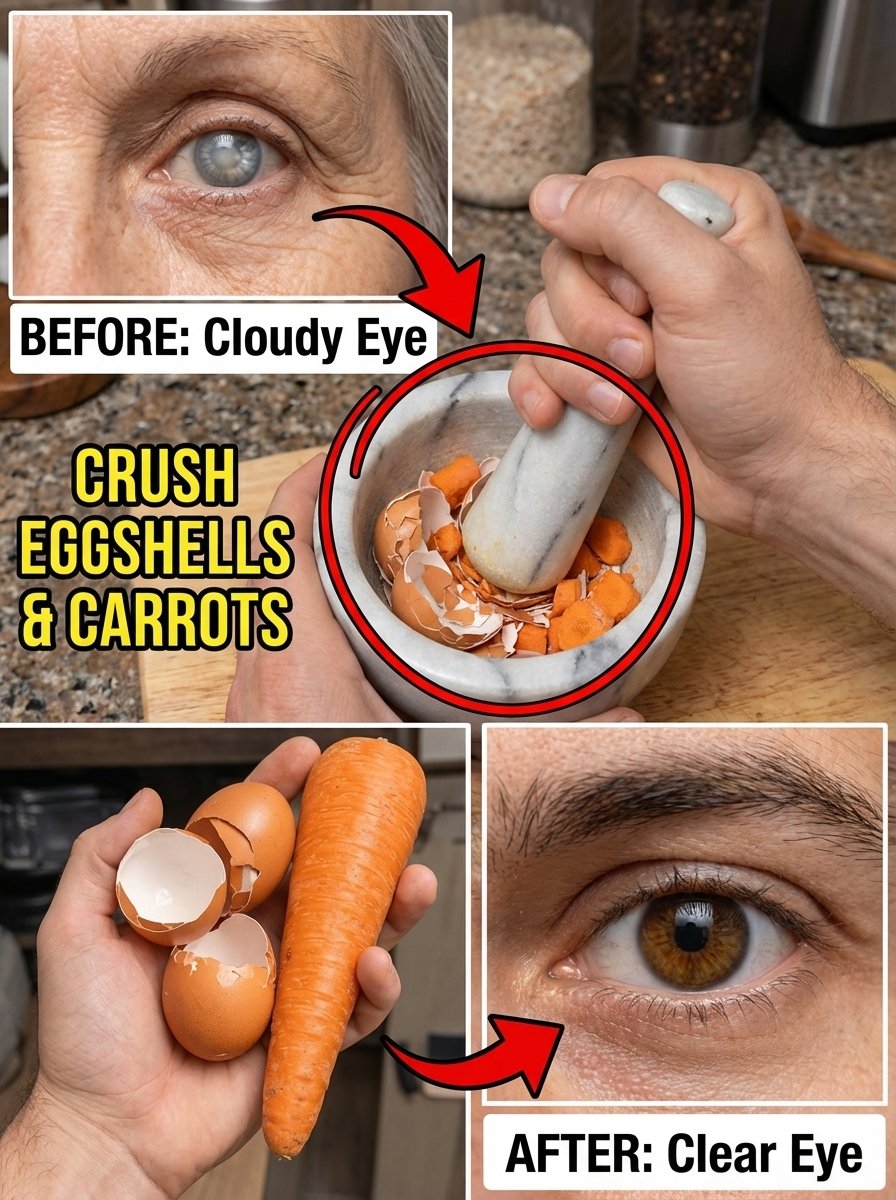
The digital landscape is rife with information that cleverly blends fragments of truth with audacious, unsubstantiated claims.
While it’s undeniable that essential nutrients play a vital role in our health, simply haphazardly combining various ingredients, no matter how “natural,” offers absolutely no guarantee of achieving desired results.
A Clear Side-by-Side Comparison
| The Viral Claim | The Scientific Reality |
|---|---|
| Consuming eggshells will significantly improve eye health | There is a complete lack of robust scientific evidence to support this assertion |
| Eating more carrots can restore lost vision or make it super sharp | Carrots primarily support existing normal eye function, they do not possess vision-restoring capabilities |
| All natural remedies are inherently safe and free from harm | Many natural substances, when misused or improperly prepared, can indeed carry considerable health risks |
| There are quick and easy fixes for complex eye health issues | Optimal eye health is the result of consistent, long-term healthy habits and diligent care, not instantaneous solutions |
This fundamental disconnect is precisely where countless individuals are led astray.
Understanding the Emotional Allure
It’s entirely natural to encounter a seemingly simple, hopeful solution online and desperately wish for it to be true.
This desire for an easy answer is a deeply human trait.
However, when it pertains to something as irreplaceable and delicate as your health, particularly your vision, gambling on unverified information is a risk that simply isn’t worth taking.
The Real Blueprint: What Genuinely Supports Healthy Eyes Through Every Stage of Life
Let’s shift our focus to what truly makes a difference for your vision – the enduring practices that genuinely work.
Maintaining optimal eye health is fundamentally shaped by consistent, mindful habits, not by fleeting, one-off “hacks” or unproven remedies.
Essential Nutrients for Optimal Eye Function
Extensive scientific research consistently points to specific nutrients as crucial for supporting robust eye function and safeguarding vision:
• Vitamin A: Abundantly found in vibrant foods like carrots and sweet potatoes
• Omega-3 Fatty Acids: Rich sources include fatty fish (like salmon) and walnuts
• Lutein and Zeaxanthin: Key carotenoids present in leafy greens such as spinach and kale
• Vitamins C and E: Powerhouse antioxidants found in a wide array of fruits and various nuts
However, nutrition is just one piece of the puzzle; there’s more to truly comprehensive eye care.
Everyday Habits That Yield Significant Results
Beyond dietary considerations, incorporating these daily practices can have a profound impact on your long-term eye health:
• Implement the 20-20-20 rule: Take regular breaks from digital screens every 20 minutes, looking 20 feet away for 20 seconds
• Always ensure your reading and work environments are illuminated with proper, adequate lighting to reduce strain
• Prioritize scheduling and attending routine, comprehensive eye checkups with a qualified optometrist or ophthalmologist
• Maintain consistent hydration throughout the day, as adequate fluid intake supports overall eye moisture and comfort
While these habits might appear deceptively simple on the surface, their cumulative effect over time is remarkably powerful in preserving your vision.
Immediate & Actionable Steps You Can Implement for Healthier Eyes
Let’s translate these insights into a straightforward, practical guide that’s easy to integrate into your daily life, starting right now.
Your Simple Step-by-Step Eye Care Guide
- **Diversify Your Plate:** Make a conscious effort to include a wide variety of colorful fruits and vegetables in your daily meals to ensure a broad spectrum of eye-supporting nutrients.
- **Embrace Healthy Fats:** Regularly incorporate sources of beneficial fats, such as omega-3 rich fish or a handful of nutrient-dense nuts, into your diet.
- **Steer Clear of Unverified Remedies:** Absolutely refrain from experimenting with unproven or potentially unsafe homemade concoctions, especially those that lack scientific backing.
- **Prioritize Professional Check-ups:** If you observe any changes in your vision, no matter how subtle, promptly schedule a comprehensive eye examination with an eye care specialist.
- **Implement Digital Detox Before Bed:** Make it a habit to limit your screen exposure, particularly from electronic devices, for at least an hour before you go to sleep.
And here’s a small, yet profoundly impactful piece of advice…
When it comes to nurturing your eye health, steady consistency in your habits will always yield far greater long-term benefits than sporadic, intense efforts.
Final Verdict: Should You Really Experiment with Eggshells and Carrots for Your Eyes?
Let’s approach this with complete candor and clarity.
While carrots undoubtedly deserve their place as a valuable component of a healthy, balanced diet, the notion of consuming eggshells as a method to bolster eye health is definitively neither professionally recommended nor scientifically proven. In fact, it carries potential risks that far outweigh any perceived benefits.
The genuine, lasting solution for maintaining vibrant vision isn’t some obscure secret tucked away in a viral internet recipe.
Instead, it resides within your consistent daily choices, a well-rounded and nutritious diet, and a proactive awareness of your overall eye care needs.
And that highly anticipated “secret” you might have been hoping for?
The truth is, there are no magical shortcuts to optimal health. However, there is a clearer, more dependable, and infinitely safer path to protecting your precious eyesight.
Frequently Asked Questions (FAQ) About Eye Health Trends
1. Will drastically increasing my carrot intake significantly improve my eyesight?
While carrots are beneficial due to their vitamin A content and play a role in supporting normal eye function, they cannot enhance your vision beyond its healthy, baseline levels. They primarily help maintain, not supercharge, your sight.
2. Is it truly safe to consume eggshell powder on a regular basis?
No, consuming eggshell powder regularly can pose several risks, including potential bacterial contamination (like Salmonella) and physical irritation or damage to your digestive tract. It is strongly advised to avoid this practice unless under the direct and specific guidance of a qualified medical professional.
3. What are the most effective and natural methods to genuinely support long-term eye health?
The most reliable and natural strategies for maintaining excellent eye health involve a combination of a consistently balanced and nutrient-rich diet, ensuring adequate and appropriate lighting in your environment, adhering to a schedule of regular professional eye examinations, and adopting an overall healthy lifestyle that includes proper hydration and screen breaks.
Important Medical Disclaimer
Please note: The information presented in this article is intended solely for general informational purposes and should never be considered a substitute for professional medical advice, diagnosis, or treatment. It is absolutely essential to always seek the guidance of a qualified healthcare provider or eye care specialist before implementing any significant changes to your diet, health regimen, or treatment plan.