 By admin
 Ever suddenly felt that unsettling “pins and needles” sensation creeping into your hands or feet, leaving you wondering if something serious is wrong? You’re not alone, and while fleeting numbness is often harmless, persistent tingling can be your body trying to send a crucial message.
When these sensations return repeatedly, it’s natural to feel concerned and ask yourself: what exactly does it signify when your extremities frequently lose feeling?
Let’s dive into the most common explanations, presented in an easy-to-understand format.
Understanding Numbness and Tingling (Paresthesia)
The medical term for this sensation is paresthesia, and it occurs when nerves are subjected to irritation, compression, or simply aren’t transmitting signals effectively. This can manifest in various ways, often described as:
-
A gentle or intense tingling
-
A noticeable burning sensation
-
“Electric” shock-like feelings
-
A partial or complete loss of feeling
-
A sensation of coldness or heaviness in your hands and feet
It’s important to recognize that these particular sensations are typically indicators of a nerve-related issue, rather than a problem originating in the muscles.
1. Nerve Compression: The Everyday Culprit
Among the most prevalent reasons for experiencing numbness and tingling is simply pressure on your nerves. This often happens due to how you position your body.
Think about common scenarios such as:
-
Drifting off to sleep in an uncomfortable or awkward posture
-
Remaining seated with your legs crossed for extended periods
-
Applying prolonged pressure by leaning on your elbows or wrists
-
Engaging in repetitive motions with your hands, such as typing
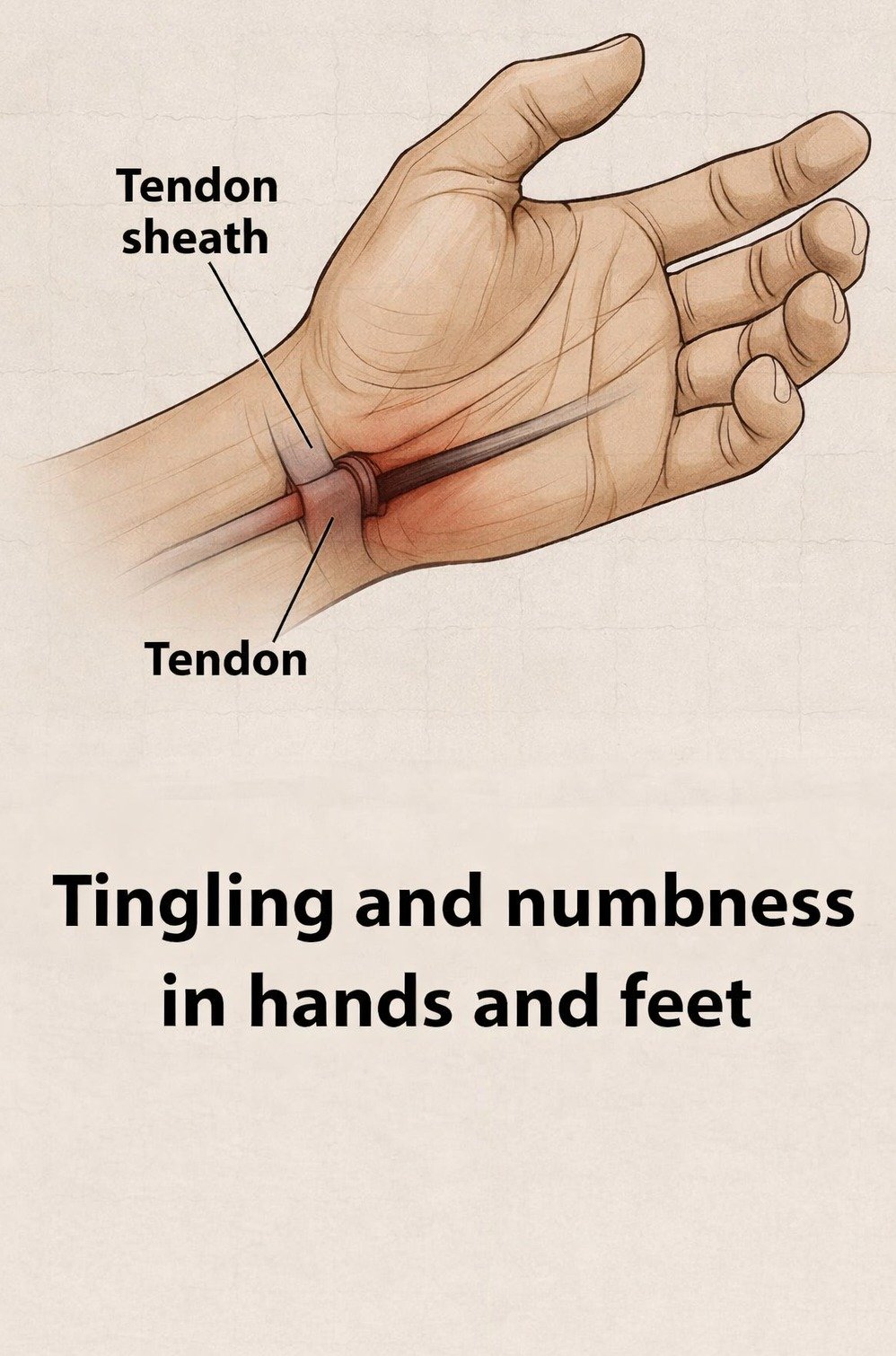
A classic example of nerve compression, often illustrated in medical contexts, is carpal tunnel syndrome. This condition arises when the median nerve in your wrist becomes compressed due to inflammation and swelling of the surrounding tendon sheath.
Look out for these common indicators:
-
A persistent tingling sensation in your fingers
-
A noticeable weakening of your grip strength
-
Experiencing numbness that often wakes you up at night
-
Pain that extends from your wrist, traveling up into your arm
2. Poor Blood Circulation: When Flow is Restricted
Another significant factor contributing to numbness in your hands and feet is inadequate blood circulation, meaning your extremities aren’t receiving enough oxygen-rich blood.
This can stem from several potential causes, such as:
-
Extended periods of inactivity or immobility
-
Exposure to excessively cold temperatures
-
Wearing shoes that are too tight or restrictive
-
The habit of smoking, which constricts blood vessels
-
Underlying systemic circulatory problems
Essentially, when the supply of blood flow diminishes, your nerves are deprived of essential oxygen and nutrients, which then prompts the onset of those familiar tingling sensations as a warning sign.
3. Vitamin Deficiencies: The Nutritional Link
Believe it or not, insufficient levels of specific vitamins can profoundly impact your nerve health. Key culprits often include a deficiency in vitamin B12, vitamin B6, and folate.
Symptoms that might suggest a vitamin deficiency include:
-
A persistent, unexplained numbness
-
Overwhelming feelings of fatigue
-
General physical weakness
-
Issues with memory or “brain fog”
This type of deficiency is particularly prevalent among individuals who:
-
Adhere to highly restrictive dietary plans
-
Experience chronic digestive problems that hinder nutrient absorption
-
Have diets that contain minimal or no animal-based foods
4. Stress and Anxiety: The Mind-Body Connection
It’s a common misconception that stress solely impacts mental well-being; in reality, it exerts a powerful influence over your entire nervous system.
When you’re experiencing moments of intense anxiety or panic, your body undergoes several physiological changes:
-
Your breathing pattern becomes rapid and shallow
-
There are noticeable shifts in your body’s oxygen levels
-
Muscles throughout your body involuntarily tense up
-
Your nerves enter a state of heightened overstimulation
These combined reactions can frequently trigger temporary episodes of numbness, particularly noticeable in your fingers, toes, and even around your lips.
5. Blood Sugar Imbalance: A Silent Threat to Nerves
Consistently elevated or fluctuating blood sugar levels pose a serious risk, as they can gradually inflict damage upon the delicate small nerves, particularly those found in the hands and feet.
Initial indicators of this nerve damage might manifest as:
-
Tingling sensations that frequently occur during the night
-
A distinct burning feeling in the soles of your feet
-
A noticeable decrease in overall sensation
It’s crucial to recognize these as some of the earliest and most significant warning signs linked to nerve sensitivity stemming from glucose imbalance, often a precursor to more serious conditions.
6. Inflammation and Tendon Irritation: The Pressure Point
When tendons become inflamed, particularly with conditions like tendon sheath swelling (tenosynovitis), the resulting expansion can exert pressure on adjacent nerves, leading to numbness.
This type of irritation is frequently triggered by:
-
Engaging in repetitive movements over time
-
Excessive or prolonged overuse of your hands
-
Frequent, sustained activities like typing or extensive phone use
-
Performing demanding manual labor
As visually demonstrated, when tendon structures swell, they inevitably constrict the available space for nerves, which directly results in the sensation of numbness.
When Does Numbness Signal Something More Serious?
While an occasional, fleeting episode of numbness is typically nothing to worry about, there are crucial instances when these sensations should absolutely not be dismissed.
It’s imperative to seek medical advice if you notice that:
-
The numbness occurs with increasing frequency
-
It impacts both sides of your body simultaneously
-
The intensity or duration of the symptoms progressively worsens
-
The numbness is accompanied by noticeable weakness or significant pain
-
It begins to disrupt your ability to perform daily tasks and activities
Any symptoms that are persistent, recurrent, or escalating in severity warrant a thorough professional evaluation to determine the underlying cause.
Simple Habits That Can Offer Relief and Support Nerve Health
Even though the root causes of numbness can differ widely, incorporating these straightforward habits into your daily routine can significantly contribute to better nerve health and potentially alleviate symptoms:
-
Regularly pause and take breaks from tasks involving repetitive movements
-
Incorporate daily stretching exercises for your hands, wrists, and ankles
-
Consciously work on improving and maintaining good posture
-
Ensure you are consistently staying well-hydrated throughout the day
-
Prioritize a balanced and nutrient-rich diet for overall well-being
-
Be mindful to avoid sustained or prolonged pressure on your limbs
Remember, even seemingly minor adjustments to your daily routine can yield substantial positive impacts on your nerve health and comfort.
Concluding Thoughts
Ultimately, experiencing numbness in your hands and feet is often your body’s subtle, yet important, signal that something requires your attention—whether it’s an issue with nerve pressure, blood circulation, nutritional intake, or specific lifestyle habits.
While the majority of these instances are not indicative of life-threatening conditions, it is absolutely paramount that repeated or persistent symptoms are never dismissed or ignored.
Paying heed to these early warnings can be instrumental in preventing minor discomforts from escalating into more significant health challenges down the road.