 By admin
 Ever glanced down at your nails and spotted those faint vertical lines, dismissing them as just another sign of aging? You might be overlooking a crucial message your body is trying to send you. While often benign, these subtle changes can sometimes be vital indicators of your overall health.
This comprehensive guide will delve deep into the various causes behind vertical ridges on your nails, uncover their potential meanings, and most importantly, help you understand exactly when these common markings warrant a closer look and perhaps a visit to your doctor.
What Are Vertical Lines on Nails?
Often referred to as longitudinal ridges, these vertical lines are essentially grooves that extend from the base of your nail, near the cuticle, all the way to its free edge. They are incredibly prevalent, and it’s quite common for them to become more distinct and noticeable as individuals age.
While frequently benign and nothing to worry about, these nail patterns shouldn’t always be dismissed. There are instances where their sudden appearance or a noticeable worsening of their prominence could serve as a subtle warning sign of underlying health conditions that require attention.
Common Causes of Vertical Nail Ridges
1. Natural Aging Process
Unsurprisingly, the primary culprit behind the appearance of vertical lines on your nails is the natural process of aging. As our bodies mature, the production of keratin, the fundamental protein responsible for forming strong, smooth nails, gradually diminishes. This reduction in keratin often results in the development of these characteristic ridges and other textural changes.
2. Nutritional Deficiencies
Beyond aging, the presence of vertical ridges might occasionally point towards a deficiency in vital nutrients that are crucial for overall health and robust nail growth, including:
- Iron
- Zinc
- Vitamin B12
- Magnesium
An inadequate intake of any of these key nutrients can significantly compromise nail strength, making them more prone to weakness, breakage, and irregular growth patterns.
3. Dehydration and Dry Skin
Insufficient hydration, both internally and externally, can significantly contribute to the visibility of nail ridges. When nails and their surrounding cuticles become excessively dry, their natural flexibility and smooth surface are compromised, making any existing ridges far more noticeable.
4. Minor Trauma or Damage
The delicate nail matrix, which is the crucial area where new nail cells are produced, can be easily damaged by various external factors. Frequent pressure, accidental injuries, or even overly aggressive manicures can all disrupt this growth process, often manifesting as distinct vertical lines on the nail plate.
5. Underlying Health Conditions
While less common, it is important to recognize that vertical lines on your nails can sometimes be an indicator of more serious, underlying health conditions, such as:
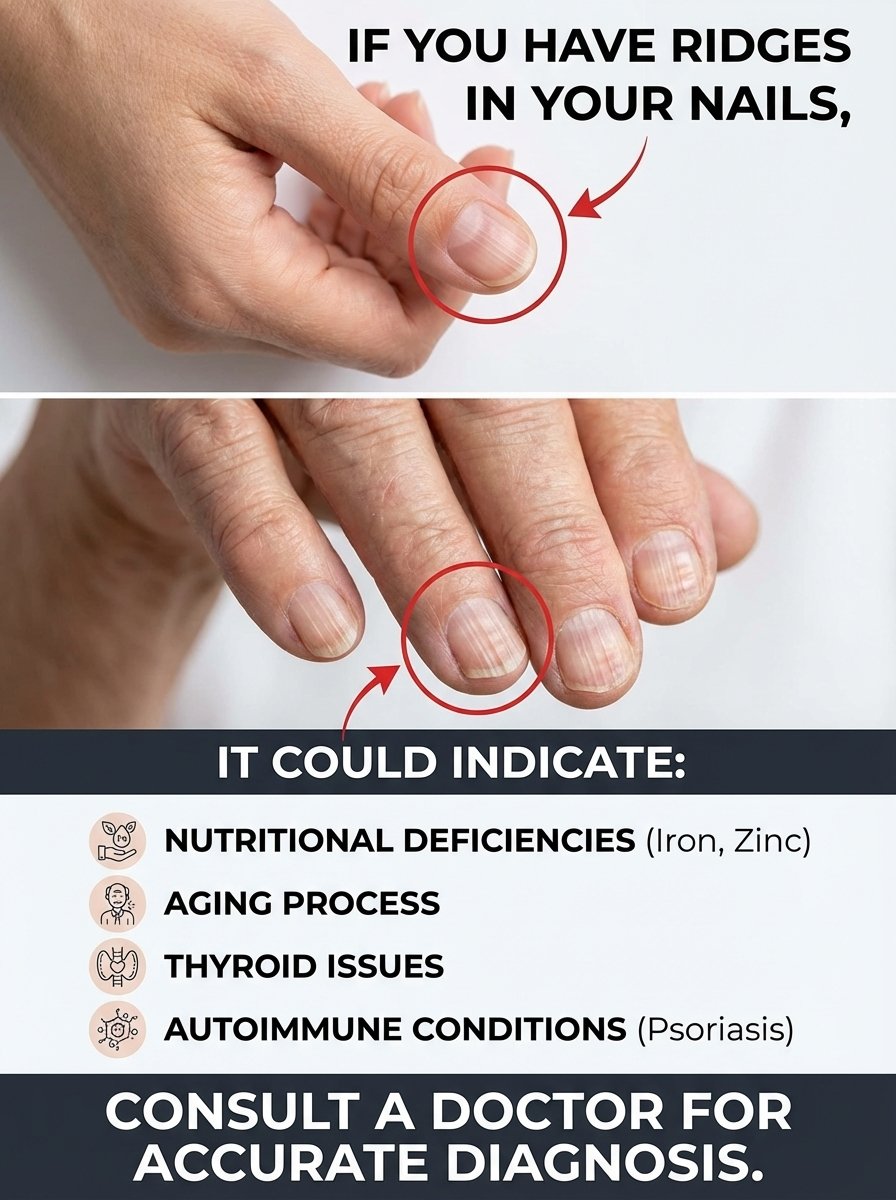
- Thyroid disorders
- Circulatory problems
- Autoimmune diseases
Such systemic conditions can significantly impact the body’s ability to produce healthy nails, leading to noticeable alterations in their growth patterns and structural integrity.
When Should You Be Concerned?
Although vertical lines on your nails are typically benign and nothing to worry about, certain characteristics should prompt you to seek medical advice from a healthcare professional. You should definitely consult a doctor if you observe any of the following:
- Sudden appearance of deep ridges
- Changes in nail color or thickness
- Brittle or splitting nails
- Pain or discomfort
These specific symptoms could be crucial indicators of significant nutritional deficiencies or point towards more complex underlying medical conditions that require proper diagnosis and treatment.
How to Treat and Prevent Vertical Nail Lines
1. Improve Your Diet
To foster stronger, healthier nails and potentially reduce the prominence of ridges, focus on incorporating a variety of foods rich in essential nutrients into your daily diet, specifically those packed with:
- Iron (spinach, red meat)
- Zinc (nuts, seeds)
- Vitamins (fruits and vegetables)
2. Stay Hydrated
Maintaining adequate hydration is paramount for nail health. Ensure you’re drinking sufficient amounts of water throughout the day, and complement this by regularly applying nourishing moisturizing creams or specialized oils directly to your nails and cuticles.
3. Avoid Harsh Chemicals
To protect your nails from damage and potential ridge formation, it’s wise to significantly limit their exposure to harsh chemical agents, including:
- Strong detergents
- Nail polish removers
- Acrylic or gel nails
4. Protect Your Hands
An effective way to safeguard your nails and hands from unnecessary trauma and chemical exposure is to consistently wear protective gloves, especially when engaging in household cleaning tasks or handling any chemicals.
5. Consider Supplements
For those looking for an extra boost, supplements like Biotin and collagen have shown promise in enhancing overall nail strength and improving their aesthetic appearance. However, it is always crucial to consult with a qualified healthcare provider before introducing any new supplements into your regimen.
Final Thoughts
To reiterate, while vertical lines on your nails frequently represent nothing more than a natural, harmless consequence of the aging process, it’s vital to remember their potential role as a ‘silent signal.’ These subtle ridges can, at times, discreetly point towards underlying nutritional deficiencies or even more significant health concerns that warrant attention.
Therefore, cultivate a habit of closely observing any changes in your nails; they truly possess the remarkable ability to reveal far more about your overall health and well-being than you might initially suspect.