 By admin
 Do you ever find yourself waking up feeling stiff, drained, or sore, even after getting a full eight hours of sleep? While many people are quick to blame stress, aging, or their mattress, there’s a crucial factor you might be overlooking: your sleep position. The way you hold your body during the night can subtly deplete your energy, put stress on your joints, and even hinder your breathing. Surprisingly, one very common position, which feels incredibly comforting to many, could actually be the most detrimental of all.
Consider this: sleep accounts for nearly a third of your entire life. These hours in bed are meant to rejuvenate and repair your body, not contribute to its wear and tear. However, maintaining poor posture while you sleep can gradually lead to spinal misalignment, persistent muscle tension, and impaired circulation. Over time, these issues can manifest as chronic fatigue, frequent headaches, and even more significant health concerns, particularly for older adults who may already be dealing with conditions like arthritis, back pain, or reduced lung capacity. Overlooking your sleep posture could mean that each day you wake up feeling slightly worse than the day before.
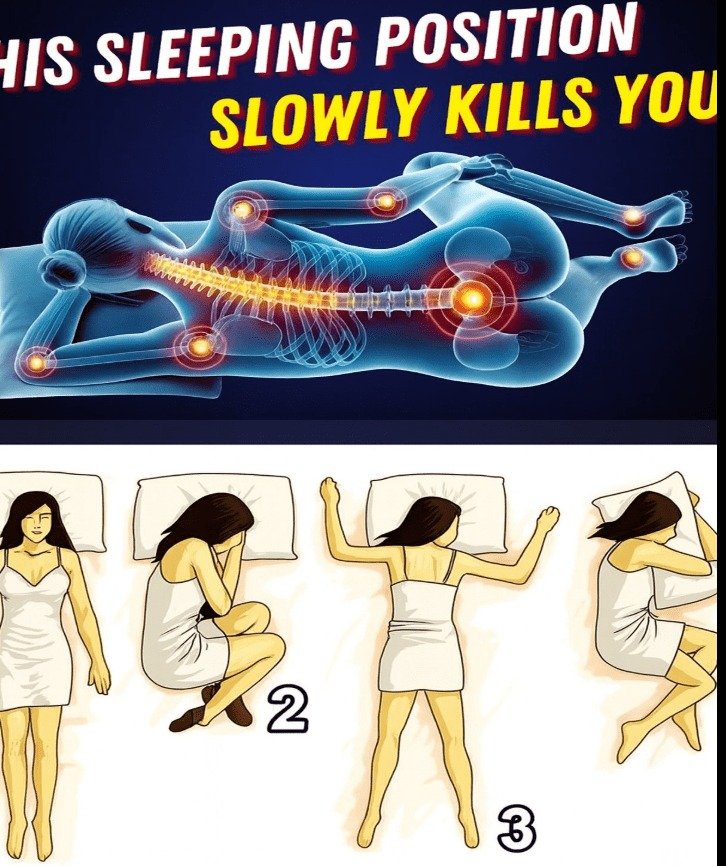
The challenge lies in the fact that many sleep positions feel entirely natural. You might instinctively curl up as you did in childhood or lie flat without a second thought. By morning, it’s easy to dismiss that persistent ache or mental fogginess as unrelated to how you spent the night. Yet, the connection is very real, and certain positions carry significantly higher risks than others. Let’s explore the three most problematic sleep postures, saving the most hazardous one for our final reveal.
3… The fetal position. While curling into a tight ball may offer a sense of security and comfort, studies indicate that this posture can restrict deep breathing by compressing your lungs and diaphragm. Furthermore, consistently sleeping in this position can place undue stress on your hips and knees, potentially leading to increased stiffness and discomfort upon waking.
2… Lying flat on your back without adequate support. Although back sleeping can be highly beneficial when properly supported, lying completely flat without a pillow positioned under your knees can place significant strain on your lower back. Additionally, some individuals may experience increased snoring or develop sleep apnea—a condition characterized by brief pauses in breathing during sleep—when sleeping in this manner. This underscores why proper support is absolutely crucial.
1… And now, for the most dangerous sleep position: sleeping on your stomach with your head turned sharply to one side. This position forces your neck into a sustained rotation for hours, compresses your spine, and can even lead to shallower breathing. The potential consequences include morning stiffness, numbness or tingling in the arms, and chronic neck or back pain. While this position may feel natural to some, its hidden tolls make it the most overlooked risk factor for truly restorative sleep.
As a little bonus for reading on: stomach sleeping can also contribute to facial wrinkles and skin irritation. When your face is pressed against the pillow night after night, the skin stretches and creases in unnatural ways. It’s a subtle, often-ignored detail that truly illustrates how profoundly your sleep position can impact your physical well-being.
So, what are the alternatives? If you experience persistent sleep issues or chronic pain, always consult a healthcare professional for personalized advice. However, here are some safe and simple adjustments you can begin experimenting with immediately.
For those who typically sleep on their stomach, try to gradually train yourself to sleep on your side. Placing a body pillow in front of you can mimic the comforting sensation of stomach sleeping while keeping your spine in a much safer alignment. To further support your hips and knees, tuck a smaller pillow between your legs.
If back sleeping is your preference, place a pillow underneath your knees. This simple adjustment helps to alleviate strain on the lower back and promotes proper spinal alignment. Additionally, use a supportive neck pillow designed to cradle the natural curve of your neck.
If you enjoy the fetal position, aim to loosen your curl. Keep your knees gently bent rather than pulled tightly towards your chest. Placing a pillow between your legs can also help maintain optimal alignment for your hips and spine.
Here’s another interesting idea: some individuals explore “zero-gravity” positions, inspired by NASA, where the legs are slightly elevated above the heart. Research suggests this posture can potentially enhance circulation and reduce swelling in the legs. Even a minor adjustment with a pillow can yield significant improvements.
The reward for these changes? Moving away from the most hazardous sleep positions isn’t about achieving perfection. It’s about empowering your body to truly rest and restore itself. With improved posture, you might experience less morning stiffness, fewer headaches, and a greater surge of energy to tackle your day. The best part is that you can start implementing these beneficial changes tonight, without any cost.
Therefore, here is your challenge: pay attention to how you naturally fall asleep tonight. If you find yourself on your stomach, make an effort to switch to your side, using a pillow for support. Try this for a week and observe how your mornings feel. Sometimes, the smallest alteration in how you rest can profoundly transform how you live.
Give this small change a try this week and share your experience with us.
Please note: This article is intended for informational purposes only and should not be considered a substitute for professional medical advice. Readers are encouraged to consult a qualified healthcare provider for personalized guidance regarding their health concerns.