 By admin
 Have you ever experienced that familiar post-meal slump – a feeling of lethargy, bloating, or general discomfort, even after a moderately sized meal? Picture someone, perhaps in their golden years, discreetly adjusting their clothing at the table, a silent acknowledgment of an internal struggle. While it’s common to attribute such sensations to a naturally slowing metabolism as we age, the real culprit might be far simpler and more within your control. The key often lies not just in what you eat, but how different foods interact within your digestive system and the timing of your meals. Unlocking this fundamental principle, often overlooked until later in life, can transform how you feel after eating and alleviate that persistent “stuck” sensation.
Understanding Your Body’s Digestive Clock
Your body’s digestive system operates with remarkable precision, much like a finely tuned internal clock. It’s a sophisticated process where various food types navigate through your stomach and intestines at vastly different rates. Some ingredients are processed rapidly, while others demand significant time and effort from your digestive organs. Nutritional research highlights several critical elements that dictate how long it takes for food to be broken down:
- The amount of dietary fiber present
- The concentration of fats
- The density of proteins
- The preparation or cooking method
- The quantity of food consumed
- Your unique metabolic rate
Consider fruits, for instance; their high water and natural sugar content allows for swift processing. In stark contrast, meals abundant in protein and fat necessitate a greater supply of digestive enzymes and an extended period for complete breakdown. The crucial insight emerges when foods with disparate digestion times are consumed concurrently: the slower-digesting items can effectively impede the progress of faster-digesting ones. This often leads to sensations of fullness, bloating, or post-meal tiredness. Recognizing these inherent differences is key to crafting meals that feel inherently lighter and more comfortable for your stomach.
Average Digestion Time of Common Foods
While individual digestion rates can fluctuate, nutrition specialists frequently provide general estimates for how long common foods typically take to process. The table below offers a straightforward comparison.
| Food Category | Example Foods | Average Digestion Time |
|---|---|---|
| Water | plain water | almost immediate |
| Fresh juices | fruit or vegetable juice | 15 to 20 minutes |
| Raw fruits | banana, apple, melon | 30 to 40 minutes |
| Cooked vegetables | carrots, squash, broccoli | about 40 minutes |
| Fish | salmon, tilapia | 45 to 60 minutes |
| Salads with oil | vegetables with olive oil | about 1 hour |
| Grains and legumes | rice, beans, lentils | about 90 minutes |
| Dairy products | milk, yogurt, cheese | around 2 hours |
| Chicken | grilled or baked chicken | 1.5 to 2 hours |
| Nuts | almonds, walnuts | about 3 hours |
| Red meat | beef steak | 3 to 4 hours |
| Pork | pork chop | up to 5 hours |
What many people find particularly eye-opening is the effect of combining dense proteins, such as heavy meats, with quickly digestible items. Such pairings can cause the entire meal to linger in the stomach for considerably longer than anticipated, leading to a sluggish and uncomfortable digestive experience. Fortunately, the solution isn’t complex. Incorporating a few straightforward habits can significantly improve digestive comfort.
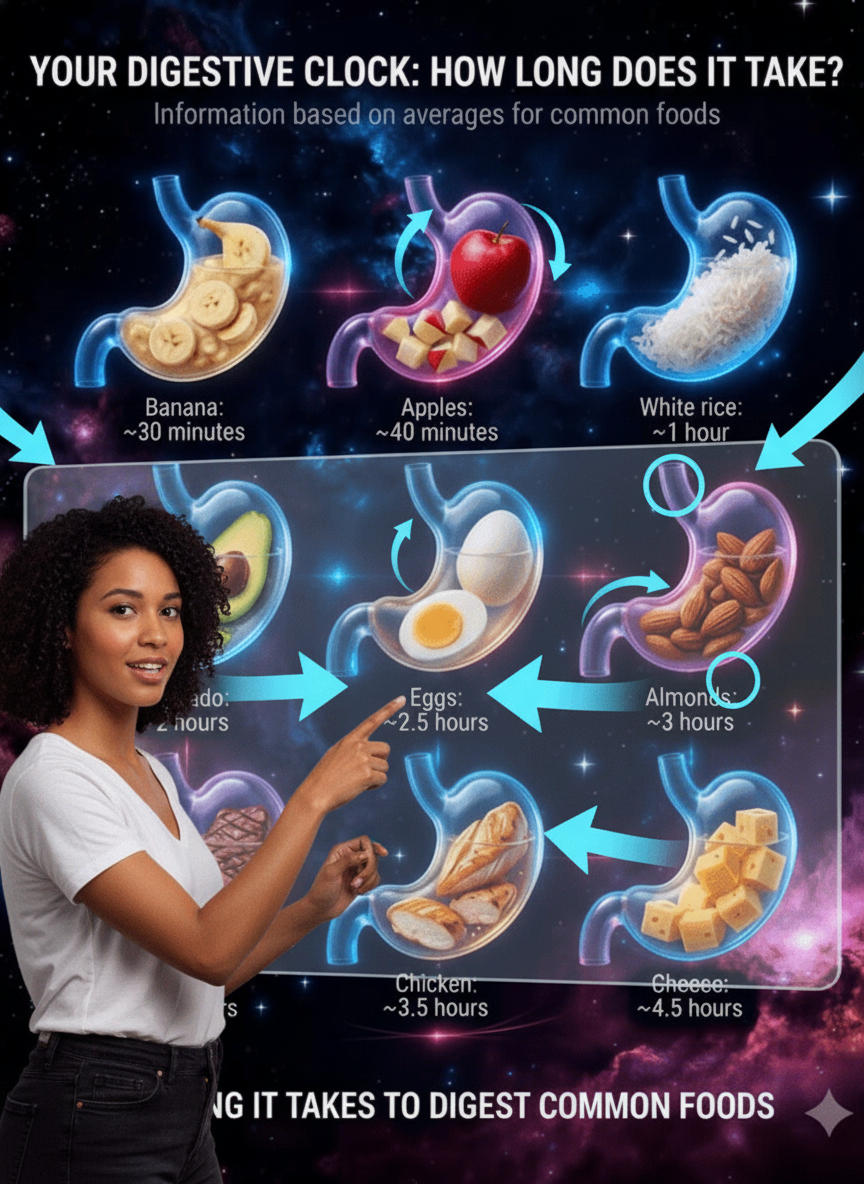
Why Mixing Certain Foods Can Feel Heavy
Consider a common meal scenario: a hearty grilled steak, accompanied by rice, and perhaps a refreshing fruit for dessert. Under normal circumstances, that fruit would typically pass through your stomach quite rapidly. However, when consumed immediately following a substantial, protein-rich course, it becomes trapped, forced to wait while the much heavier meal undergoes its lengthy breakdown process. This isn’t to say the fruit becomes detrimental; rather, this digestive traffic jam can manifest as:
- A feeling of pressure in the stomach
- Increased gas and flatulence
- Noticeable abdominal bloating
- Post-meal drowsiness or fatigue
Crucially, as we advance in years, our digestive capabilities naturally tend to diminish. There’s often a reduction in stomach acid production and a decrease in intestinal motility. This means that thoughtful meal timing and judicious food pairing become even more vital, particularly for individuals over 50 or 60. But rest assured, optimizing your digestive well-being doesn’t necessitate restrictive or intricate diets. Even minor adjustments can yield substantial positive outcomes.
Smart Meal Timing Tips That Support Comfortable Digestion
Leading gastroenterology specialists advocate for straightforward strategies that harmonize with your body’s inherent digestive rhythms. These practices are particularly beneficial for older individuals seeking enhanced comfort.
- Prioritize Lighter Meals Earlier in the Day: Your digestive system generally operates at its peak efficiency during daylight hours. Consequently, consuming your more substantial meals earlier in the day can facilitate easier processing compared to heavy, late-night dinners.
- Incorporate Fruit as a Strategic Snack: Rather than consuming fruit immediately after a dense meal, consider enjoying it:
- Mid-morning
- Mid-afternoon
- Approximately 30 minutes before a meal
This approach allows your body to assimilate its nutrients more efficiently and prevents it from being held up by slower-digesting foods.
- Opt for Lighter Evening Meals: Large servings of red meat or pork consumed late in the evening can demand several hours for complete digestion, potentially disrupting sleep and causing discomfort. Instead, a lighter dinner might comprise options like:
- Lean fish
- Assorted vegetables
- Nourishing soups
- Wholesome whole grains
Such choices can significantly contribute to reducing nighttime digestive distress.
- Hydrate Mindfully for Optimal Digestion: While water is crucial for overall digestive health, the timing and quantity can matter. Instead of consuming very large volumes of water during meals, which can dilute digestive enzymes, focus on staying well-hydrated throughout the day by sipping water between meals. This supports efficient nutrient absorption and smooth bowel function without overwhelming your system.