 By admin
 Ever had that startling moment? A sudden sneeze, a tickle in your throat, and then — a small, yellowish, bumpy lump appears. You might feel a mix of surprise and confusion, wondering what just happened. Rest assured, this strange little object is often a common occurrence known as a tonsil stone, a harmless buildup that forms in the back of your throat. Understanding what causes them and how simple daily habits can help manage them is key to better throat comfort.
What Exactly Are Tonsil Stones (Tonsilloliths)?
Tonsil stones, medically known as tonsilloliths, are small, hard calcifications that develop within the natural folds and pockets of your tonsils. Your tonsils, those soft tissue pads at the back of your throat, play a role in trapping germs. However, their intricate structure includes small crevices called crypts, which can inadvertently become traps for various debris.
Here’s how they form: Bits of food, dead cells, mucus, and bacteria can get lodged in these crypts. Over time, these trapped materials harden as they accumulate minerals, primarily calcium from your saliva, forming those pebble-like lumps. They commonly appear white, yellow, or off-white and can vary significantly in size, from tiny specks to pieces as large as a grain of rice or a small pea. Research, including insights from the Cleveland Clinic, indicates that tonsil stones are quite prevalent, potentially affecting up to 40% of people at some point, though many remain unaware.
Why Do Tonsil Stones Form?
The primary reason tonsil stones develop is the accumulation of debris in the tonsil crypts, rather than its natural clearance through swallowing or saliva flow. Several factors can increase this likelihood:
- Deep or Irregular Tonsil Crypts: Some individuals naturally have more pronounced or pocket-like tonsils, making them more susceptible.
- Frequent Throat Irritation: Past episodes of tonsillitis or chronic inflammation can create more crevices where debris can settle.
- Suboptimal Oral Hygiene: Infrequent brushing, especially neglecting the tongue, allows more bacteria and food particles to build up.
- Dry Mouth: Reduced saliva flow means less natural flushing action to clear debris from the tonsils.
It’s also worth noting that the bacteria involved in breaking down this trapped material produce a strong odor, which explains one of the most noticeable side effects of tonsil stones.
Common Signs and Symptoms
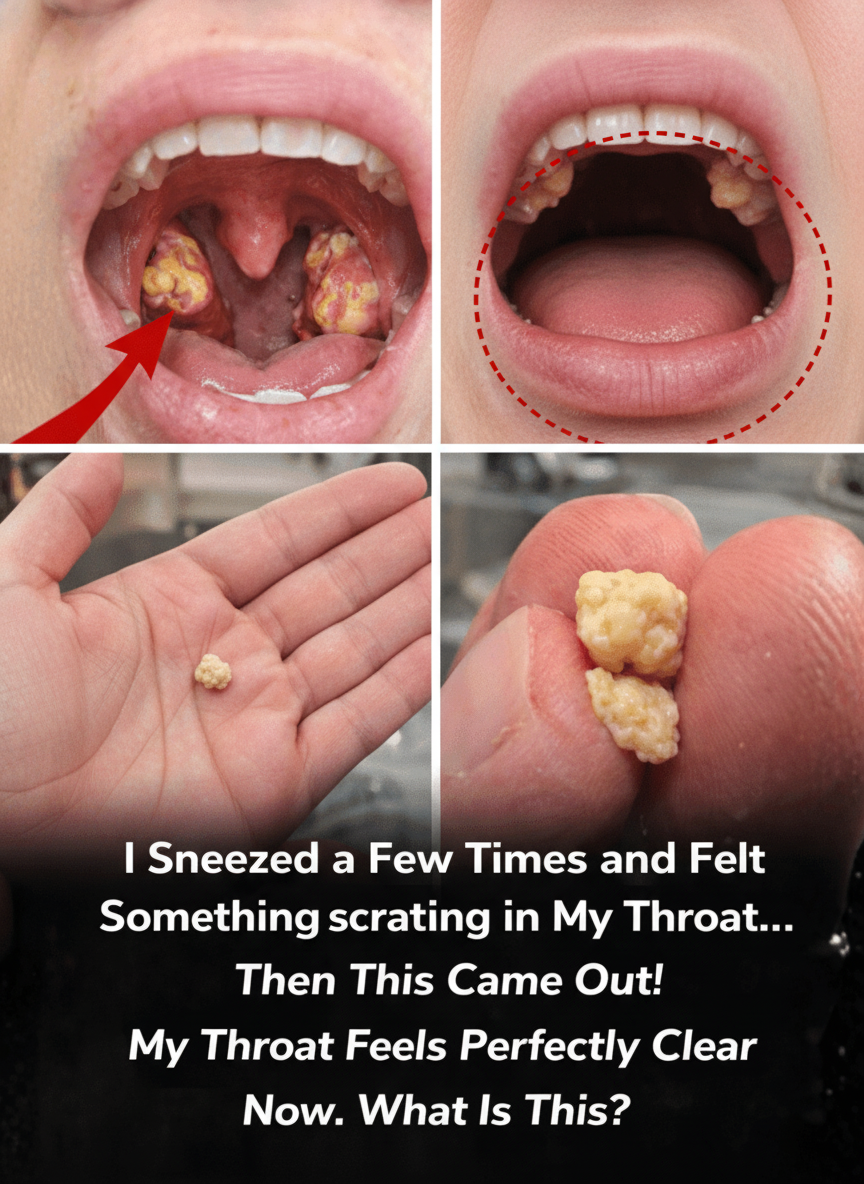
Many tonsil stones cause no symptoms at all and may dislodge spontaneously, much like in the sneezing scenario. However, when they do make their presence known, common indicators include:
- Persistent Bad Breath (Halitosis): A foul odor that persists despite regular brushing.
- Feeling of Something Stuck: A sensation that something is lodged in the back of your throat.
- Mild Sore Throat or Irritation: A low-grade discomfort in the tonsil area.
- Occasional Ear Pain: Due to shared nerve pathways, pain can sometimes radiate to the ear.
- A Bad Taste in the Mouth: An unpleasant or metallic taste.
- Visible White or Yellow Spots: Observing small, discolored lumps on your tonsils.
Often, the instant relief felt after coughing or sneezing something out is a clear sign that a tonsil stone has naturally dislodged.
Safe Home Management for Tonsil Stones
The good news is that most tonsil stones are harmless and can be effectively managed with simple, gentle daily practices. Here’s a step-by-step guide to practical habits many find beneficial:
- Gargle with Warm Salt Water: Mix half a teaspoon of salt in 8 ounces of warm water. Gargle vigorously for 20-30 seconds after meals or whenever you feel irritation. This helps loosen debris and soothes the throat.
- Stay Well Hydrated: Drink plenty of water throughout the day to maintain good saliva flow, which naturally cleanses the throat and reduces dry mouth.
- Maintain Excellent Oral Hygiene: Brush and floss regularly. Pay extra attention to gently cleaning the back of your tongue with a soft toothbrush or tongue scraper to remove bacteria.
- Use a Water Flosser Gently: On a low setting, you can carefully aim a water flosser at your tonsils to help flush out debris from the crypts without causing harm.
Important Note: Never use sharp objects like toothpicks, cotton swabs, or your fingers to poke at or try to dislodge tonsil stones. This can cause injury, infection, or push the material deeper into the tonsils. Health experts, including resources from the Mayo Clinic, emphasize that consistent and gentle oral care routines are crucial for overall throat health and can significantly reduce the frequency of tonsil stone formation.
Prevention Tips for a Fresher Throat
Incorporating a few small habits into your daily routine can make a big difference in preventing tonsil stones and keeping your throat feeling fresher:
- Brush and Floss Thoroughly: Brush twice daily and floss once, always remembering to clean your tongue to minimize bacterial load.
- Gargle After Eating: A quick gargle after meals, especially after consuming dairy or sugary foods, can help prevent debris buildup.
- Chew Sugar-Free Gum: This stimulates saliva production, aiding in the natural cleansing process.
- Avoid Mouth Breathing: If possible, try to breathe through your nose, as mouth breathing can dry out the throat more quickly.
- Regular Dental Check-ups: Your dentist can spot early signs of oral health issues and provide guidance.