 By admin
 Targeting Dormant Breast Cancer Cells: A Promising New Strategy with Existing Drugs
For countless individuals who have navigated the challenging journey of breast cancer treatment, a persistent apprehension often lingers: the fear of recurrence. Despite successful completion of surgery, chemotherapy, radiation, and hormone therapy, microscopic quantities of inactive tumor cells can sometimes evade detection and conventional therapies. These elusive, dormant cancer cells may lie hidden within the body for extended periods, even decades, only to reactivate later and trigger metastatic disease—a condition responsible for the vast majority of breast cancer-related fatalities.
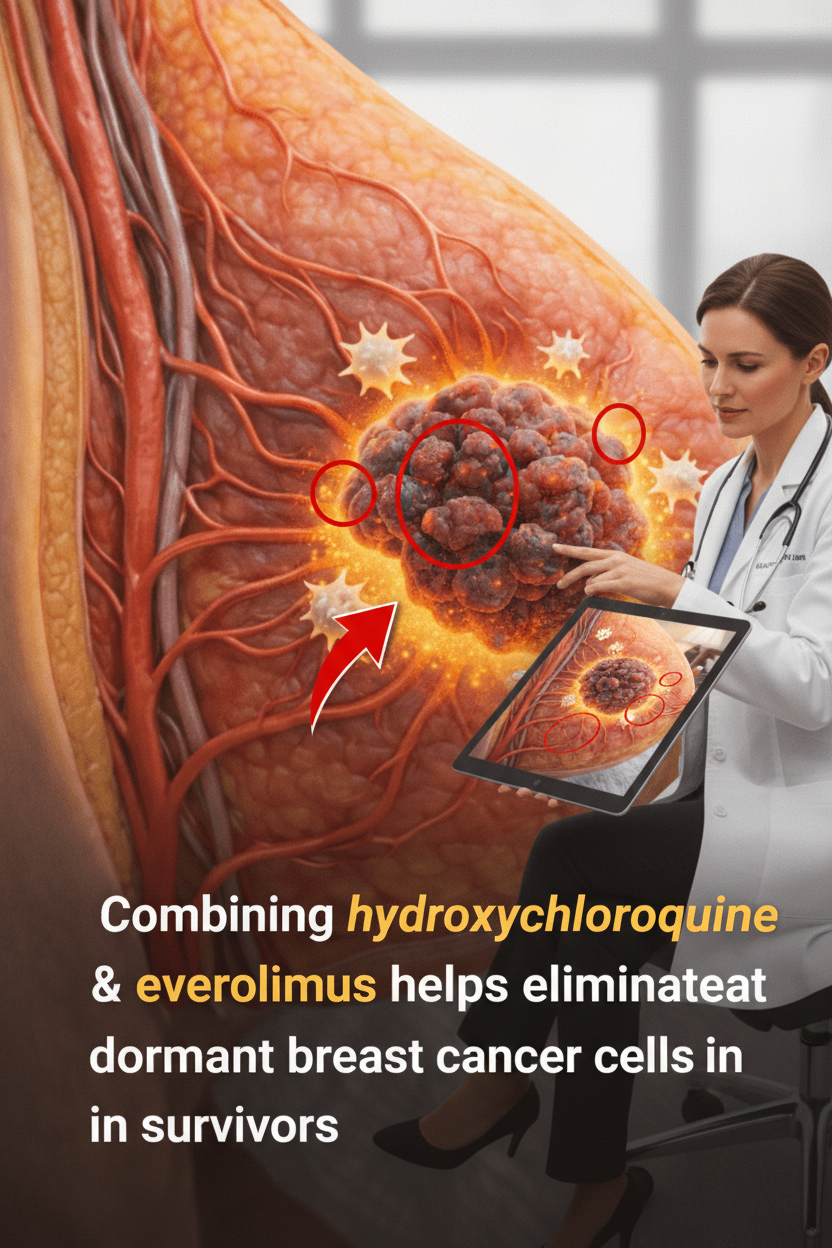
However, a recent clinical investigation led by the University of Pennsylvania has unveiled encouraging preliminary findings. This research suggests that confronting these persistent dormant cells might be achievable through a novel combination of two medications already approved for other uses: hydroxychloroquine, widely prescribed for conditions like malaria, lupus, and rheumatoid arthritis, and everolimus, an mTOR inhibitor currently approved for specific types of breast cancer and other malignancies.
Insights from the Clinical Trial: Key Outcomes
- Participants: The study enrolled 51 breast cancer survivors. Each participant had already undergone standard treatment but presented with confirmed detectable circulating tumor cells (CTCs) or disseminated tumor cells (DTCs), indicating the presence of persistent minimal residual disease (MRD).
- Treatment Protocol: Participants were administered a combination regimen of hydroxychloroquine and everolimus over a predetermined duration.
- Positive Outcomes: The combination therapy arm demonstrated remarkable efficacy, with 87% of participants achieving clearance of detectable dormant cells. Crucially, no instances of recurrence were noted within the treated cohort during a three-year follow-up period. Interestingly, when each drug was evaluated independently, clearance rates remained above 90%, strongly suggesting that both agents possess individual activity against dormant cells.
- Safety Profile: The combined regimen was generally well-tolerated by participants. Reported side effects were consistent with the established profiles of hydroxychloroquine and everolimus, including fatigue, oral mucositis (mouth sores), skin rash, and mild gastrointestinal disturbances.
The Significance: Why Targeting Dormant Cells is Crucial
Eliminating dormant tumor cells presents a significant challenge in oncology due to several inherent characteristics:
- They exist in a non-dividing, or quiescent, state, rendering them impervious to many chemotherapies and targeted agents that specifically act on rapidly proliferating cells.
- They often seek refuge in protective microenvironments, such as the bone marrow, lungs, liver, and brain, where they are shielded from systemic treatments.
- They downregulate critical growth signals, effectively making them “invisible” to the body’s immune surveillance and many conventional therapies.
The therapeutic rationale behind this combination is compelling: Hydroxychloroquine disrupts autophagy, a critical cellular recycling process that cancer cells often exploit for survival, especially under stressful conditions. Concurrently, everolimus acts as an mTOR inhibitor, blocking a key signaling pathway essential for dormant cells to persist and eventually reactivate. The synergistic action of these two drugs seemingly creates an inhospitable environment, compelling these persistent dormant cells towards programmed cell death.
Understanding Limitations and Future Directions
It is crucial to acknowledge that this was a relatively small, early-phase clinical investigation, not a large-scale, randomized Phase III trial, which is the gold standard for definitive efficacy.
The follow-up period of three years, while promising, is relatively short. Extended observation is imperative to conclusively determine if the observed clearance of dormant cells indeed translates into a sustained reduction in long-term recurrence rates.
Furthermore, the study specifically targeted patients with detectable residual cells. Therefore, its findings do not definitively establish prevention across all patient populations or every breast cancer subtype.
Consequently, larger, well-designed confirmatory trials are essential to validate these initial findings. Such studies are likely already in the planning stages or actively underway.
Implications and Recommendations for Breast Cancer Survivors
Despite its early stage, this research represents one of the most encouraging breakthroughs in recent memory, signaling that targeting dormant cancer cells is a viable strategy using readily available and relatively well-tolerated medications. Should these findings be substantiated in more extensive studies, this innovative approach could potentially be integrated into post-treatment “maintenance” regimens for survivors at higher risk of recurrence, thereby offering tangible hope for significantly reducing late-stage relapses.
Important Disclaimer for Breast Cancer Survivors: It is paramount that individuals who have experienced breast cancer do not attempt to self-prescribe hydroxychloroquine or everolimus. Both are potent prescription medications with potential side effects and significant drug interactions. We strongly advise discussing these emerging research findings with your oncologist during your next consultation. Your healthcare provider is best equipped to determine if you show evidence of residual disease (potentially via CTC/DTC testing, if available) and whether participation in clinical trials or off-label use might be suitable for your specific situation.
Crucially, continue to adhere diligently to all standard follow-up protocols. This includes regular physical examinations, imaging scans, monitoring of tumor markers (when clinically indicated), and strict adherence to any prescribed endocrine therapy.
It is worth noting that advancements in early detection and contemporary treatment modalities have already significantly enhanced breast cancer outcomes. Nevertheless, the development of strategies specifically designed to target dormant cells holds the potential to elevate survival rates even further, particularly for individuals facing a heightened risk of late recurrence.
For those interested in the specific study reference or links to related scientific research, please feel free to reach out. Remain hopeful – the scientific community is continuously advancing in the fight against cancer. 💗