 By admin
 Millions worldwide rely on statin medications daily to effectively manage cholesterol levels and bolster cardiovascular wellness. Yet, a growing body of scientific inquiry has begun to explore a fascinating, and potentially crucial, connection: how these widely prescribed drugs might influence vitamin K2 status and, consequently, the gradual accumulation of calcium within artery walls over time. For individuals diligently focused on safeguarding their heart health, this emerging discussion can undoubtedly spark questions.
The encouraging news is that gaining a deeper understanding of this potential interplay empowers you to make more informed dietary and lifestyle choices, always in consultation with your healthcare provider. In this comprehensive article, we will delve into the scientific insights, explain why this link holds significance for your well-being, outline practical considerations to discuss with your doctor, and spotlight a particular nutrient protocol that researchers have highlighted for those undergoing statin therapy.
Understanding Statins and Their Pivotal Role in Heart Health
Statins represent one of the most frequently prescribed classes of medications globally. Their primary mechanism involves lowering low-density lipoprotein (LDL) cholesterol, often referred to as “bad” cholesterol, thereby substantially reducing the risk of adverse cardiovascular events for countless individuals. Their efficacy in cholesterol management is well-established and life-saving for many.
However, the scientific landscape is ever-evolving. While statins are highly effective in their intended role, some investigations have begun to explore whether they might exert broader, perhaps unintended, effects on other physiological processes. A key area of interest revolves around vitamin K2, an essential nutrient renowned for its vital role in directing calcium to appropriate sites, such as bones and teeth, and crucially, *away* from soft tissues like arterial walls where it can contribute to hardening.
The Potential Connection Between Statins, Vitamin K2, and Arterial Calcification
A number of observational studies and systematic reviews have focused on individuals taking statins, examining markers indicative of vitamin K status. For instance, research published in various medical journals has observed that statin users sometimes exhibit reduced activity of vitamin K-dependent proteins. This diminished activity has, in some cases, been correlated with higher scores for coronary artery calcification – a key indicator of arterial stiffness and cardiovascular risk.
But the narrative extends beyond simple correlation. Other scientific inquiries suggest that statins might influence the very same biochemical pathway – specifically, the mevalonate pathway – which is implicated in both cholesterol production and the synthesis of certain forms of vitamin K2 within the body. This intriguing overlap has led some experts to propose a potential “paradox”: a medication designed to protect the heart might, under certain circumstances, inadvertently contribute to calcium deposition in arteries if vitamin K2 levels are not adequately supported.
It is crucial to acknowledge that this field of research is still developing. Not all studies present uniform findings, and large-scale, randomized controlled trials are ultimately required to provide more definitive answers. Nevertheless, the emerging scientific discourse warrants attention, particularly for individuals currently on statin therapy.
Why Vitamin K2 Is Indispensable for Artery Health
Vitamin K2, particularly its highly bioavailable form known as menaquinone-7 (MK-7), plays a critical role in activating specific proteins, such as Matrix Gla-Protein (MGP). When activated by sufficient vitamin K2, MGP acts as a potent inhibitor, preventing calcium from inappropriately settling and accumulating within the delicate walls of arteries. Without adequate levels of active vitamin K2, calcium can progressively build up over time, potentially leading to arterial stiffening – a process strongly associated with increased cardiovascular concerns.
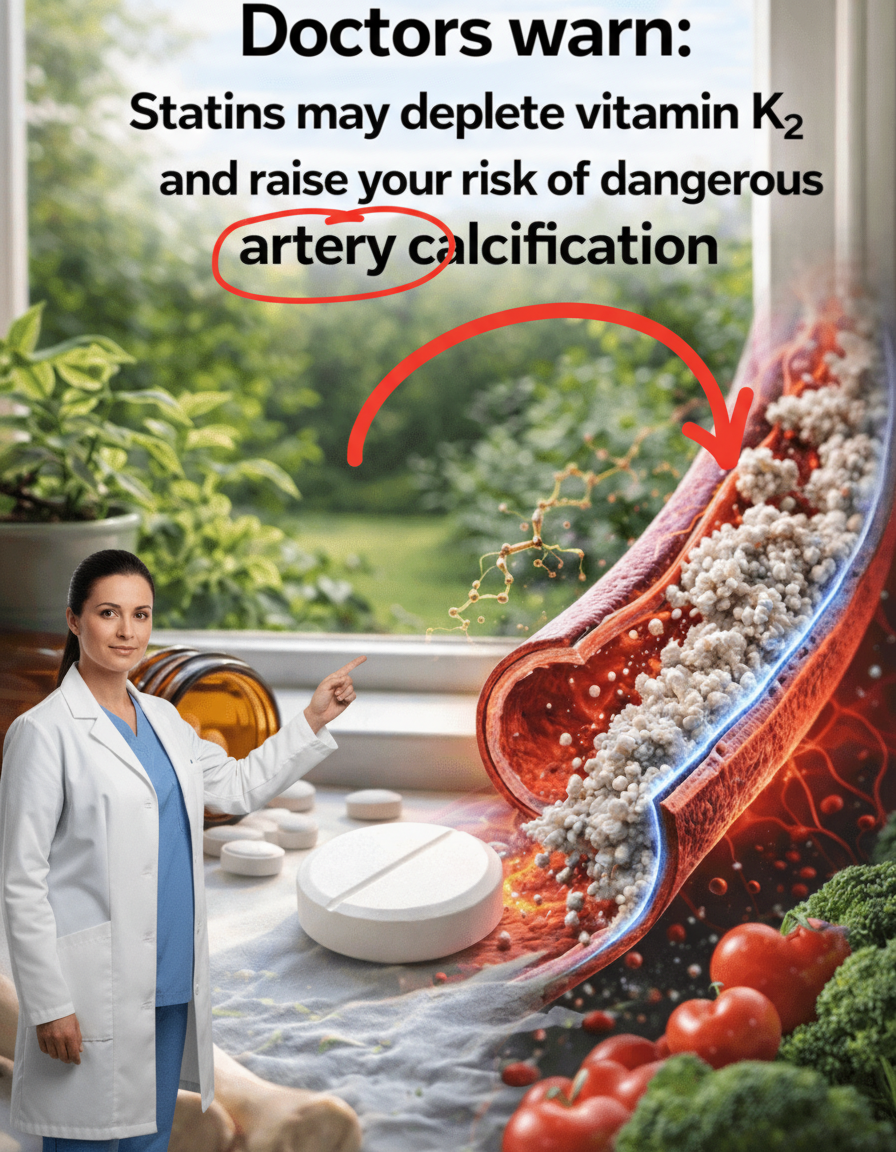
Dietary sources rich in vitamin K2 include fermented foods like natto, certain types of cheese, and egg yolks. However, many individuals may not consume enough vitamin K2 through their diet alone, and factors such as medication use or the natural aging process can further influence its availability and effectiveness in the body.
Here’s a concise comparison of the two primary forms of vitamin K:
- Vitamin K1 (Phylloquinone): Primarily found in green leafy vegetables; its main function is to support healthy blood clotting.
- Vitamin K2 (Menaquinones): Present in fermented foods and some animal products; its key roles involve robust calcium regulation, promoting bone mineralization, and crucially, safeguarding artery health.
Research increasingly indicates that vitamin K2 offers distinct and significant benefits for vascular health that are not replicated by vitamin K1.
What Scientific Studies Have Revealed About Statins and This Essential Nutrient
A notable cross-sectional study investigating statin users identified a positive association between statin therapy, lower markers of vitamin K status (specifically, higher levels of inactive vitamin K-dependent proteins), and elevated coronary artery calcification scores. Furthermore, several scientific reviews have put forth the hypothesis that statins could potentially impede aspects of vitamin K2 synthesis, given that both cholesterol and vitamin K2 production share common enzymatic steps within the mevalonate pathway.
One in-depth analysis highlighted that in some individuals on statins, this biochemical interaction might contribute to an accelerated progression of calcification markers, although the exact impact can vary significantly among individuals. It is vital to underscore that not every study demonstrates a direct, unequivocal cause-and-effect relationship. Some clinical trials investigating general vitamin K2 supplementation (not always specifically in statin users) have yielded mixed results regarding its ability to slow the progression of calcification. This variability underscores why ongoing, targeted research remains incredibly valuable and necessary.
Nutrient Considerations for Individuals Taking Statins
If you are currently on statin medication and these potential connections raise concerns, many experts advocate for a comprehensive focus on overall nutrient support. This discussion should always take place in close collaboration with your healthcare provider. Based on the evolving research, vitamin K2 has been frequently highlighted by researchers and in reviews as a nutrient worth considering for statin users, potentially helping to maintain healthy vitamin K status and support arterial integrity.
While the science continues to unfold, proactive discussions with your doctor about your diet, lifestyle, and potential nutrient supplementation, including vitamin K2, can be a valuable step in your ongoing journey toward optimal cardiovascular health. Informed choices, guided by professional medical advice, are paramount.