 By admin
 Spotting Early Nerve Issues: 8 Subtle Toe Symptoms You Shouldn’t Ignore
After a long day, have you ever kicked off your shoes only to experience a persistent, unusual tingling sensation in your toes? Or perhaps you’ve noticed a peculiar numbness in your feet, making everyday actions like walking barefoot feel strange and disconnected. These minor alterations can often go unnoticed, easily dismissed as mere tiredness or the natural wear and tear of daily life. Yet, these subtle sensations could be crucial early indicators of underlying nerve issues in your feet, a condition impacting millions and frequently associated with factors such as advancing age or various health conditions. Recognizing these initial signs is key to maintaining optimal foot health and well-being.
Understanding How Nerve Problems Can Begin in the Toes
The intricate network of nerves within your feet plays a vital role, relaying critical information to your brain about sensations like touch, temperature, and your body’s position. When this delicate communication pathway is compromised, symptoms frequently manifest first in the toes. This is due to the simple anatomical fact that the nerves extending to your toes are among the longest in your body, making them more vulnerable. Initially, you might attribute these sensations to simple fatigue from prolonged standing. However, if left unaddressed, these subtle changes can progressively impair your mobility and overall sensory perception. According to various health organizations, peripheral nerve issues affect over 20 million individuals in the U.S. alone, highlighting its prevalence despite often being overlooked in its early stages. This widespread issue prompts a deeper look into why these critical warning signs often go unnoticed, particularly as we grow older.
Why Foot Sensations Often Go Unnoticed After Age 50
With advancing age, our bodies undergo various transformations, often leading us to normalize minor discomforts in our toes. Hectic daily routines and the general aches and pains associated with everyday life can effectively obscure these crucial early warnings. For instance, a mild pins-and-needles sensation might easily be dismissed as a result of restrictive footwear or temporary circulatory issues. While such feelings can indeed be benign in many instances, their persistence warrants closer attention. Research consistently indicates that the aging process can impact nerve function, underscoring the importance of early detection and awareness. Your toes essentially serve as sensitive early warning systems. Disregarding their signals could mean missing opportunities for timely interventions and lifestyle adjustments. It’s important to remember that these nerve-related symptoms typically develop gradually, making the recognition of evolving patterns particularly significant.
How Nerves in Your Toes Might Signal Distress
Changes in nerve function rarely occur abruptly. Instead, they typically manifest as intermittent or evolving sensations, such as a subtle buzzing or an uncharacteristic feeling of warmth. General medical literature suggests that these sensory alterations are direct reflections of how nerves are processing and transmitting signals. Promptly noting these changes can encourage proactive health practices. With that introductory context, let’s now delve into eight specific signs that individuals frequently experience yet often fail to recognize as potential nerve issues.
8 Subtle Toe Symptoms That Could Indicate Nerve Issues
-
A Tingling or Pins-and-Needles Feeling
Picture the sensation of ‘pins and needles’ or a gentle buzzing, akin to static electricity, that arises in your toes, especially after periods of rest or upon standing. Medically termed paresthesia, this sensation is a common early sign of nerve involvement. While initially it might be fleeting, its recurrent presence warrants attention. For instance, an individual over 50 might experience this tingling more frequently in the evenings. Persistent or worsening paresthesia should not be ignored.
-
Numbness That Makes Toes Feel Distant or Asleep
Imagine touching your toes and perceiving only a faint pressure, as if a thick layer of cotton or a heavy sock muffles your sense of touch. This diminished sensation, often described as numbness, frequently originates in the body’s extremities, including the toes. It might lead to not noticing the imprint of sock seams or the presence of small objects beneath your foot, making routine activities feel unusually disconnected or awkward. This sensory alteration is a crucial signal of potential nerve dysfunction.
-
Burning Sensations, Especially at Night
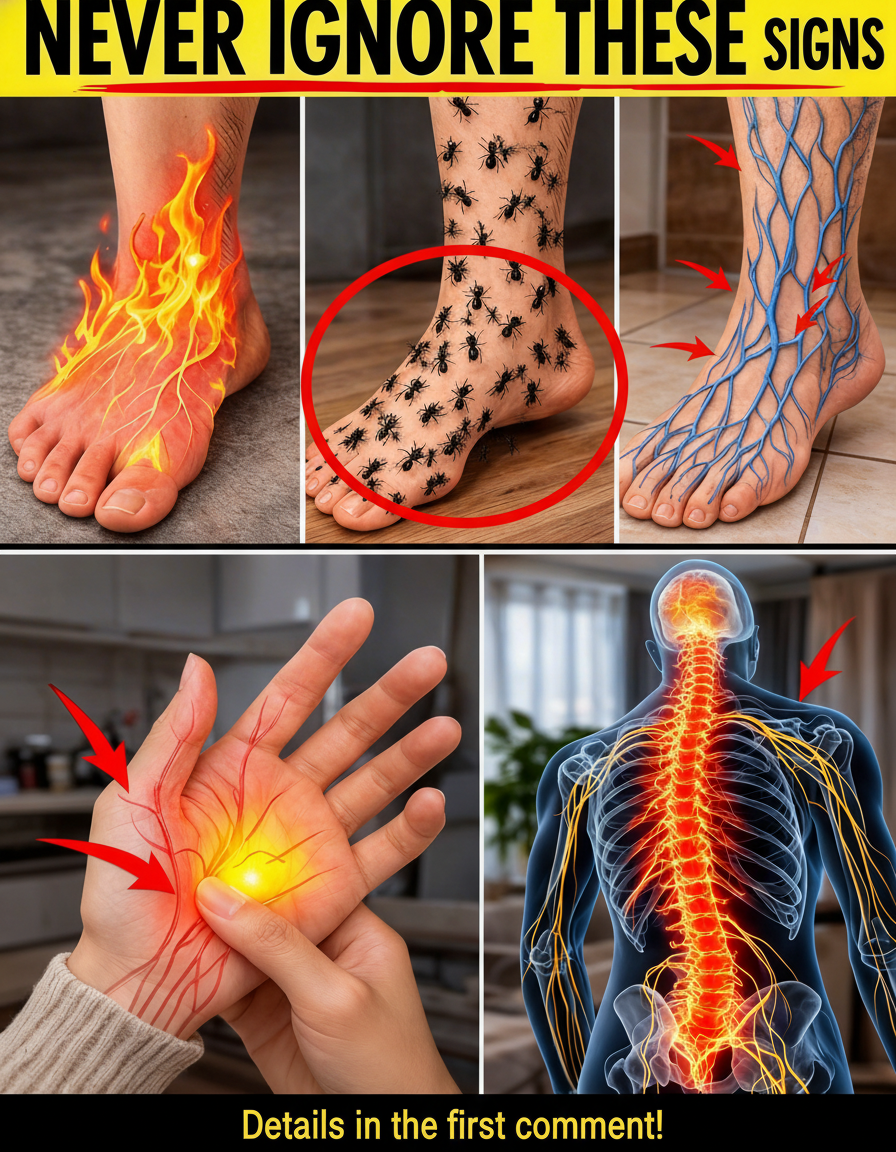
Even in a cool environment, such as lying in bed with light sheets, you might experience an intense, internal heat in your toes – a distinct burning sensation. Medical reports and studies frequently link this specific symptom to irritation or damage within particular nerve fibers. Such discomfort can severely interfere with sleep quality, resulting in daytime fatigue. Interestingly, the polar opposite sensation can also be a warning sign, which we’ll discuss next.
-
An Unusual Cold Sensation in the Toes
Despite being in a comfortably warm room, your toes might inexplicably feel cold, as if they are failing to register appropriate temperature signals. Medical literature often classifies this as a ‘misperception of temperature,’ where nerves send incorrect cold signals to the brain. This unusual coldness can occur in isolation or in conjunction with other sensory disturbances. This leads us to another potent indicator: sudden, sharp pains.
-
Sharp, Jabbing Pains That Shoot Through
You might experience sudden, intense, and fleeting pains in your toes, often described as electric shocks or sharp jabs, occurring unexpectedly whether you are active or at rest. Research into neuropathy frequently associates these sensations with heightened nerve irritability. These sharp pains often become more pronounced in the evenings or are triggered by movement. Beyond these acute sensations, subtle alterations in how your toes perceive touch can also be indicative.
-
Increased Sensitivity to Light Touch (Allodynia)
A seemingly harmless touch, such as the soft brush of bedsheets or the gentle pressure of socks, might suddenly elicit discomfort or even considerable pain. This phenomenon is known as allodynia, where non-painful stimuli are perceived as painful. It’s a significant sign that nerve signals are being misinterpreted.
-
Muscle Weakness or Cramping in Toes/Foot
Beyond sensory changes, you might also notice a subtle but persistent weakness in your toe muscles, making it harder to lift or move them. This can manifest as difficulty with balance or a tendency for your toes to cramp unexpectedly, particularly after physical activity. Such motor symptoms can signal nerve damage affecting muscle control.
-
Changes in Skin, Hair, or Nail Appearance
Nerve issues can also affect the autonomic nerves that control skin health. You might observe changes in the skin texture of your toes, perhaps becoming unusually dry or shiny. Hair growth on your toes might decrease, and your toenails could appear brittle, discolored, or grow more slowly. These trophic changes are often subtle but can point to underlying nerve problems.
Recognizing these eight subtle signs is the first step toward understanding potential nerve issues in your toes. While many of these symptoms can be mild or intermittent at first, their persistence or worsening should prompt a conversation with a healthcare professional. Early diagnosis of peripheral neuropathy or other nerve conditions can lead to more effective management and improved quality of life. Don’t dismiss what your toes are trying to tell you – proactive attention to these signals is vital for your long-term foot health.